Making the Case for the Terminal as AI's Workbench: Warp’s Zach Lloyd
Zach Lloyd, founder of Warp, discusses how the terminal is becoming the central workbench for AI-powered development. He explores the convergence of IDEs and terminals, the rise of cloud-based agent swarms, and his thesis that coding will soon be a "solved" problem, making the clear expression of human intent the final bottleneck.
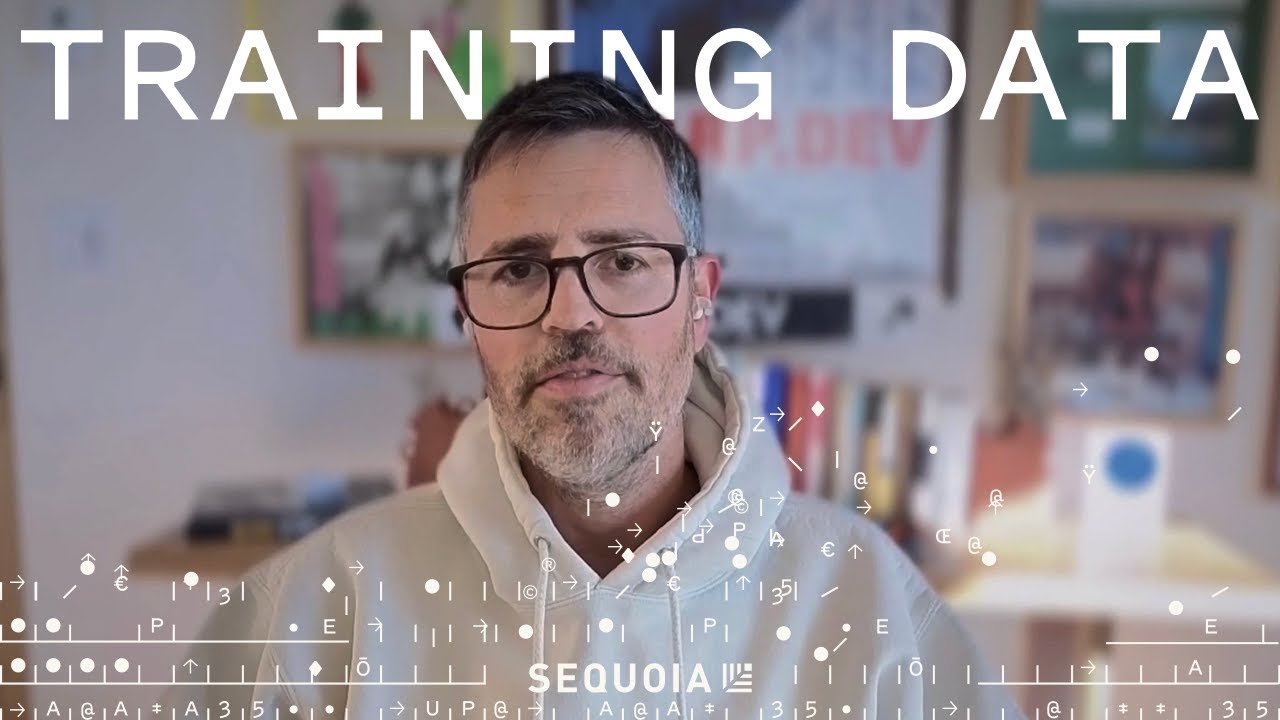
Zach Lloyd, founder of Warp, initially set out to modernize the terminal for professional developers. However, the rise of generative AI and coding agents has pivoted the company and highlighted the terminal’s unexpected role as the ideal environment for agentic workflows.
The Terminal as the Epicenter of Agentic Development
The terminal’s form factor is perfectly suited for working with AI agents. Its core characteristics make it a superior workbench compared to traditional IDEs for this new paradigm:
- Time-Based and Text-Oriented: The entire workflow is a chronological log of text inputs and outputs, which is a natural fit for prompting and reviewing agent actions.
- Built-in Logging: Every command and output is recorded, providing a clear history of what an agent has done.
- Multitasking: It’s easy to run and manage multiple agents simultaneously in different terminal sessions.
This has been a “great stroke of luck” for Warp, placing its product at the center of the most significant shift in software development.
The Convergence of IDEs and Terminals
The distinction between the terminal and the IDE is blurring. A new type of developer workbench is emerging, optimized for prompting and agent orchestration rather than manual coding.
- Warp, which started as a terminal, has incorporated IDE-like features such as a built-in code editor and a file tree.
- IDEs like Cursor are becoming more chat-centric, resembling the interactive, prompt-driven nature of the terminal.
The future workbench will likely look more like an advanced terminal than a traditional IDE. The primary interface is shifting from direct manipulation of code (like in a word processor) to a conversational, prompting interface. Hand-editing code is becoming a secondary, fallback mechanism for when the agent needs adjustment.
“I would think of it as like the hand editing is like almost become like a fallback interface or a secondary interface and the primary interface now is the prompting interface.”
The Next Frontier: Cloud Agents and Orchestration
The next major evolution in AI-powered development will be the shift from interactive agents triggered by a developer to “ambient agents” running in the cloud. These agents will be launched autonomously by system events, such as:
- A server crashing
- A cluster of user-reported issues
- A new security incident
This shift implies that the developer’s workbench must evolve into an orchestration platform or a “cockpit” for managing swarms of agents. This platform needs a strong team concept to track agent-initiated pull requests, code reviews, and tasks across the organization. Warp is focusing its product strategy on building this infrastructure, which includes an agent SDK, optional agent hosting, and a management layer to monitor the status and logs of all running agents.
Navigating a Brutally Competitive Market
The AI coding market is intensely competitive, with major model providers like Anthropic, OpenAI, and Google subsidizing their own application-layer tools. Warp competes by:
- Focusing on Product Quality: Creating a superior, holistic developer experience that professionals are willing to pay a premium for, moving beyond the cost-sensitive “vibe coder” segment.
- Acting as an Abstraction Layer: Sitting above the model providers and offering users the choice between different models (e.g., Anthropic, Gemini, OpenAI) or automatically routing requests to the best model for the job (based on cost, latency, and quality).
- Building a Sustainable Business Model: Warp shifted its pricing from a subscription with a fixed number of credits to a more sustainable consumption-based model. While this was a difficult change for users, it was necessary to avoid subsidizing usage at a loss.
State of Coding Agents and the Ultimate Bottleneck
Today’s frontier models are capable of handling medium-complexity tasks with human guidance. They can create PRs, fix bugs, and implement small features. However, significant bottlenecks remain:
- Context Window: Despite larger context windows, models struggle with effective attention and must constantly “relearn” the codebase for each task. There is no continuous learning or memory.
- Verification: Agents can now consistently produce code that compiles, but they frequently introduce logical bugs. The next step is closing the loop by giving agents the ability to verify their changes from a user’s perspective (e.g., via browser or computer use), which will also enable more effective reinforcement learning (RL).
Lloyd predicts that within a few years, coding will essentially be a solved problem. The models will be so capable that the limiting factor will no longer be the AI’s ability to generate code, but rather a human’s ability to clearly and unambiguously express their intent.
“We’re moving from a world where people speak in code to one where they just speak in English to try to build apps… we’re like reintroducing ambiguity.”
This is why model providers are aggressively moving into the application layer—they recognize the risk that the underlying API layer for coding tokens will become commoditized once the problem is “solved.”