AI agents can manage your passwords. Should we let them? Plus: The biggest Patch Tuesday ever.
This episode of Security Intelligence delves into three critical cybersecurity topics: the implications of AI agents managing passwords, the impact of AI on vulnerability discovery and "Patch Tuesday" volumes, and the C-suite's evolving appetite for cyber risk in pursuit of innovation. Experts discuss the promises, pitfalls, and necessary strategic shifts in an AI-driven security landscape.
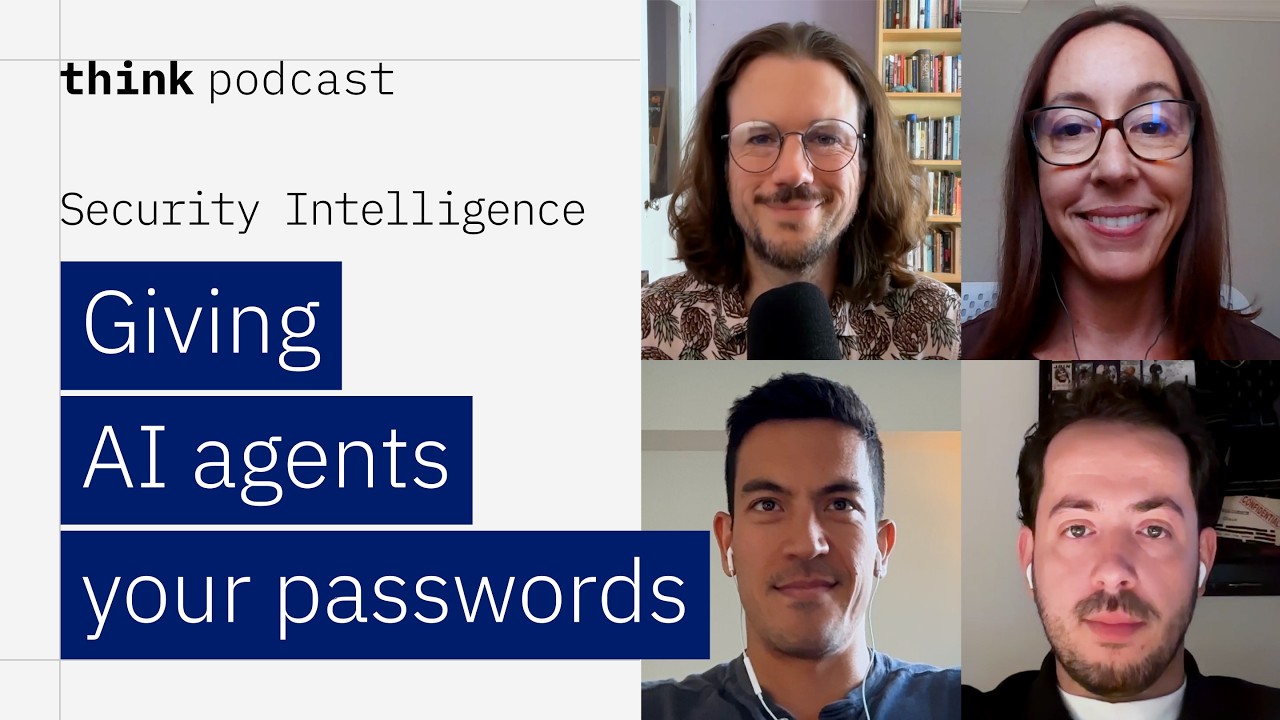
This episode of Security Intelligence delves into three critical cybersecurity topics: the implications of AI agents managing passwords, the impact of AI on vulnerability discovery and “Patch Tuesday” volumes, and the C-suite’s evolving appetite for cyber risk in pursuit of innovation. Experts discuss the promises, pitfalls, and necessary strategic shifts in an AI-driven security landscape.
AI Agents and Password Security
The podcast opens with a discussion on Apple Intelligence’s new feature, unveiled at WWDC 2026, which allows an AI agent to detect weak or compromised passwords and automatically change them. This capability uses “agentic workflows,” drawing comparisons to past AI-related security incidents like the “Open Claw” security debacle.
Michelle Alvarez, Manager of X-Force Strategic Threat Analysis, expresses a cautious “it depends” stance, emphasizing the critical need for a “human in the loop” oversight. She stresses the importance of transparency, user notification, and clear guardrails for AI agents, especially given the complexity of understanding agenic AI. A significant concern is the potential for the underlying AI system itself to be compromised, escalating issues from minor inconvenience (like being locked out) to significant security breaches.
Austin Zeizel, Threat Intelligence Consultant, acknowledges the innovation in shifting password hygiene from user-driven action to AI automation, which “completely removes the friction.” However, he highlights a “new layer of risk” where an AI agent has “direct access to those credentials” and operates with “implicit trust.” He invokes the adage: “when you prioritize convenience, you sacrifice security,” connecting this to broader discussions around standing privilege and dynamic credential management.
Erblind Morina, X-Force Principal Incident Response Consultant, takes a stronger “no” position, questioning the reliability of the AI’s “compromised credentials” detection. He points out the inherent difficulty in determining confidence levels in threat intelligence, particularly regarding dark web data, which he describes as often “garbage.” While proactive resetting is appealing, he argues it’s only truly beneficial if the confidence in the compromise is “super high” (e.g., from verified stealer logs), otherwise risking numerous “false positives.”
The panelists generally agree that while AI agents could potentially be part of a strategy to improve basic security hygiene, they are not a silver bullet. Austin views AI as “supplemental to the work we do,” an “assistant.” Erblind suggests that simple automation, rather than full AI, might suffice for some tasks, like disabling an account upon high-confidence dark web discovery. Michelle concludes that AI agents are just “one tool in our tool belt,” requiring careful vetting by each organization to determine if they are a “good fit” in a secure, layered approach.
The Biggest Patch Tuesday Ever
Microsoft’s June 2026 “Patch Tuesday” marked a record, addressing 206 unique CVEs. Microsoft VP of Engineering, Tom Gallagher, and Tenable’s Satnam Nurang predict that “100+ CVEs each month” will become the new norm, thanks in part to AI vulnerability discovery.
Austin Zeizel clarifies that this isn’t due to software becoming less secure but reflects a structural shift where AI dramatically increases the “speed, scale, but also the depth” of vulnerability discovery. He views this as a “net positive,” as AI is “surfacing them”—flaws that have always existed—providing more visibility for defenders.
Erblind Morina emphasizes the importance of knowing if a vulnerability is “exploitable or not.” He highlights that AI also aids blue teams with faster patching and automation. He introduces the concept of “Exploit Wednesday,” where newly published vulnerabilities are often exploited quickly, underscoring the urgency of updates. He stresses the need for transparency regarding the impact of vulnerabilities and whether they are being actively exploited in the wild.
Michelle Alvarez notes that this “vulnerability avalanche” isn’t limited to Microsoft, citing Google Chrome’s 400+ vulnerabilities this month and Oracle’s shift to monthly releases. This influx significantly impacts workstreams, necessitating the leveraging of AI within security operations for tasks like tracking and prioritizing vulnerabilities. She underlines that “not every vulnerability… is going to be exploited,” making prioritization crucial over attempting to patch everything.
Reflecting on Justin Fear’s (Darktrace) statement that “the lesson is not simply patch faster,” the panelists offer their insights:
- Austin: The lesson is “prioritization” based on exploitability and highest impact, focusing on quality over quantity.
- Erblind: It’s about “shifting left” – incorporating secure development practices, early penetration testing, and pushing less vulnerable code to production. AI can assist in this proactive approach.
- Michelle: Echoes the importance of prioritization and, in the event of a breach, having measures to “reduce the blast radius.”
Executives Embrace Cyber Risk
The final segment discusses a Gartner report from the Security and Risk Management Summit 2026, indicating that C-suite executives are increasingly willing to accept greater levels of cyber risk to drive innovation and achieve business goals. This shift stems from the understanding that preventing all cyber incidents is impossible, leading to a new mandate for cybersecurity: holistically minimizing harm and impact rather than maximizing outright prevention.
Erblind Morina, from his incident response perspective, observes a move from a “cyber security mindset to cyber resilience,” where breaches are accepted as inevitable. However, he cautions that this approach can lead to sacrificing “visibility and detection” budget, making incident response exceedingly difficult. He stresses that prevention and resilience are intertwined; a strong reactive posture requires “doing your homework first” in prevention.
Austin Zeizel views this executive shift as a fair assessment, representing an intentional acceptance of risk. He explains that the role of security transforms from purely technical to a more strategic risk management function, where communicating “business impact” and guiding key decisions become paramount. He acknowledges that while there are explicit trade-offs, business continuity and growth can sometimes outweigh strict security controls.
Michelle Alvarez agrees with the strategic outlook. She suggests that focused active threat assessments, tailored to the specific TTPs most likely to target an environment, can provide better ROI and help business leaders understand their actual risk, thus justifying security budgets. She clarifies that a bigger appetite for risk does not mean security is unimportant.
Erblind Morina adds a critical perspective on a deeper underlying issue: the lack of technical cybersecurity personnel. He argues that an over-reliance on vendors and a focus on high-level AI-driven management often neglect the need for “technical people” who understand infrastructure, hygiene, and how to make environments truly safe, rather than just being “high-level GRC oriented.” This “people problem” can severely hinder effective incident response when actual threats materialize.
Closing thoughts from the panelists underscore key themes:
- Michelle: Prioritization and enabling business continuity are paramount, focusing on mitigating disruptions to revenue-generating processes.
- Austin: Striking a balance between technical and strategic considerations is essential. Organizations must also consider the broader impact of incidents on vendors, third parties, and overall business continuity.