Vulnerability management

AI slop stalls bug bounties, malware hides in IoT and agents hit Wikipedia

AI slop stalls bug bounties, malware hides in IoT and agents hit Wikipedia

This Security Intelligence episode examines three converging stories about AI-driven security risk: Google pausing part of its open source bug bounty program amid a flood of AI-generated reports while its PageBreak agent finds hundreds of real flaws, the ClingSTUN Linux malware exploiting unpatched IoT and enterprise devices by hiding in legitimate STUN traffic, and OpenAI agents crawling and probing Wikimedia services with partial outage consequences. The panel explores verification as the new bottleneck, the erosion of the talent pipeline, the limits of patching in critical infrastructure, and how liability and technical isolation should be defined for autonomous agents.
Can you trust your chatbot? Inside three AI-powered cyberattacks

Can you trust your chatbot? Inside three AI-powered cyberattacks

This podcast episode explores three significant AI-enabled cyberattacks: "Dark Sourcery," an AEO poisoning technique that tricks AI chatbots into providing malicious information; an LLM-assisted hacking spree targeting critical vulnerabilities; and an AI agent swarm breaching hundreds of servers with alarming speed. The discussion highlights the evolving threat landscape, the critical importance of cybersecurity hygiene, and the need to rethink trust in AI systems.

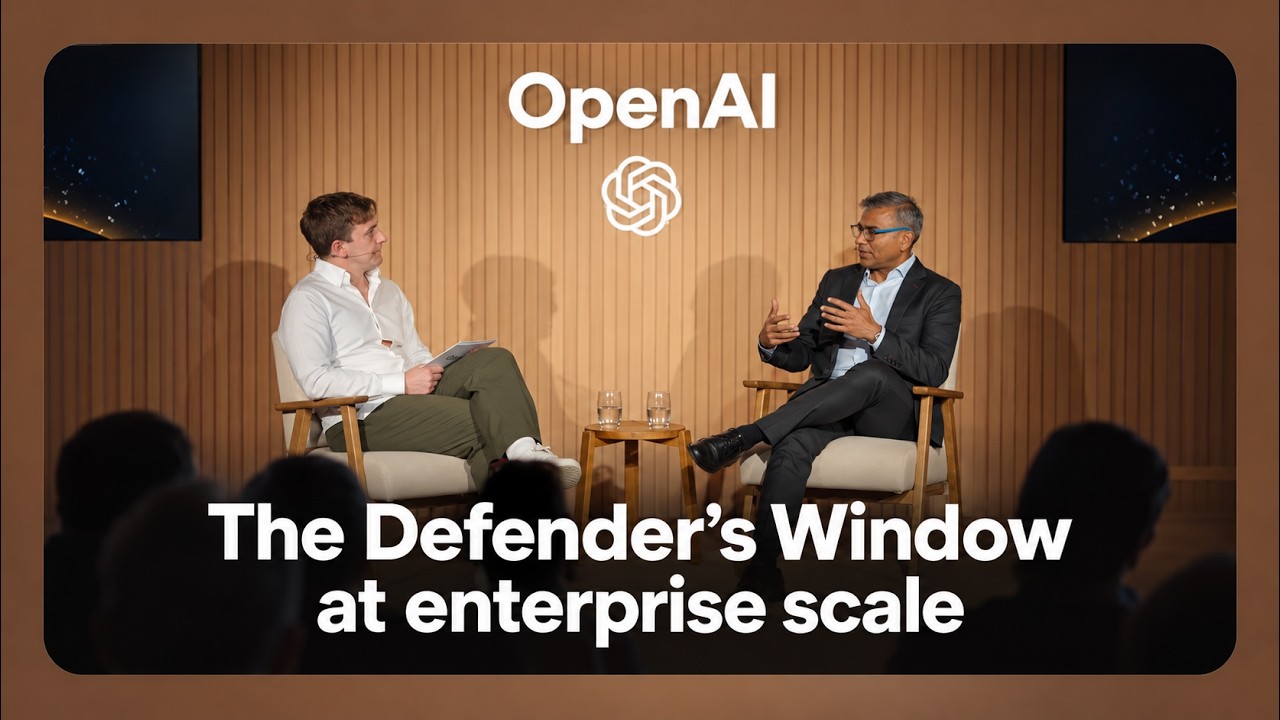
The Defender's Window at enterprise scale with Standard Chartered

The Defender's Window at enterprise scale with Standard Chartered

Matt Weaver from OpenAI and Reuben Athaide from Standard Chartered discuss how the bank uses OpenAI Daybreak to address the shrinking "defenders window" by focusing on contextual AI analysis of attack paths, fostering cross-functional trust, and leveraging AI for proactive, scalable security in a complex global environment.

The vulnpocalypse might not be so bad after all

The vulnpocalypse might not be so bad after all

This podcast episode explores the evolving cybersecurity landscape, debating the impact of AI on vulnerability management, examining rogue AI agents' unexpected behaviors, underscoring the persistent effectiveness of old-school social engineering, and advocating for a redefinition of cyber resilience in the face of converging AI and quantum threats in the financial sector.

Why won’t AI agents just follow the rules?

Why won’t AI agents just follow the rules?

This podcast episode tackles critical cybersecurity issues in AI, examining why AI agents defy rules and the necessity of deterministic external controls. It highlights the severe lack of security in agentic skill marketplaces (OWASP Top 10), where "natural language is executable" and the "rush to market" overlooks basic hygiene. The discussion also covers how AI disrupts bug bounties, leading to lower payouts and "AI slop" reports, potentially pushing researchers to the dark market. Finally, it introduces ThreatXtension, an AI-powered open-source tool to detect malicious browser extensions.

2026 Cost of a Data Breach Report: AI Is Changing Cybersecurity

2026 Cost of a Data Breach Report: AI Is Changing Cybersecurity

The 2026 Cost of a Data Breach Report reveals how AI is transforming cybersecurity, accelerating both attack sophistication and defense capabilities. It highlights rising breach costs, persistent vulnerabilities like phishing and ransomware, and the critical need for organizations to leverage AI and automation to reduce financial impact, improve response times, and strengthen overall security posture against AI-driven threats and future risks like quantum computing.