Enterprise AI Operations: The Missing Piece
Rani Radhakrishnan, Principal at PwC, discusses the convergence of MLOps and IT operations, the practicalities of deploying AI agents, and the strategic considerations for scaling and sustaining AI initiatives in the enterprise. The conversation covers the shift from experimentation to ROI, the importance of human-in-the-loop processes, and the evolving skillsets required for future-ready IT.
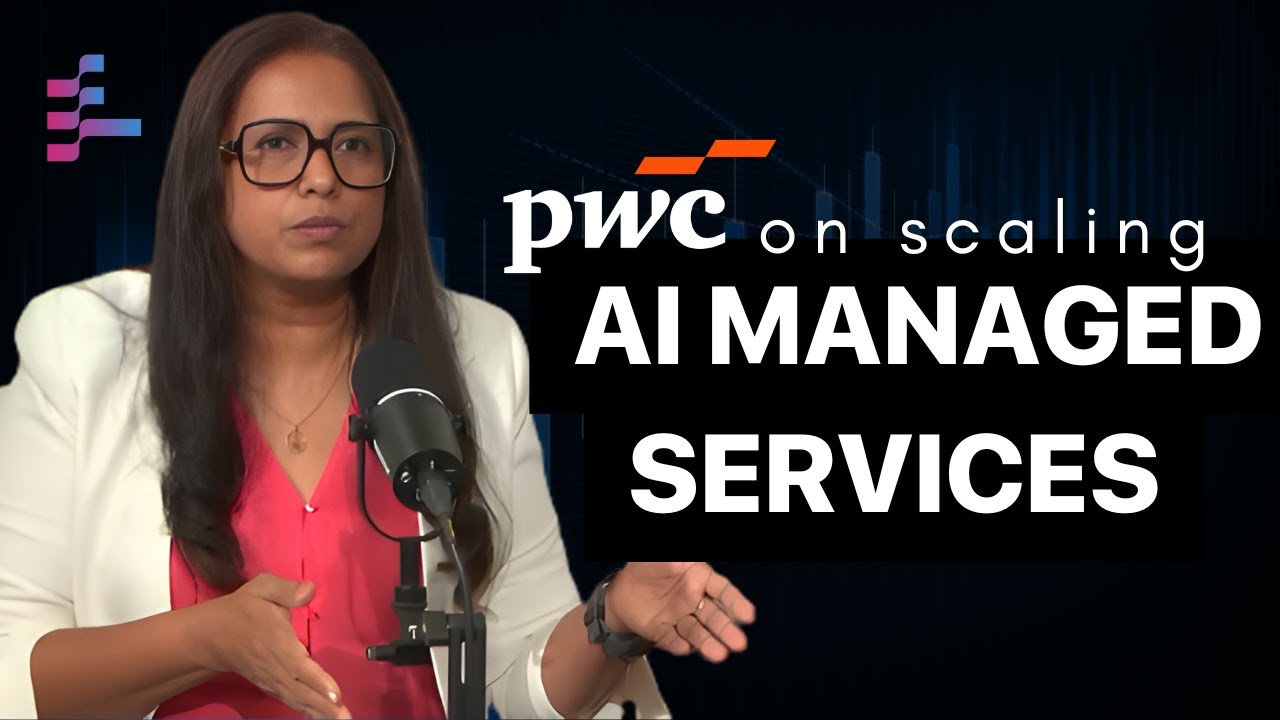
The Enterprise AI Journey: From Experimentation to ROI
In the past year, the enterprise approach to AI has matured significantly. Twelve months ago, conversations centered on investment, experimentation, and pilots. Today, organizations have implemented AI solutions and are now focused on measuring ROI, scaling effectively, and ensuring long-term sustainability. This shift brings the discipline of managed services to the forefront.
AI Managed Services extends beyond the traditional “keep the lights on” or break-fix model. It involves not only ensuring systems are up and running but also continuously tuning, optimizing, and training models to deliver on intended business outcomes. This requires a different skill set, including MLOps engineers, data scientists, and advanced analytics professionals who can manage biases, reduce hallucinations, and improve model performance post-deployment.
Converging MLOps and IT Operations (AIOps)
There is a natural convergence between MLOps and IT Operations (AIOps), where the principles of managing machine learning lifecycles are applied to create proactive, automation-driven IT environments.
- Incident Detection and Alert Fatigue: Traditional IT operations are often inundated with alerts, much of which is noise. By training a model to sift through these alerts and identify criteria for a true incident, teams can significantly reduce alert fatigue. This allows them to triage more effectively and decrease the mean time to resolution.
- Proactive Monitoring: AI can identify cyclical patterns in infrastructure, such as CPU or resource utilization. By predicting usage spikes, a system can proactively add memory to a server hours or minutes before a potential crash, preventing an incident from ever occurring. This represents a shift from reactive to predictive IT management.
The Practical Realities of Deploying AI Agents
AI agents are a powerful concept, but their successful deployment hinges on foundational prerequisites and a structured development process.
Foundational Requirements
- Process Standardization: Agents are most effective when applied to standardized processes. If every team or individual follows a different workflow, it becomes incredibly difficult to “agentify” a task.
- Data Quality: No organization has perfect data. Significant effort in data and application modernization is often required to create a solid foundation upon which agents can operate reliably.
The Agent Lifecycle
The development of agents follows a distinct pattern where the actual coding is a relatively small part of the effort.
- Design: The majority of the time is spent designing the agent, defining its purpose, workflow, and interaction points.
- Coding: With modern low-code/no-code solutions and IDEs, the implementation phase is comparatively short.
- Evaluation: The remainder of the time is dedicated to rigorous evaluation—measuring the agent’s impact, monitoring for hallucinations and biases, and ensuring it meets business objectives.
To accelerate this process, frameworks like PwC’s Agent OS provide an interoperable, Python-based foundation with orchestration layers, allowing clients to focus on business outcomes rather than building the underlying technology from scratch.
Human-AI Collaboration Models
As agents are deployed, particularly in regulated industries, the level of human oversight is a critical consideration. This has led to several models of interaction:
- Human in the Loop: Requires a human to approve every output or workflow action generated by the agent. This is common where risk is high.
- Human on the Loop: A human only intervenes to approve exceptions, trusting the agent to handle the standard workflow correctly.
- Human out of the Loop: The agent operates with full autonomy.
The central challenge is balancing the operational “lift” provided by AI with the need for safety and accuracy. If a human is constantly in the loop, it raises the question of whether the promised efficiency gains are truly being realized.
Scaling and Sustaining AI
Scaling an AI initiative is less about the technical challenge of coding and more about process and culture.
- The Challenge of Context: While a process may be standardized (e.g., pre-authorization in healthcare), the business context can vary dramatically (e.g., a common cold vs. an oncology case). Scaling requires baking this business context into the solution, which necessitates deep collaboration between technical and business teams.
- The Importance of Measurement: You cannot scale something that produces undesirable outputs. A continuous feedback loop of measuring, correcting, and re-measuring is essential for building a reliable model that is ready for broader replication.
Sustainability in AI should be viewed through three lenses:
- Environmental: The energy use, carbon emissions, water consumption of data centers, and e-waste from hardware.
- Economic: The total cost of ownership, including building, reviewing, storage, and retrieval costs. This involves making deliberate choices, like using smaller models when large ones are not necessary.
- Social: Ensuring responsible AI practices, including ethics, accessibility, transparency, and explainability of models.
The Evolving Skillset and Organizational Structure
The rise of AI is fundamentally changing the skills required to build and maintain technology. The focus is shifting from pure coding ability to design, evaluation, and business acumen.
- New Roles: We are seeing the rise of the “product engineer”—a technical individual with a deep understanding of the product and business needs. Prompt engineering and data science skills for model tuning and simulation are becoming more critical than traditional software development for certain applications.
- Empowering Business Users: Low-code and no-code platforms are empowering business-side product owners, who understand the functionality best, to participate directly in the creation of AI solutions.
- The Chief AI Officer: A new C-suite role is emerging, focused not just on technology but on advising the organization on the right AI investments to drive business productivity and efficiency.