Aiops

Why AI Can Write Code But Can’t Keep It Running (Yet)

Why AI Can Write Code But Can’t Keep It Running (Yet)

Grepr CEO Jad Naous talks with a16z's Martin Casado about how coding agents have changed a 10-person engineering team, with projects that once took six months now finishing in about ten days. They examine whether AI can reason about and troubleshoot production distributed systems, why operations is a harder problem than code generation, and where AI adoption is likely to go next.
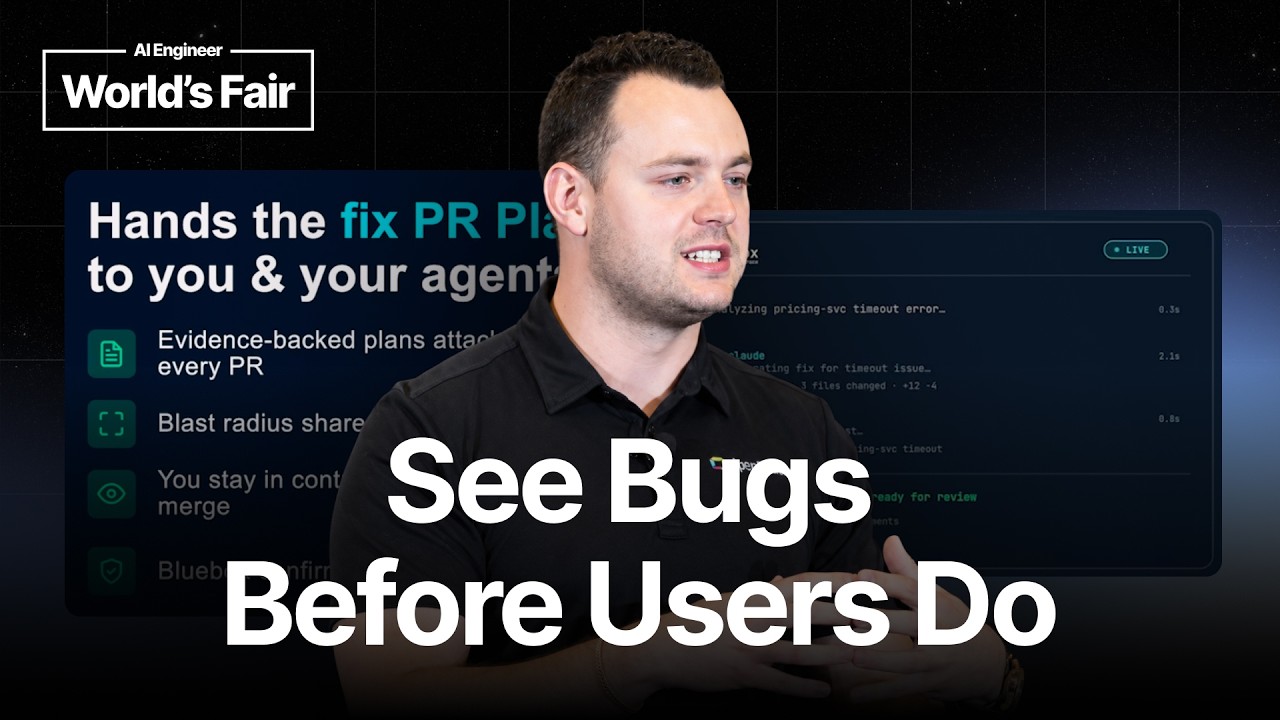
Your AI Agent Has No Nervous System — Matt Gibiec, Dynatrace

Your AI Agent Has No Nervous System — Matt Gibiec, Dynatrace

Matt Gibiec of Dynatrace argues that coding agents are fast but blind without real context about how services run in production, and introduces Bluebox, an observability agent that brings dependency maps, production baselines, and change history into local testing, issue detection, fix suggestions, and pre-build planning, with a human approving the final result.

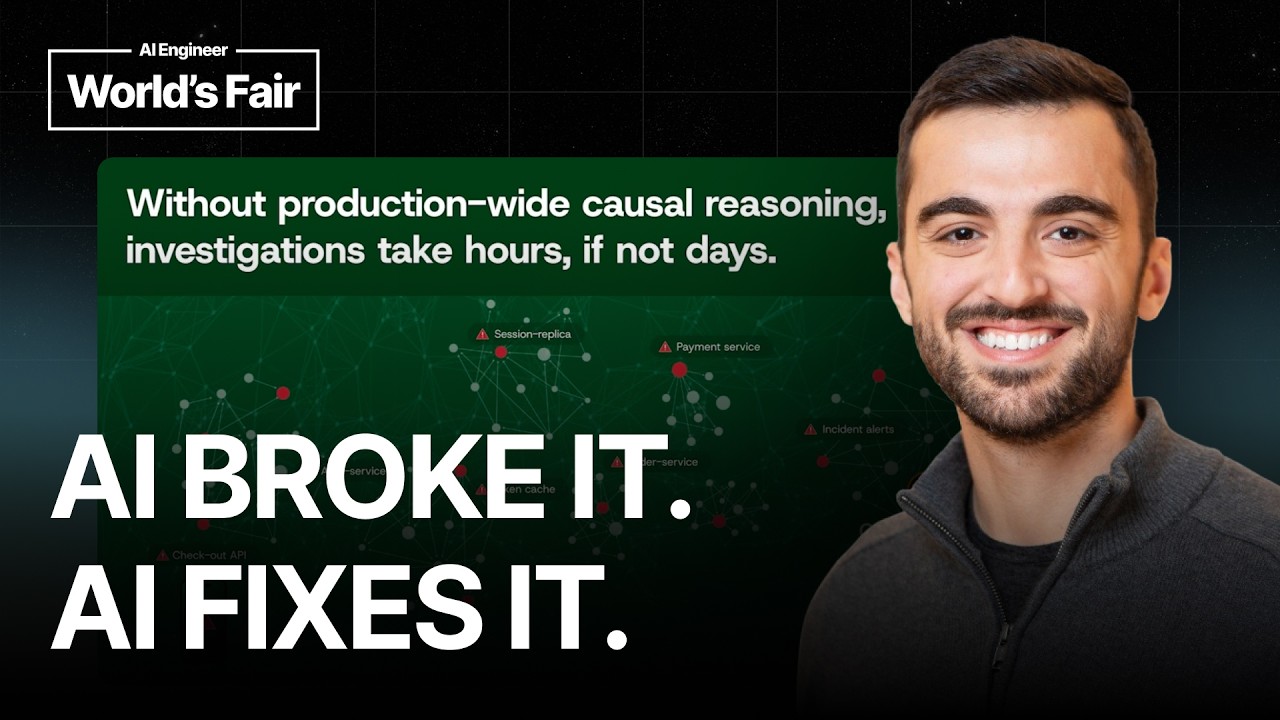
The 5 Levels of Self-Driving Production — Eric Schwartz, Traversal

The 5 Levels of Self-Driving Production — Eric Schwartz, Traversal

Eric Schwartz, a product manager at Traversal, argues that AI-generated code has moved engineering time from building to troubleshooting, and that observability dashboards show what broke but not why. He frames root cause analysis as a causal problem, lays out five levels of self-driving production, walks through alert intelligence at PepsiCo and incident response at American Express, and offers five questions for evaluating an AI SRE.

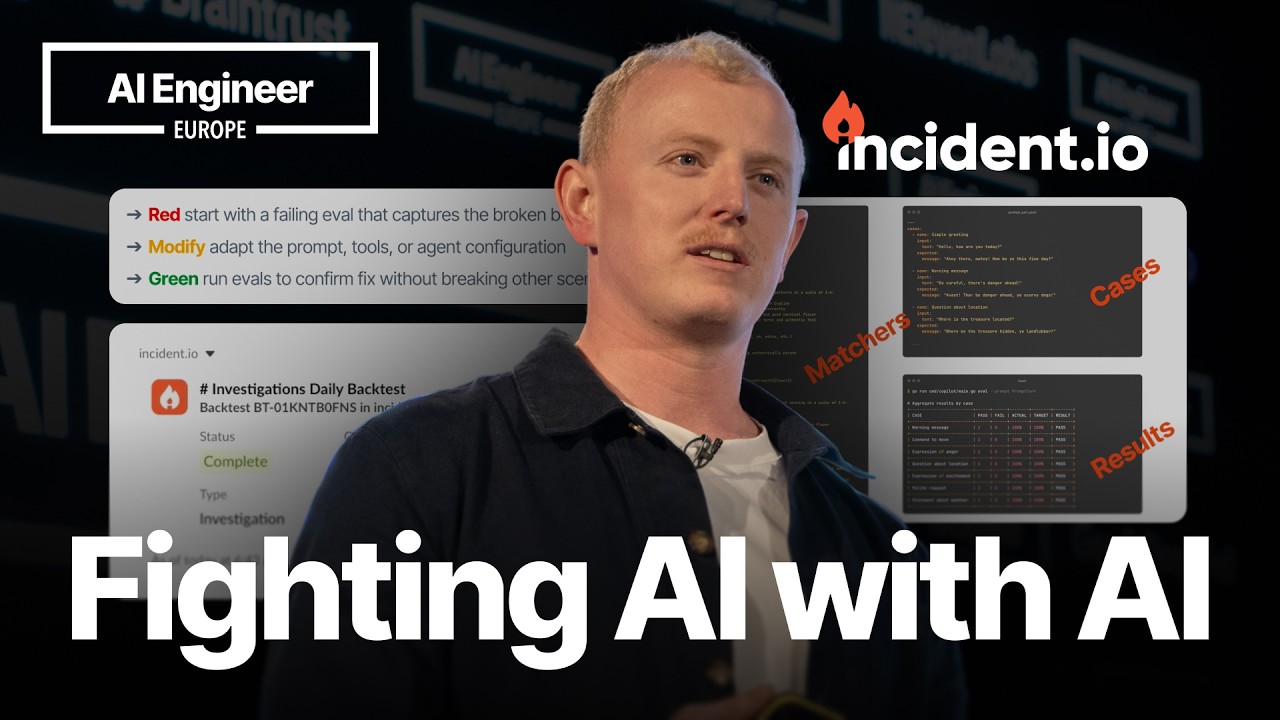
Fighting AI with AI — Lawrence Jones, Incident

Fighting AI with AI — Lawrence Jones, Incident

Lawrence Jones from Incident.io explains why their team needed AI to debug their complex AI SRE product. He details three powerful patterns: a CLI for agents to manage large evaluation files, serializing debug UIs into downloadable file systems for agent-based tracing, and multi-agent pipelines for fleet-scale failure analysis.

Live from Think 2026: AI operating model, VC funding & CAIO evolution

Live from Think 2026: AI operating model, VC funding & CAIO evolution

Live from IBM Think 2026, experts discuss the maturation of enterprise AI, moving from siloed applications to integrated, end-to-end solutions. The panel explores the rising trust in AI for strategic decisions, the evolving role of the Chief AI Officer (CAIO), and the state of AI investment, arguing that the field is broadening to solve specific business problems.

Architecting Self-Healing Enterprise Operations: AI + DevSecOps | Akshay Mittal | SW Engineer | 4K|E

Architecting Self-Healing Enterprise Operations: AI + DevSecOps | Akshay Mittal | SW Engineer | 4K|E

Explore the shift from reactive to predictive DevSecOps with Akshay Mittal. This discussion covers how AI-Augmented DevSecOps and Agentic Workflows are creating self-healing systems, the critical role of Explainable AI (XAI), and a four-layer architecture for building scalable, enterprise-grade AI solutions.