Enterprise AI Adoption Challenges
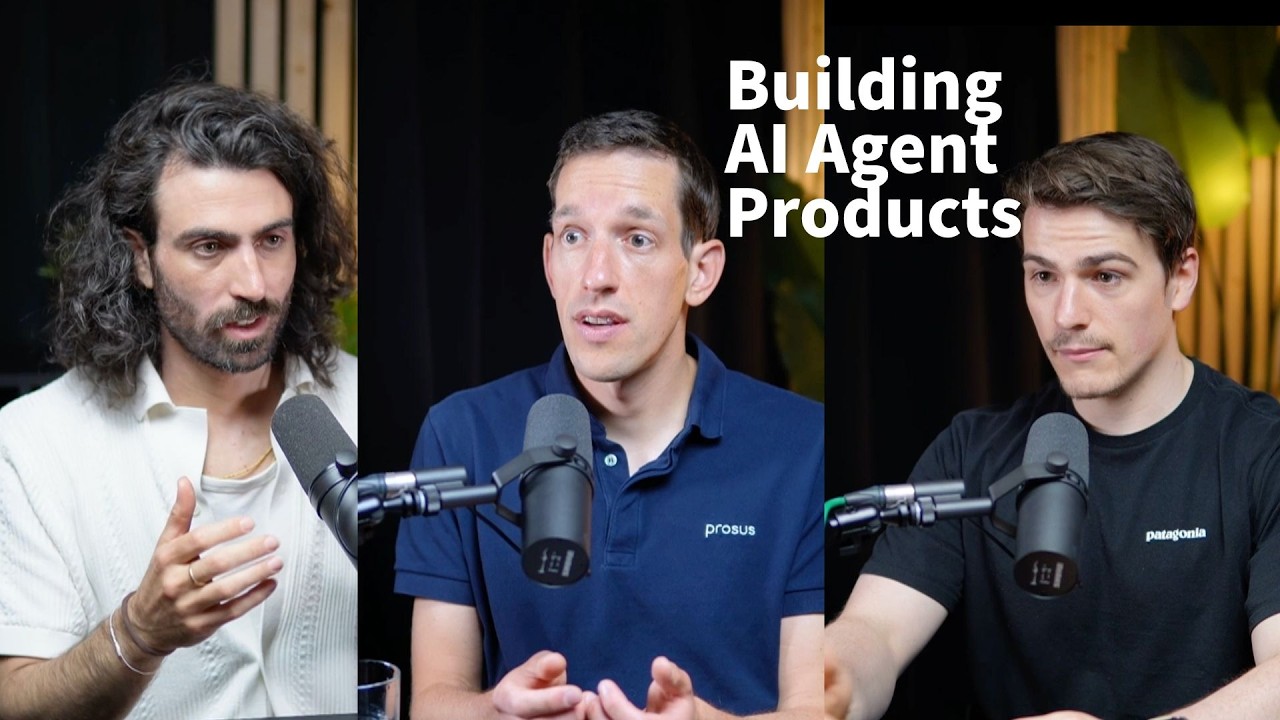
Paul van der Boor and Sean Kenny from Prosus detail the journey of Toqan, an internal AI platform that evolved from a Slack experiment into a sophisticated agentic system. They share insights on driving enterprise adoption, key metrics for measuring productivity, and their future vision of an "AI Workforce" where employees architect AI agents to automate complex, cross-system tasks.
The Genesis of Toqan: From Experiment to Enterprise Platform
At Prosus, a global group of over 100 companies, the central AI team’s mission is to foster AI adoption across the entire portfolio. Recognizing the accelerating trajectory of large language models (LLMs) even before the public launch of ChatGPT, the team initiated an experiment. They made early models available through a Slack application, allowing employees to explore their capabilities. This experiment organically grew into Toqan, which is now a comprehensive productivity platform.
Toqan provides access to a swappable roster of cutting-edge LLMs and generative models through a web interface, Slack, and APIs. It has evolved from a simple chat tool into an agentic system that powers numerous use cases, from employee productivity to core business workflows.
Measuring Success: The Metrics of AI Adoption
Toqan’s success is measured across two primary buckets: workforce productivity and the adoption of the underlying engine for consumer-facing use cases.
1. Workforce Productivity & Adoption
The goal is to get employees to understand the capabilities and limitations of AI by using it. This is more effective than static training courses, given the technology’s rapid evolution. Key metrics include:
- User Reach: The percentage of employees within a company who have tried Toqan, with a target of over 80%. The initial hurdle is simply getting a user to ask a work-related question.
- Frequency of Usage: Tracking the evolution of users from casual (once a month) to “super users.”
- The “Super User” North Star: A “super user” is defined as someone who asks more than five questions a day. This metric, while not as scientifically derived as Facebook’s “seven friends in ten days,” signifies a turning point where using the AI tool becomes a natural, daily habit for an employee. The goal is to grow this user segment, as they push the product’s boundaries and provide invaluable feedback.
- Total Questions Asked: A measure of overall engagement across the group.
2. Business Use Case Adoption
This bucket focuses on integrating the Toqan engine into business workflows via APIs. Success here is measured by:
- API Calls: The volume of calls made to the Toqan engine for non-productivity tasks.
- Number of Use Cases: The quantity of distinct, consumer-facing or internal applications being powered by the platform’s agentic capabilities and LLMs.
Driving Adoption: Overcoming Cultural and Usability Hurdles
Getting employees to adopt AI tools is a significant challenge that goes beyond just providing the technology.
The Cultural Component
Successful adoption is heavily influenced by company culture. Companies that exhibit a top-down willingness to experiment see much faster uptake. Key cultural drivers include:
- Leadership Encouragement: Leaders must go beyond simply stating “AI is important.” They need to provide clear guidelines and policies that create certainty and encourage employees to invest time in learning, even if it initially costs time.
- Overcoming Stigma: There’s often a “stigma” or a feeling of “cheating” associated with using AI-generated content. Creating an open culture where sharing and asking for help is encouraged helps dismantle this barrier. Many users struggle with the same basic issues, and a community of sharing prevents redundant effort.
- Willingness to Redefine Processes: AI doesn’t just plug into existing workflows; it often requires rethinking them entirely. Teams that are nimble and willing to experiment with new ways of working benefit the most.
The Education and Onboarding Strategy
Simply giving users a chat input field that says “Ask me anything” is a recipe for failure. Users don’t know where to start, and a failed first attempt leads to churn. Toqan’s team employed a hands-on approach:
- Active Evangelism: Sean Kenny, in his initial role as an “adoption adviser,” ran live webinars every two weeks, along with hackathons and workshops.
- Guided, Safe Experimentation: The team created dedicated, safe environments for users to experiment. One of the most successful webinars was an accidental live demo where the presenter walked through a use case, verbalizing his thought process. This “live interaction” proved incredibly appealing for user uptake.
- Building on Successes: Onboarding involves giving users a checklist of tasks the tool is known to perform well (e.g., “summarize an article”). This ensures their first interactions are successful, building confidence and preventing them from giving up after a single failed query.
The Future Vision: An “AI Workforce”
The team is moving from the “AI assistant” paradigm to a more ambitious “AI Workforce” concept. The goal is to empower every employee to build their own “AI employees” that can complete specific, recurring tasks.
Jobs-to-be-Done and the Role of the Architect
This vision reframes work from employee roles to “jobs-to-be-done.” Most knowledge work involves creating, transforming, or moving information between systems (e.g., Salesforce, Looker, Google Drive, GitHub). The AI Workforce consists of three core components:
- Systems: The existing software stack where work happens.
- AI Employees (Agents): Agents designed to perform tasks and move information between these systems.
- The Architect: A domain expert who, instead of doing the work, designs the entire workflow. They build, monitor, and refine the system of AI employees, acting as the designer of a business process machine.
This approach is different from workflow automation tools like Zapier. While Zapier connects systems, it is fragile, requires deep technical understanding of APIs, and lacks the “cognitive” aspect to handle ambiguity. An AI agent can interpret intent and manage complex conditional logic that is currently the domain of human employees.
Technical Hurdles and the Path Forward
The journey to the AI Workforce is an iterative process focused on solving fundamental challenges:
- Making it Work: The first step is achieving basic functionality. Can an agent be set up to perform a task reliably? For example, the team built a text-to-SQL agent, first proving its feasibility before figuring out how to let non-expert users configure it.
- Integrations and Context: A major challenge is providing agents with the right context. A Jira agent that works in a clean hackathon environment will fail in a real-world, messy Jira instance. The strategy is not to build verticalized, one-size-fits-all agents. Instead, the platform provides the core integration (the “skill”), and the user (“the architect”) configures it with specific instructions and context for their unique workflow (e.g., “we use Kanban,” “use these ticket labels”).
- Memory and Learning: Agents need a form of memory to be effective. This isn’t just about personalization but about learning the parameters for tool calls to improve consistency. An agent should not have to ask for a manager’s email address every time it’s asked to schedule a meeting.
- The Flaw of Crawling and Indexing: The team has deliberately avoided large-scale crawling of company knowledge bases (like Confluence or Google Drive). The reasoning is that these systems are often messy, and crawling them creates too much noise. Simply replicating a chaotic human process is not the goal. Instead, the “architect” must actively redefine their workflow to be agent-friendly, creating a more structured and efficient process for the AI to execute. The focus is on bottom-up, user-driven agent creation for hyper-specific tasks, where broad company context is often just noise.