OpenAI’s Head of Design: This is the best time in history to be a designer | Ian Silber
Ian Silber, OpenAI's Head of Design, discusses the paradoxical anxiety among designers despite AI's transformative potential. He explains why this is the best time to be a designer, emphasizing curiosity, systems thinking, and the human element in an AI-amplified world. The conversation delves into ChatGPT's evolution as a "super app" and the unique design challenges of building for vastly diverse users.
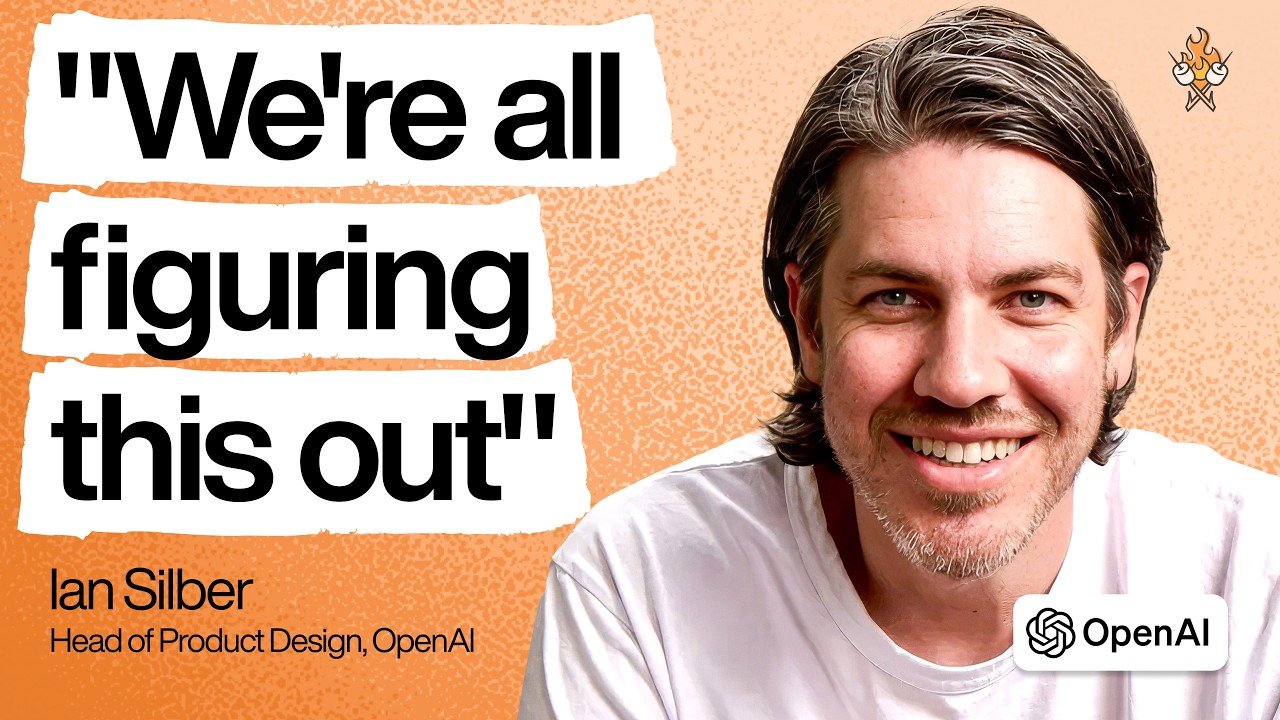
The current sentiment among tech workers reveals a paradox: while engineers experience significant productivity boosts from AI, designers often feel anxious and overwhelmed, ranking as the least optimistic and most worried in recent surveys. Ian Silber, Head of Product Design at OpenAI, acknowledges this unease, attributing it to the uncertainty surrounding the evolving role of designers. He notes that the design process, unlike coding with agents, remains “messy and fluid,” requiring iterative exploration and feedback loops that aren’t yet 10x’d by AI.
Despite this, Silber firmly believes “this is the best time in history to be a designer.” He highlights that the AI era is still in its “early innings,” meaning “nobody should feel behind right now.” The accessibility of AI tools empowers anyone to become a designer, fostering creativity and expression. As AI automates more, the “human element” in design—understanding users, creating delight, and having a distinct point of view—becomes paramount for product differentiation. Designers are increasingly empowered to take early research concepts and develop them into user-centric products.
Silber contends that AI already is an “incredible product designer,” capable of rapidly generating ideas and prototypes. However, human judgment remains irreplaceable in several key areas:
- User Understanding: Deep empathy and observation of human behavior.
- Invention: Creating truly novel interactions and products that AI, trained on existing data, may not conceive.
- Point of View: Infusing products with unique character and a specific vision. These are critical for navigating “uncharted territory,” such as designing for multi-modal AI interactions or agents that carry out complex tasks.
When hiring at OpenAI, Silber seeks a well-rounded team, valuing generalists alongside specialists in visual design, prototyping, and strategic thinking. Key attributes for success in the AI era include:
- High Curiosity: An eagerness to explore and learn how to use and build with AI, even without prior AI experience.
- Prototyping Skills: The ability to quickly visualize and test ideas.
- Strategic Thinking and Point of View: A clear vision for the future of AI products.
- Systems Thinking: Crucial for building composable primitives that can scale across diverse capabilities and create cohesive user experiences, rather than siloed features. This often leads to the counterintuitive advice: “just do less,” by leveraging existing components or questioning the necessity of new features to maintain speed.
OpenAI faces the unique challenge of designing for “vastly different audiences”—from users seeking a recipe to those automating complex farm operations. This creates a “capability overhang,” where most users only tap a fraction of the product’s potential. The strategy involves creating simple, streamlined experiences for the broad user base while making advanced features accessible to power users. The long-term vision for ChatGPT is a “super app” that:
- Becomes more adaptive to context (e.g., calendar, Slack integration).
- Offers proactive assistance.
- Leverages natural voice interaction.
- Transitions from merely answering questions to doing things for users.
- Provides a “one universal input” that simplifies the experience by hiding underlying model complexities.
- Evolves the interface beyond pure chat, adapting to specific tasks with “writing blocks” or specialized tools for image generation, building more durable workflows.
Silber reflects on his own journey, emphasizing the importance of recognizing how early the field is and combating imposter syndrome by connecting with peers. He advocates for humility in the face of rapid technological change, echoing the sentiment that “the model we have today is the worst the model will ever be.” His advice to overwhelmed designers is to embrace exploration, focus on the outcome of great software, and not be precious about current processes, as continuous adaptation is key.
His lightning round insights include recommending “The Design of Everyday Things,” enjoying unique theatrical productions like “Maybe Happy Ending,” appreciating the thoughtful design of products like Rivian and Waymo, and embracing a life “vibe” of flexibility, adaptability, and “having fun with it.” He also shares lessons from Groupon, highlighting the importance of a strong brand character and understanding that every company possesses a unique “DNA” that dictates its working style, requiring designers to adapt rather than impose a single methodology.