NVIDIA NemoClaw, OpenAI’s pivot and Shopify agents
Experts discuss NVIDIA's agentic AI push with NemoClaw, the ethics of the Anthropic Institute, the future of e-commerce with Shopify's AI shoppers, and OpenAI's strategic pivot to enterprise and coding.
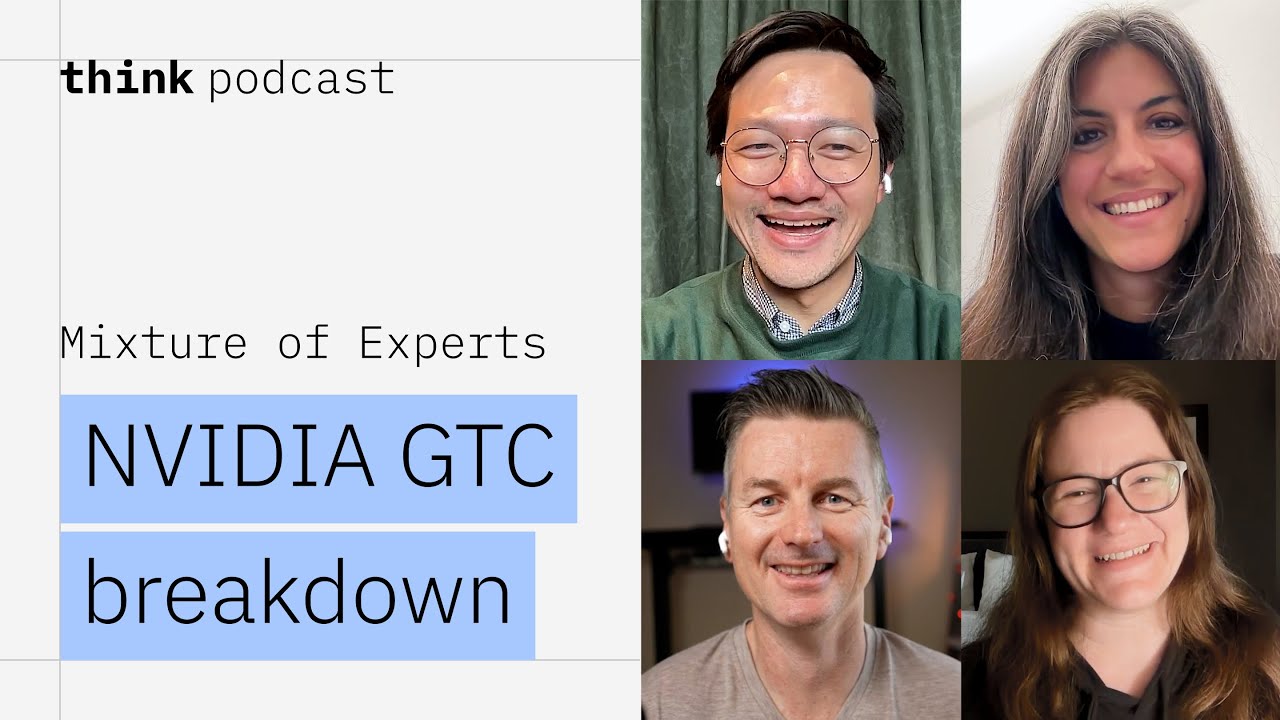
NVIDIA GTC: Agentic AI’s Influence on Hardware and Software
NVIDIA’s GTC conference highlighted a significant strategic focus on agentic AI, signaling that software developments are now directly influencing hardware design. With announcements of potential trillion-dollar orders for its Blackwell and Vera Rubin systems, the company is betting heavily on a future where AI agents drive exponential compute demand. This is based on the new paradigm where a single user request can spawn dozens or even hundreds of sub-agents for tasks like web research, code testing, and synthesis, each running on its own LLM instance.
A key announcement was NemoClaw, NVIDIA’s enterprise-grade AI agent platform built on the open-source OpenClaw. While OpenClaw is noted for its power and rapid growth, it has significant security vulnerabilities. NemoClaw aims to address this by adding security controls and sandboxing, creating an enterprise-safe version. This move is compared to how Linux was hardened for enterprise use through commercial distributions. However, there’s a debate on whether these necessary restrictions—described as a “leash”—might stifle the very independence and broad system access that made OpenClaw so capable. This initiative also marks NVIDIA’s strategic move up the stack from a hardware provider to a key player in the “agentic operating system war.”
The discussion also touched upon the application of LLMs in robotics. The panelists noted the remarkable improvement in robot capabilities, such as the “kung fu robots,” is due to integrating LLMs into their core processing. Instead of relying solely on visual models, robots can now analyze a scene using language, verbally reason, and instruct their own movements with greater precision, representing a fundamental shift in robotic control.
The Anthropic Institute and the Challenge of Self-Auditing
Anthropic announced the formation of the Anthropic Institute, a body intended to study the societal impacts of the AI technology it is building. While the involvement of a co-founder and the inclusion of diverse, non-Anthropic leaders is a positive sign, the move raises a critical question: “Can you be the honest auditor of your own work?”
The panelists expressed a healthy skepticism, drawing parallels to historical instances where industries like tobacco and fossil fuels funded research related to their products, leading to institutional incentives shaping the questions that were asked. At the same time, the institute is seen as an honest admission by Anthropic that they, and the industry at large, don’t fully understand the long-term implications of their creations.
Anthropic’s history of openness in interpretability research, such as the “Golden Gate Claude” experiment, lends some credibility to the effort. The institute’s unique vantage point, with access to internal data on model development and usage, could yield insights unavailable to external researchers. However, for the initiative to be truly effective, it must collaborate with independent research bodies to ensure a complete and unbiased conversation about AI’s role and responsibilities. The very creation of the institute now highlights a concerning reality: the people building the most advanced AI do not know where it is taking society.
Shopify and the Dawn of Agentic E-Commerce
Shopify’s plan to introduce AI-powered personal shopping agents signals a shift in e-commerce, but it’s viewed as a natural evolution of personalization rather than a revolutionary new concept. The key differentiator for Shopify is its distributed nature. Unlike Amazon’s centralized marketplace, a Shopify-powered agent ecosystem could potentially democratize e-commerce by not inherently favoring a single platform’s products.
The rise of shopping agents introduces profound questions for the future of retail and marketing:
- The Future of Branding: Brands rely on storytelling and emotional connection to bypass purely rational decision-making. Agents, optimized for cost, performance, and user history, could neutralize traditional branding, making it difficult for consumers to discover products they “didn’t know they wanted.”
- Advertising to Agents: A new market may emerge focused on “advertising to agents” rather than humans. The goal would shift from persuading a person to persuading the agent shopping on their behalf.
- The Degradation of Information: A significant concern is the “hollowing out” of genuine knowledge resources. Today’s models provide good recommendations because they are trained on vast amounts of human-generated reviews and forum discussions (e.g., Reddit). As AI-generated, ad-driven content pollutes the internet, future agents may lack reliable, unbiased data, leading to a degradation in the quality of their recommendations. The sharp decline in user engagement on Stack Overflow is cited as a parallel in the coding world.
- Storefront Optimization: Web storefronts will likely be redesigned for machine readability, not human experience. This means sacrificing aesthetically pleasing banners and psychological nudges for simple, structured layouts that AI agents can navigate without error.
OpenAI’s Strategic Pivot to Enterprise
A report from the Wall Street Journal suggests OpenAI is shifting its strategy away from a “do everything” consumer-first approach to focus more narrowly on enterprise and coding applications. This move is seen as a recognition that while consumer tools like ChatGPT have immense reach, user engagement is often shallow. Deep integration into daily workflows is happening more rapidly in specialized, high-incentive environments like business and software development.
The panelists debated whether OpenAI is late to this realization. Anthropic has successfully targeted the enterprise market from the outset, building sticky relationships with developers and organizations. Once an enterprise builds internal workflows around a specific coding assistant, the cost and effort of switching can be substantial.
However, others argue that it is “absolutely not too late” for OpenAI. The coding agent market currently lacks a significant moat or network effects. Features are easily replicated across platforms, and the cost of switching for a developer or a team is extremely low. The models are largely interchangeable, with one panelist sharing an anecdote of seamlessly switching from a Claude-based project to OpenAI’s Codex mid-task. To win, a platform will need to introduce true network effects, where having a team on the same platform provides a collaborative advantage that does not yet exist.