AI models can now help run physical science experiments
The Model Hardware Standard (MHS) is a pioneering framework developed by Anthropic and HHMI Janelia to enable AI, specifically Claude, to safely and intelligently operate diverse scientific and manufacturing hardware. By abstracting device-specific communication, MHS dramatically accelerates scientific discovery, from automating complex microscopy tasks and real-time tracking to optimizing high-throughput drug screening, empowering researchers to focus on core scientific questions.
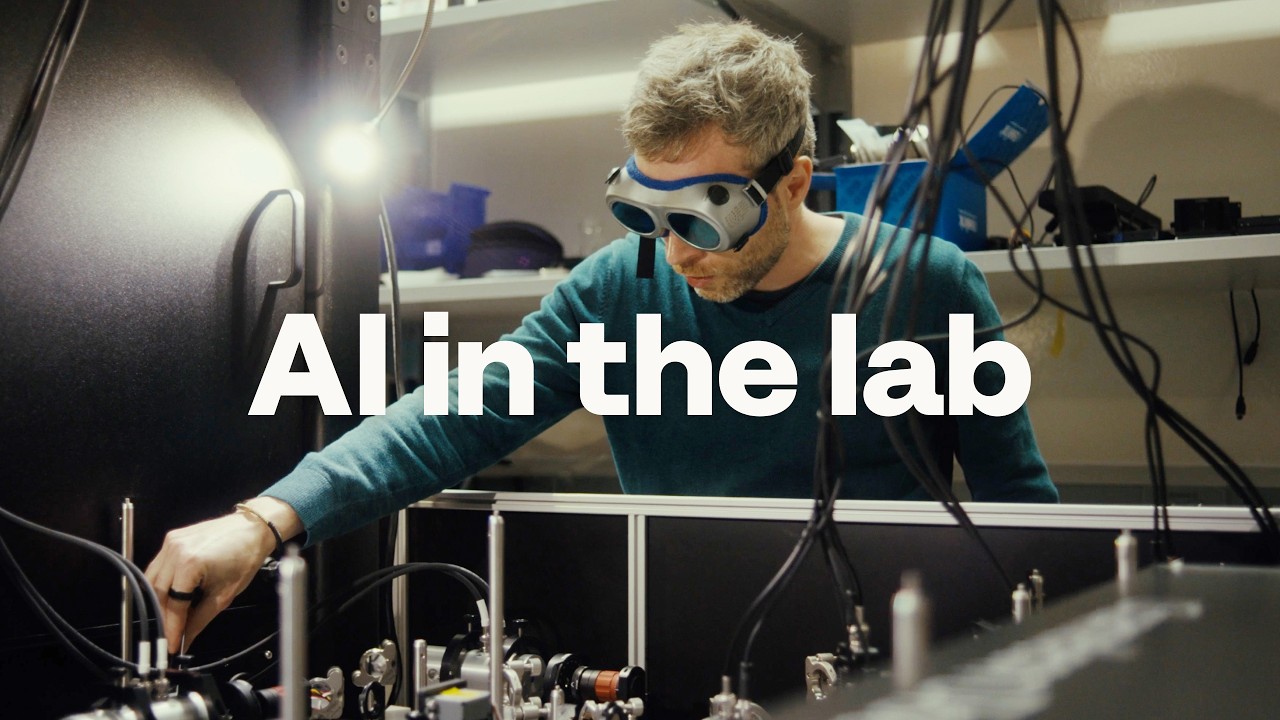
The process of scientific discovery is often bottlenecked by the practicalities of experimental setup and execution. Scientists typically dedicate approximately 80% of their time not to theoretical exploration, but to the intricate tasks of building and debugging physical measurement devices, and integrating disparate hardware and software systems. This necessitates a common language for devices, a challenge that the Model Hardware Standard (MHS) aims to address.
Genesis and Core Concept of MHS
The vision for AI-driven acceleration of scientific experiments, initially perceived as ambitious, gained traction through the work of neuroscientist Arco Bast. Bast’s innovative approach to making custom-built microscopes communicate seamlessly, despite each component speaking a “different language,” provided the foundational insight. This led to a collaboration between Anthropic’s Beneficial Deployments team and HHMI Janelia Research Campus, culminating in the development of MHS. MHS is designed as a generalized framework for AI to interact with and control diverse hardware, thereby overcoming device-specific communication barriers.
Demonstrations and Capabilities
MHS, with Anthropic’s Claude as the AI agent, showcased several critical capabilities:
-
Safe Physical Interaction: During a prototype test with a robotic arm, MHS demonstrated its inherent safety mechanisms. When Claude was prompted to move the arm outside its predefined safe range, MHS actively refused the command, highlighting its ability to prevent potentially damaging or unsafe operations.
-
Autonomous Microscopy Operation: In a significant collaboration with Danaher, Claude was tasked with operating a Leica microscope. Notably, Claude had no prior training or explicit programming for this specific device or application.
- Iterative Learning: Claude approached the task iteratively, making initial “mistakes” and learning from the outcomes.
- Image Acquisition & Analysis: It successfully adjusted microscope settings to acquire a focused image, and remarkably, could interpret the visual data, identifying structures like “lignified cell walls” based on false-colored images. This capability, typically requiring weeks of a scientist’s focused effort, was achieved in a matter of minutes or hours with AI.
- Dynamic Live Sample Tracking: Further illustrating its potential, Claude developed and executed a script to track a highly dynamic, moving algae sample under the microscope. This real-time, adaptive tracking, which can consume hours of manual effort for a researcher, was performed autonomously for several minutes. This demonstrates MHS’s capacity for automating complex, time-sensitive observations.
Impact on Scientific Acceleration
The advent of MHS promises to fundamentally transform scientific research by:
- Reducing Time on Setup: By abstracting hardware control and automating experimental procedures, MHS allows scientists to significantly reduce the time spent on non-scientific tasks. It is posited that a PhD student’s experimental setup phase could be shortened from two years to two months, enabling a greater focus on core biological questions.
- Accelerating Drug Discovery (Genentech Example): In pharmaceutical research, where countless iterations are required to find effective molecules, MHS offers a powerful tool.
- Claude can execute complex sequences of operations, interpret real-time data (e.g., detecting critical issues like bubbles in aspiration wells), and make informed adjustments to experimental parameters in a closed-loop system.
- This iterative optimization process drastically speeds up the “shots on goal” in drug screening, accelerating the discovery of new medicines.
- Enabling New Scientific Frontiers: The ability for AI to safely and intelligently interact with the physical world through MHS opens doors for unprecedented acceleration in fields such as quantum computing, nuclear fusion, and other “big technologies” crucial for future global advancements.
MHS marks a historic milestone in deploying AI to actively engage with the physical world, empowering scientists to pursue previously unattainable insights and fostering a new era of rapid discovery.