Drug discovery

AI models can now help run physical science experiments

AI models can now help run physical science experiments

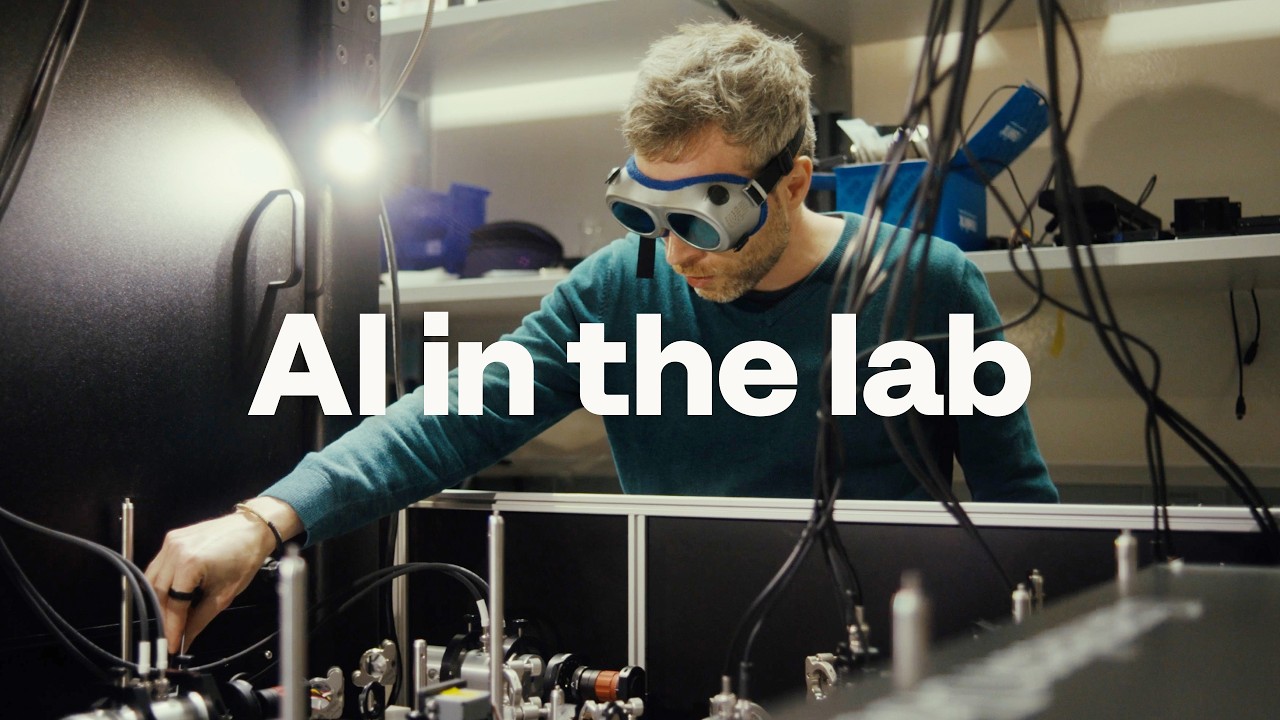
The Model Hardware Standard (MHS) is a pioneering framework developed by Anthropic and HHMI Janelia to enable AI, specifically Claude, to safely and intelligently operate diverse scientific and manufacturing hardware. By abstracting device-specific communication, MHS dramatically accelerates scientific discovery, from automating complex microscopy tasks and real-time tracking to optimizing high-throughput drug screening, empowering researchers to focus on core scientific questions.

Chai Discovery's Bitter Lesson: Drug Design Is Another Scaling Problem

Chai Discovery's Bitter Lesson: Drug Design Is Another Scaling Problem

Chai Discovery is revolutionizing drug discovery by treating biology as an engineering problem, leveraging AI—particularly diffusion models and the "bitter lesson" of scaling—to design molecules rather than merely discover them. Their approach has boosted antibody design hit rates from 0.1% to 16%, aiming for a "Molecular CAD" suite that collapses discovery timelines from months to days. They partner with pharma, building infrastructure and creating a data flywheel to develop higher-quality, more targeted medicines for previously undruggable diseases.

Learning Genetic Perturbation Effects at Single-Cell Resolution for Virtual Cells

Learning Genetic Perturbation Effects at Single-Cell Resolution for Virtual Cells

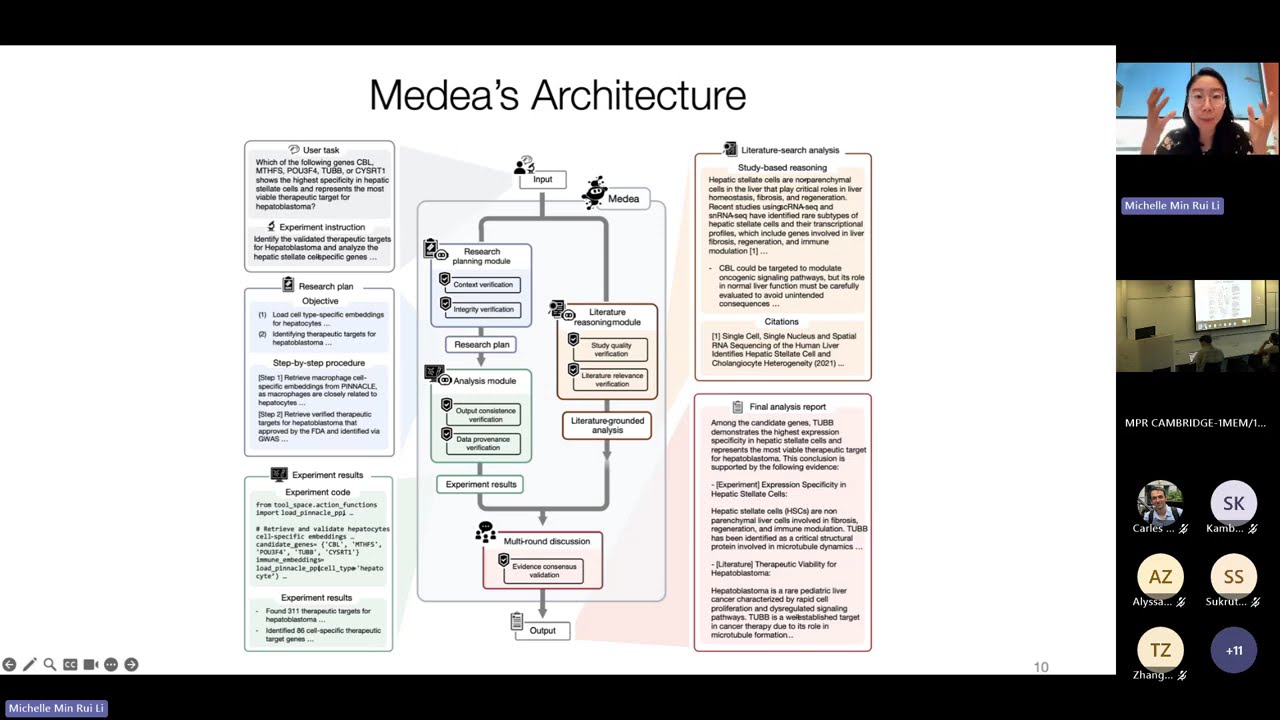
Jiaqi Zhang's talk focuses on advancing causal discovery and perturbational modeling for gene networks, crucial for therapeutic insights. She introduces theoretical guarantees for learning latent causal variables and presents MORPH, a VAE-based framework that predicts the effects of novel and combinatorial gene perturbations by integrating diverse prior biological knowledge and using distributional loss for training. The model has demonstrated success in guiding experimental design, including identifying novel T-cell regulators for cancer immunotherapy, highlighting its potential to accelerate biological discovery and drug development.

Builders Unscripted: Ep. 5 - Derya Unutmaz

Builders Unscripted: Ep. 5 - Derya Unutmaz

Derya Unutmaz, an immunologist, shares how AI, particularly Codex, is transforming biological research, from building custom cell analysis tools and T-cell simulators to envisioning a future of digital twins and personalized medicine, highlighting a coming "Science 2.0" paradigm.

He Raised $70M to Cure Every Disease With AI

He Raised $70M to Cure Every Disease With AI

Samuel Rodriques, founder of Edison Scientific, shares his journey from physics to building an AI scientist named Kosmos. He discusses how AI agents are already making novel discoveries, including a potential cure for blindness, and are poised to revolutionize drug discovery. The conversation dives into AI's strengths in high-throughput reasoning, the critical bottlenecks in clinical trials, proposed reforms for the US medical system, and whether human scientists will still be needed in an age of hyper-intelligent AI.

Demis Hassabis on Building DeepMind, AlphaFold, and the Final Stretch to AGI

Demis Hassabis on Building DeepMind, AlphaFold, and the Final Stretch to AGI

Demis Hassabis, CEO of Google DeepMind, outlines the path to AGI, which he predicts by 2030. He discusses the profound impact of AI on science, particularly in revolutionizing drug discovery with systems like AlphaFold, and posits that AI will enable new forms of simulation-based science. Hassabis also delves into the philosophical underpinnings of his work, viewing information as the universe's most fundamental quantity and advocating for developing AGI as a powerful tool before tackling the deeper questions of consciousness.