Michael Kratsios: Inside the White House's AI Strategy
Michael Kratsios, from Scale AI and the White House, discusses US AI policy, advocating for open-source AI, flexible regulation, and supporting startups against incumbent moats. He outlines the White House's vision for AI-driven scientific discovery and the future focus on Quantum Information Science, while urging Congress to legislate on preemption and IP. He concludes with a call for technologists to engage in public service.
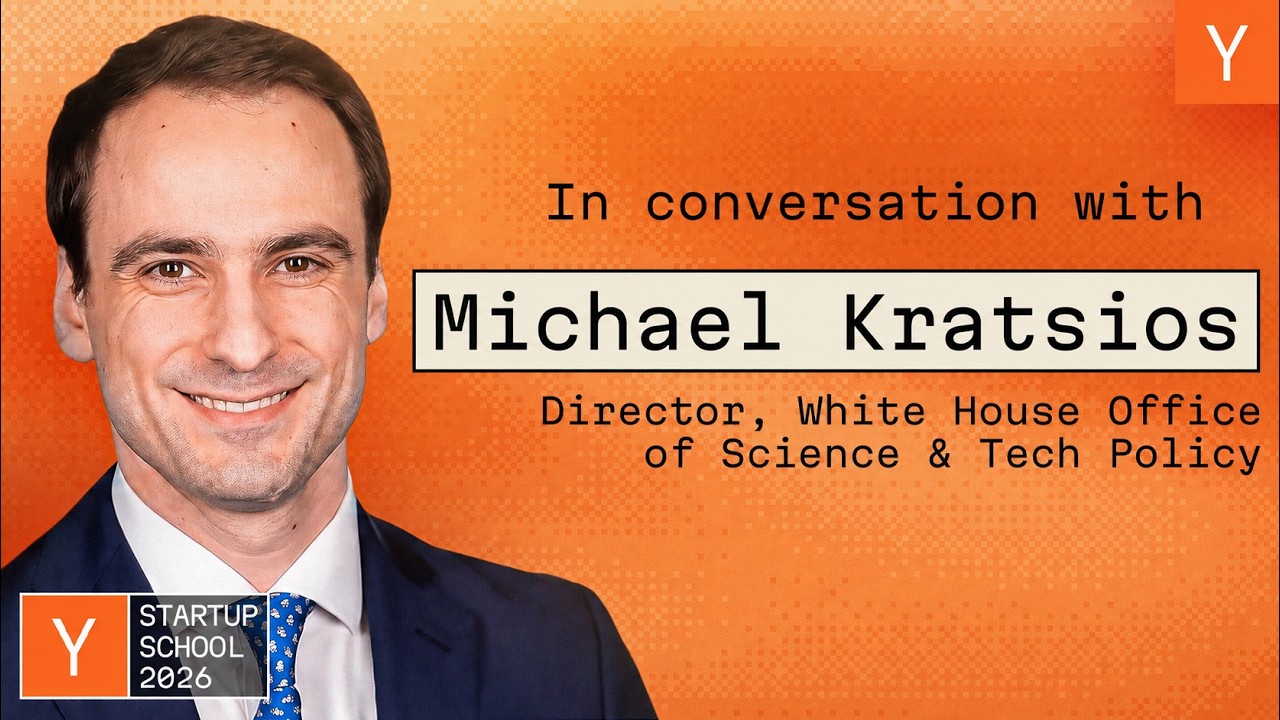
Michael Kratsios, leveraging his experience from Scale AI and the White House, offers a unique perspective on US AI policy, driven by a deep belief in American leadership in emerging technologies and the impact of public service.
The Landscape of US Tech Policy
US technology policy-making is highly decentralized, lacking a single federal agency for technology. Instead, issues are spread across various departments (e.g., national security, commerce, health, science). The White House, particularly the Office of Science and Technology Policy (OSTP), plays a crucial coordinating role, bringing diverse agencies and stakeholders together to formulate cohesive policy.
White House Stance on Open-Source AI
Contrary to recent speculation, the White House strongly supports open-source AI. Kratsios emphasizes that this commitment is a cornerstone of the US strategy for artificial intelligence, advocating for a vibrant ecosystem that includes both closed and open-source models as essential for American leadership. He views public engagement and feedback from the tech community as vital for sound policy development.
Regulating Rapidly Evolving Technology
Washington’s understanding of AI is broad, encompassing implications for labor, data center infrastructure, healthcare, and national security, leading to complex policy considerations. Regulating a technology that evolves every six months necessitates flexible approaches. Kratsios criticizes rigid regulatory “red lines,” citing the EU AI Act (drafted before ChatGPT) as an example of how quickly static rules can become obsolete. The US strategy aims to avoid firm, unchanging thresholds that might stifle innovation.
Addressing AI Risks
Kratsios identifies two main AI risks:
- Cyber Risk: Models with potentially nefarious capabilities can also be instrumental in hardening existing systems. This duality presents inherent challenges in their development and deployment.
- Biological Risk: While perceived as “overblown” in the past, the potential for AI in biological applications demands robust testing and evaluation infrastructure as these models advance.
Championing “Little Tech” and Avoiding Incumbent Moats
A key objective for the administration is to prevent technology policy from inadvertently benefiting large incumbent tech companies and creating market “moats.” Kratsios advocates for “little tech” (startups) to have a strong voice in policy discussions. The administration promotes a single national standard for AI regulation to eliminate a detrimental patchwork of state-level rules, which disproportionately burdens smaller companies unable to absorb varied compliance costs like larger firms. This commitment aligns with ongoing antitrust efforts against major tech companies.
“Born Free” vs. “Born in Captivity” Technologies
Kratsios categorizes technologies based on their regulatory state:
- Born Free: Technologies initially free from regulation (e.g., the early internet). The government’s role is to preserve this freedom, exercising caution when considering new rules.
- Born in Captivity: Technologies requiring government approval for commercialization (e.g., commercial drones, supersonic flight). For these, the focus is on removing regulatory barriers to unlock innovation.
The White House OSTP and “A New Golden Age of American Science”
As Director of OSTP and Special Advisor to the President, Kratsios oversees one of four primary policy councils. His team coordinates science and technology policy across federal agencies on diverse topics from AI and quantum computing to biotech and space. The recent report, “A New Golden Age of American Science,” updates the 1945 Bush report, acknowledging the shift in R&D funding from federal dominance to private and philanthropic leadership.
A central theme of this report is the transformative role of Artificial Intelligence in scientific discovery. Kratsios envisions autonomous cloud labs where AI agents design, execute, and analyze experiments in a continuous loop, accelerating breakthroughs across scientific domains. The government’s task is to “shape the arena, not direct discovery,” by developing the necessary infrastructure, such as robotics and software ecosystems, for autonomous experimentation.
Future Focus: Quantum Information Science
Beyond AI, Kratsios predicts a growing Washington focus on Quantum Information Science (QIS). He draws parallels to the early prioritization of AI, expecting QIS to be a major area of investment. The administration is advancing QIS through executive orders, setting ambitious goals like the development of a scientifically relevant quantum computer by 2028.
Congressional Role in AI Policy
While executive orders are used for AI policy, Kratsios urges Congress to enact stable legislation. Laws provide long-term clarity, unlike executive orders which can be reversed by future administrations. Key areas for congressional action include:
- Preemption: Establishing a national AI standard to prevent a confusing and burdensome array of state regulations.
- Intellectual Property (IP) and Name, Image, and Likeness (NIL): Addressing creators’ concerns about AI’s impact on their work. Kratsios suggests clarifying statutory protections against AI models outputting copyrighted content while allowing market-driven solutions for revenue-sharing in other areas.
A Call to Public Service
Kratsios, one of the youngest to hold his position, encourages technologists to consider public service. Despite potential bureaucratic hurdles, he highlights the unparalleled opportunity government offers for impactful work, enabling innovation, supporting startups, and ultimately serving fellow Americans.