Re-engineering the Semiconductor Supply Chain with Intel CEO Lip Bu Tan
Intel CEO Lip Bu Tan shares his strategic vision for turning around the tech giant, focusing on cultural transformation, strengthening the balance sheet with key investments (including the US government and Nvidia), and driving innovation in foundry, advanced packaging, and new materials. He discusses collaborations like Terafab with Elon Musk, the profound impact of AI on the semiconductor supply chain, and his investment philosophy for the evolving industry, aiming to position Intel for agentic and physical AI at the edge and client, not just centralized compute.
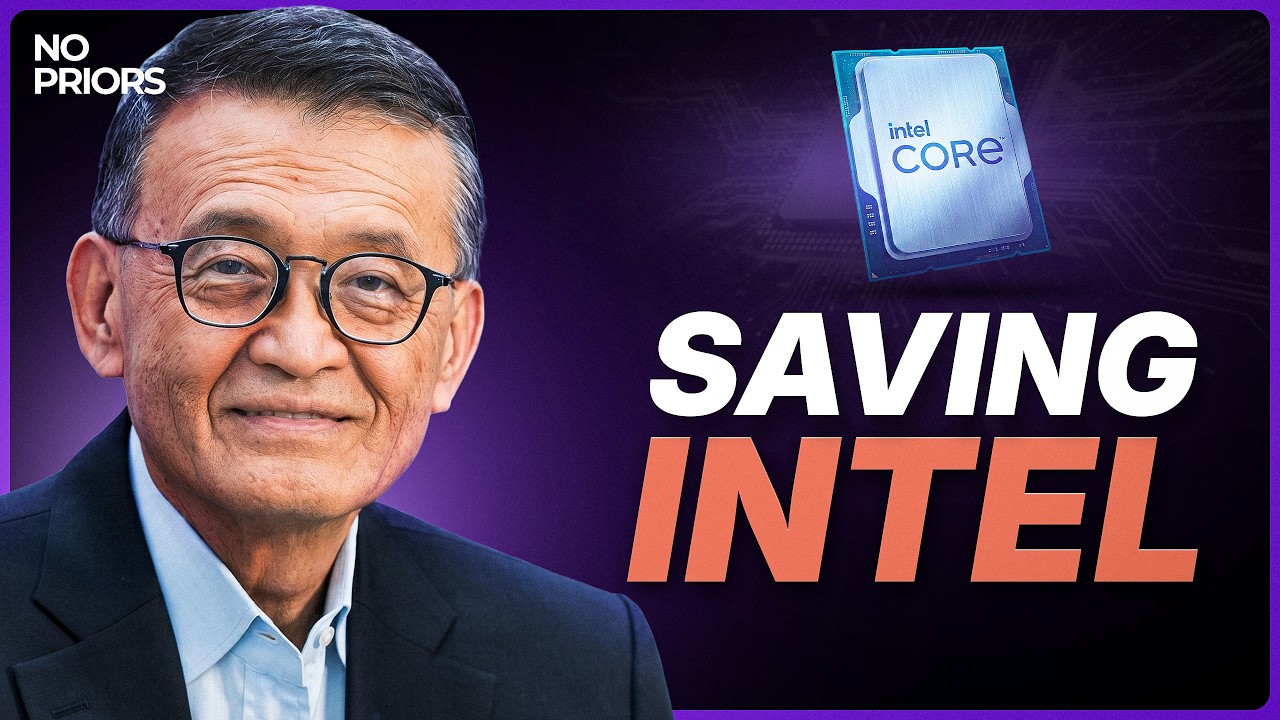
Lip Bu Tan, at 66, took on the role of Intel CEO, describing it as “the hardest job in the industry,” driven by the iconic status of the company and its importance to the semiconductor ecosystem and the United States. His initial focus for Intel’s transformation was on cultural change, emphasizing faster decision-making, increased accountability, and a deep commitment to customer satisfaction. Coming from a startup background, he aimed to dismantle bureaucracy and personally oversaw engineering, seeking to understand and correct issues while simplifying product lines and establishing a clear 5-10 year roadmap.
Intel’s Vision and Financial Strategy
Tan outlined a step-by-step cultural approach: “crawl, then be humble, listen to customer… secondly deciding to walk and then finally deciding to run in spring.” A critical first step was strengthening Intel’s balance sheet, which he acknowledged was in a “horrible” state. This involved securing significant investments: the U.S. government became a major shareholder, his long-time friend Jensen Huang (Nvidia CEO) invested $5 billion (now valued at $25 billion), and SoftBank also contributed. He strategically simplified Intel’s product portfolio to focus on next-generation leadership products, benefiting from the high demand for agentic AI and inference CPUs, noting their crucial role in reinforcement learning and orchestrating AI agents.
Foundry Business and Full-Stack Approach
Intel is also heavily investing in its foundry business, recognizing it as capital-intensive and demanding. Success hinges on a comprehensive IP portfolio (e.g., low-power IPs for mobile), a service-oriented approach, and building trust. Key metrics include yield, defect density, and cycle time. Tan’s vision extends to a full-stack solution, encompassing not just silicon but also software and complete system racks. He personally leads recruitment, leveraging his extensive network to bring in top talent.
Collaboration with Elon Musk on Terafab
Tan discussed Intel’s collaboration with Elon Musk on “Terafab,” an initiative born from a shared belief that current semiconductor infrastructure lags behind AI growth in terms of capacity, productivity, and efficiency. Musk, known for his unconventional approach, is building his own fab, with Intel assisting to accelerate production through its technology and processes. Tan appreciated Musk’s willingness to question traditional methods, even humorously noting Musk’s desire for an open-minded approach to cleanroom environments.
AI’s Impact on the Global Supply Chain
Tan views AI’s impact as “more profound” and significant than the internet, driving efficiency across industries, including semiconductor design. He identified several bottlenecks for AI’s growth: power constraints, helium supply, and a severe memory shortage, with CPU/GPU demand remaining high. He stressed that companies not embracing AI risk being left behind, as AI can optimize various enterprise functions, from prediction to design. The shift towards domestic manufacturing in the U.S. is crucial for a “robust and resilient supply chain,” especially for advanced processes like 1.4nm (14A) and future 1nm/0.7nm nodes, which require extreme precision. Intel sees itself complementing TSMC’s capacity.
Physical Limits, Advanced Packaging, and New Materials
Regarding the physical limits of miniaturization, Tan believes Intel can reach 10nm and 7nm nodes, but at increasing cost and difficulty, necessitating strong partnerships with vendors. He highlighted advanced packaging (e.g., Intel’s ’e-ip’ and the industry’s ‘co-ware’) as a growing bottleneck and a key area of investment. Beyond traditional silicon, Intel is exploring new materials like gallium nitride, silicon carbide, indium phosphide, and even artificial diamond for improved insulation, alongside glass for packaging.
Semiconductor Investing Philosophy
Drawing from his extensive venture capital experience (159 IPOs, 126 M&As), Tan outlined his semiconductor investment framework: identifying bottlenecks (interconnect, optical, power/thermal management), seeking AI/ML-driven design solutions, and exploring new materials. He targets hyper-scale initial customers who are willing to pay for early solutions and emphasizes the importance of resilient, innovative talent, particularly in Silicon Valley, Austin, and Israel. He also noted the recent resurgence of interest in semiconductor investing, a stark contrast to 18 years ago when VCs shied away.
Reshaping Intel and Future Compute
Tan highlighted the radical transformation within Intel, moving from a “legacy spreadsheet company” to an AI-enabled organization. He sees a shift in team structures, blending experienced professionals with younger talent familiar with frontier models and open-source technologies. For future winning companies, he foresees a focus on niche areas, strong partnerships, scalability, and full-stack solutions, citing Nvidia’s platform approach and the disruptive nature of startups like Anthropic and OpenAI. Intel aims to leverage its XPU, advanced packaging, and foundry capabilities to build purpose-built silicon for diverse workloads.
Regarding investor misunderstandings, Tan believes many underestimate Intel’s long-term potential in product (PC, edge, agentic/physical AI) and foundry. He envisions Intel playing a significant role in serving the “millions of agents” needing compute beyond human-facing applications. His goal for Intel is a 10x return, similar to his past success at Cadence.
He addressed the debate on compute location, acknowledging the massive build-up of centralized AI infrastructure but emphasizing the importance of application-driven deployment. He believes that specific applications, especially in areas like robotics and defense, will be better served by client or edge compute, rather than solely by large data centers. His investment thesis remains: find real problems to solve, identify strong partners, and bet on sustainable, high-impact applications, even those not yet broadly deployed.