Why Good Companies Go Bad (And How to Stop It)
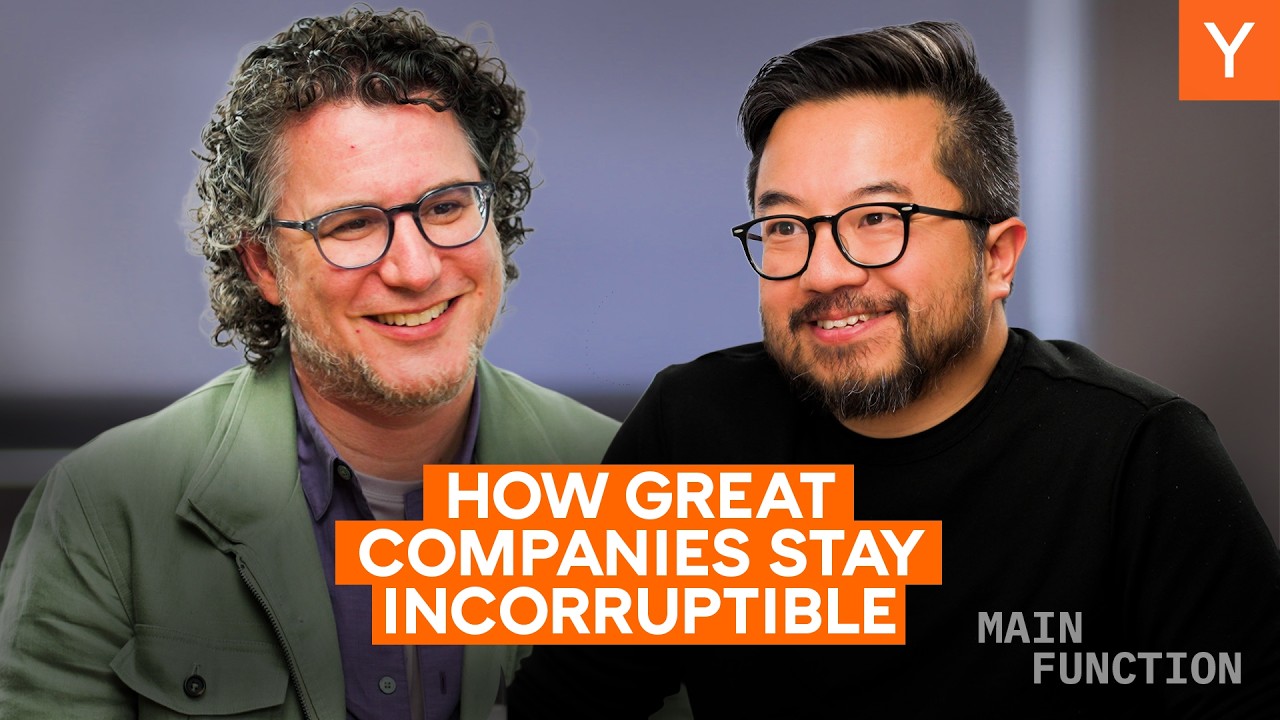
Eric Ries, author of "The Lean Startup", discusses his new book, "Incorruptible". He argues that the modern doctrine of shareholder primacy is a value-destroying trap for founders and explains the legal and governance structures—from Public Benefit Corporations to industrial foundations—that can be used to build mission-controlled companies designed to last for generations, using historical examples like Costco and modern case studies like Anthropic.
The fundamental intuition for any builder is that the best way to make money is to create more value than you capture. Yet, the modern business ecosystem has embraced a “normative consensus” that all money-making is equal, leading to extractive, value-destroying behaviors. This consensus, known as shareholder primacy, is the root cause of why so many great companies lose their way and why founders are often forced out of the very companies they built.
Success doesn’t protect you; it makes you a more valuable target. The traditional advice to founders is to focus on product-market fit, with the assumption that success will grant them freedom and power. The reality is the opposite: the more successful and valuable your organization becomes, the more incentive outsiders have to take it over and corrupt its original mission for short-term financial gain.
The Tyranny of Shareholder Primacy
Shareholder primacy is the doctrine that a corporation’s sole purpose is to maximize financial returns for its shareholders. This is not a foundational law of capitalism, but a relatively new idea that gained prominence in the 1970s and 80s through the arguments of academics like Milton Friedman. It was never passed into law via legislative action or referendum, yet it is enforced by courts as if it were.
This principle forces a company to become a mere financial instrument. Any core value—product quality, customer health, design excellence—becomes expendable on the altar of shareholder value. This leads to an economy of “temporary organizations being led by temporary managers on behalf of temporary investors,” which erodes trust and long-term value creation.
A stark, recent example is Jeff Lawson at Twilio. After building the company to billions in revenue and a 390% stock increase since its IPO, his super-voting shares sunsetted as planned after seven years. Within 199 days, he was forced out by activist investors representing less than half a percent of shareholders, who pointed to a stock price drop from its pandemic-era peak, despite the business fundamentals remaining strong. This demonstrates how little grace even a massively successful founding CEO is given under the shareholder primacy regime.
A Tale of Two Retailers: The Legend of Sol Price
The story of Sol Price provides a powerful historical A/B test on corporate purpose.
- FedMart: Price founded FedMart in the 1950s with a clear hierarchy: customers first, employees second, shareholders third. He saw himself as a fiduciary to his customer, famously posting signs in his own store directing customers to competitors if they offered a lower price. This built immense trust and success. After going public, he constantly battled investors who wanted higher prices and lower wages. He was eventually locked out of his own office in 1975. The new management implemented “best practices,” and FedMart was bankrupt within seven years.
- Costco: After being fired, Price immediately started a new company, Price Club, on the same principles. An employee who quit FedMart in protest also started a similar company. The two later merged to form Costco. Today, Costco still embodies the “fiduciary to the customer” ethos and is protected by a “governance fortress” that allows its board to prioritize the company’s mission over short-term returns. It consistently receives poor ratings from governance firms for not following “best practices,” yet has been one of the greatest performing stocks of all time.
When someone urges you to adopt a “best practice,” remember it’s likely a “Kroger practice,” not a “Costco practice.”
Building the Mission-Controlled Company
The solution is not just founder control, which is fragile and subject to the founder’s mortality, but creating mission-controlled companies where the mission itself has sovereignty. This is achieved through the formula: Ethos + Integrity = Incorruptible. You need a core principle (Ethos) and the structural ability to defend it (Integrity).
Here are key tools to build this structural integrity:
-
Become a Public Benefit Corporation (PBC): This is the easiest and most crucial first step. A PBC is a legal structure that restores the historical concept of “purposeful incorporation.” Instead of a charter that allows for “any legal act or activity” (which courts interpret as shareholder primacy), a PBC charter explicitly states a public benefit mission. This gives the board a legal shield to defend decisions that prioritize the mission over short-term profit, making it harder for shareholders to sue and force a sale or change in strategy.
-
Rethink the Board: The idea that “independent directors” ensure good governance is flawed. Independent directors often have a financial incentive to be seen as pro-investor to get their next board seat. A classic Silicon Valley board of two founders, two VCs, and one “independent” director is effectively investor-controlled. Instead, you must create selection bias and recruit board members who are aligned with the company’s long-term mission.
-
The Industrial Foundation Model (Novo Nordisk): A powerful structure involves creating two entities: a for-profit company managed by a board of directors and a non-profit foundation run by trustees whose fiduciary duty is to the mission. The foundation often holds a controlling stake in the for-profit company.
- This model was used by the predecessor to Novo Nordisk in the 1920s to ensure their life-saving insulin would be sold at a fair price. In the 2000s, the for-profit board arranged a lucrative merger, but the foundation’s trustees vetoed it, stating it was not necessary for the company’s survival.
- This single act saved an R&D program that was 11 years into developing GLP-1 drugs. That program, which would have been canceled post-merger, eventually led to drugs like Ozempic and Wegovy, making Novo Nordisk for a time more valuable than the GDP of Denmark.
- Data shows that companies with this industrial foundation structure are six times more likely to survive to year 50.
Modern Application: The Anthropic Governance Story
The principles of mission-controlled governance are critically relevant in the field of AI, where the stakes are incredibly high. Anthropic is a prime example of a company built with structural integrity from the start.
Their success in attracting top talent and maintaining sharp focus is not just due to technical superiority but to their governance. People want to work for “the good guys,” and Anthropic’s structure backs this up. They established a Long-Term Benefit Trust, a form of perpetual purpose trust, with outside trustees who have the power to appoint directors to the for-profit board.
This “governance fortress” gives them the structural strength to stand up for their mission of AI safety, even against immense commercial pressure. It allows them to make decisions consistent with their values, which in turn builds trust and creates a powerful competitive advantage in the war for talent.