Ideas: Steering AI toward the work future we want
Microsoft researchers unpack the New Future of Work Report 2025, exploring AI's real-world impact. They discuss adoption trends, the shift in job tasks, and the crucial distinction between viewing AI as a simple tool versus a collaborator. The conversation emphasizes moving beyond pure efficiency to consciously design a future where AI supports human flourishing and meaningful work.
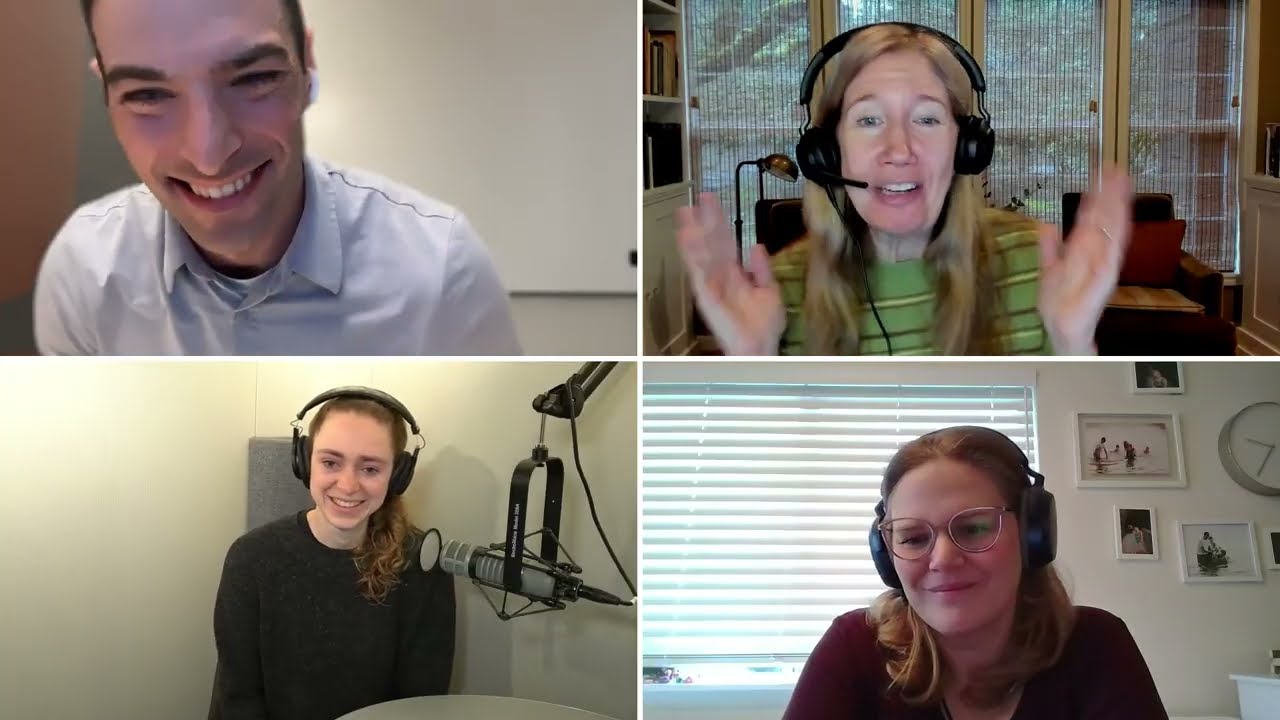
Microsoft researchers Jaime Teevan, Jenna Butler, Jake Hofman, and Rebecca Janssen discuss the 2025 New Future of Work Report, framing the current era not as a series of yearly generational shifts, but as one large, continuous transformation in how digital technology supports work.
The New Future of Work Report
The report is a collaborative, multidisciplinary effort involving over 50 authors from around the world. It aims to synthesize global research on the changing landscape of work, making it accessible to a broad audience. The goal is to provide agency to people by informing them about the latest research and how their own behaviors and views are shaping technology. The researchers emphasize that the future of work is not predetermined but is being actively built by users and creators.
AI Adoption and Usage
Research shows that AI adoption is increasing but remains heterogeneous across industries, demographics, and use cases.
- Adoption Rates: A German survey found that 38% of respondents use AI for work, with higher adoption in IT and procurement compared to marketing or operations.
- Usage Patterns: Key user intents include information retrieval, communication, and writing-related tasks. In education, adoption is remarkably high, with 80% of K-12 teachers and 90% of students reporting use of generative AI for schoolwork, mostly using generic, off-the-shelf tools.
- Bottom-Up Innovation: Much of the adoption and innovation is happening from the ground up. Individuals are experimenting, discovering novel use cases, and sharing them with colleagues, which significantly influences how AI spreads through an organization.
The Impact of AI on Work
The report explores the nuanced effects of AI on productivity, tasks, and the labor market.
- Task-Level Shifts: AI is changing the composition of jobs rather than eliminating them entirely. For instance, software engineers spend more time on complex, interesting problems and less on boilerplate code. This, however, can lead to cognitive overload and burnout, as the “easy” work that provides mental breaks disappears.
- Productivity and Overreliance: While studies show AI can make individuals faster and improve the quality of their output, there is a risk of overreliance. The effects are not always straightforward; a key misconception is that more AI use automatically equals more productivity.
- Labor Market Effects: At a macroeconomic level, the report notes that the impact of AI on employment rates is still modest. However, there are early indications that early-career workers might be more affected, as AI can perform many of their entry-level tasks.
AI Metaphors: Tool vs. Collaborator
The way users frame AI significantly impacts their interaction and outcomes.
- Tool Mindset: Viewing AI as a simple tool (like a hammer) leads users to look for specific, pre-defined tasks (“nails”), limiting its application.
- Collaborator Mindset: Treating AI as a collaborator—an imperfect but skilled partner—encourages users to be more persistent, iterate, and provide better context. This often leads to better outcomes and a broader range of uses. As Jenna Butler notes, these users think, “Maybe it’s me, I should try prompting it differently.”
- Beyond Anthropomorphism: While the collaborator metaphor is useful, the speakers caution against limiting our imagination to human-like capabilities. AI can operate at a scale and speed that humans cannot, enabling entirely new possibilities that we are just beginning to explore.
Shaping the Future: Beyond Efficiency
The researchers advocate for a deliberate approach to designing the future of work, learning from past technological shifts like social media.
- Avoiding Myopia: Jake Hofman warns against myopically optimizing for simple metrics like speed and efficiency. He argues, “I don’t think that that’s actually the future we want to live in, where everything is just fast, fast, fast.” Instead, we must measure and monitor the broader effects of these tools to steer development in a positive direction.
- AI Literacy: Understanding AI’s capabilities, limitations, and biases is crucial. A “productivity pressure paradox” can emerge where employees, told to be more productive with AI but lacking proper training, simply work harder at their old methods.
- The Ideal Future: The panelists envision a future where AI supports human flourishing. The goal is not just to automate tasks but to augment human capabilities, allowing people to focus on meaningful, creative, and fulfilling work. As Jake Hofman puts it, the aim is to “do more of the stuff you’re passionate about and less of the stuff that you’re not.”