GTM Is You - Victoria Melnikova, Evil Martians
Victoria Melnikova discusses optimal Go-To-Market strategies for developer tools and AI startups, asserting that a founder's personal brand is the most underrated competitive advantage in 2026. She covers foundational GTM hygiene, the strategic importance of San Francisco, effective advertising and event tactics, embracing unconventional marketing, and the critical role of authenticity and personal connection in building trust and cutting through digital noise.
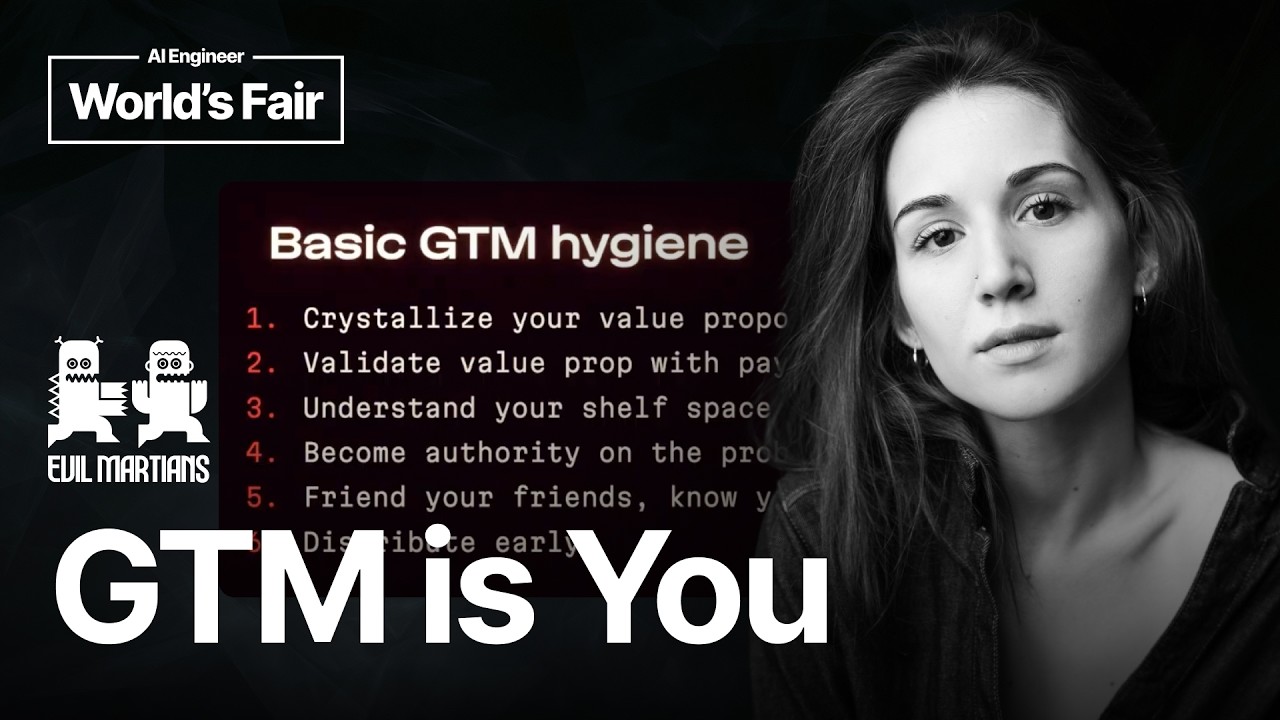
Victoria Melnikova, from Evil Martians and host of the Dev Propulsion Labs podcast, argues that in 2026, the most underrated competitive advantage for startups, particularly in developer tools and AI, is the founder’s personal brand. Building software has become easier, shifting the primary bottleneck from product creation to distribution. This challenge is compounded by the “unbearable” noise in inboxes and feeds due to AI-generated content, making it difficult to cut through and distinguish genuine value.
Evil Martians’ “Product-Market Fit Compass” framework, derived from analyzing 37 successful devtools, illustrates this point. The framework plots product signal against revenue. In early-stage devtool startups, nine out of ten times, product signal is stronger than revenue, indicating a distribution problem. Technical founders often dislike marketing, necessitating a focus on distribution.
To lay the groundwork for effective go-to-market (GTM) motion, Melnikova outlines six fundamental steps:
- Crystallize Value Proposition: Clearly define the painful problem being solved and validate its value with paying customers.
- Understand Developer “Shelf Space”: Identify where the product fits into a developer’s workflow and life.
- Become the Authority: Establish expertise on the problem the product addresses.
- Understand the Ecosystem: Differentiate from competitors (“foes”) and collaborate with complementary solutions (“friends”).
- Distribute Early: Begin distribution even before the product is fully ready, a task often disliked by technical founders.
Drawing insights from successful devtool founders in San Francisco, Melnikova highlights several tactical approaches:
The San Francisco Advantage
Founders like Sam Lambert (PlanetScale) and David Cramer (Sentry) emphasize the unparalleled networking and fundraising opportunities in San Francisco. Cramer bluntly states, “SF is unfair. Just do it.” Being present allows direct engagement with clients, peers, and investors, making it a critical hub despite prevailing internet memes.
Getting Loud Through Advertising
SF is characterized by prominent advertising, such as banners on Muni buses and buildings. This serves a dual purpose: signaling existence and potentially a new category, and earning mind share by imprinting the brand subconsciously. The example of TypeSense using billboards to establish credibility, particularly as a non-VC-backed company, demonstrates this strategy’s effectiveness.
Leveraging Events
Events, from small meetups (paddle, poker, boba time) to large user conferences, are crucial. Early-stage startups are increasingly hosting their own user conferences, mirroring successful examples like Superbase Select. The key is active participation, whether organizing or attending, to foster community and direct engagement.
Crazy Marketing Campaigns
Unconventional marketing strategies—like flying banners over cities, opening a branded cafe, or naming an ice cream—are highlighted as effective in SF. When marketing is approached with fun and creativity, it resonates and leaves a lasting impression.
Embracing Failure as Opportunity
Paradoxically, embracing and transparently sharing failures (especially with an “elegant recovery”) can attract audiences. Perfection is often boring; genuine human stories, including setbacks, build deeper connections and brand loyalty, as exemplified by a founder who walked away from a substantial ARR to pursue a new path.
The Power of Personal Brand
This is the core takeaway:
- Be Unapologetically You: Unique quirks and natural passions can become “genius zones” and pillars for a strong personal brand.
- Artisanal Resurgence: Despite AI automation, there’s a growing appreciation for craftsmanship, beautiful design, and human-crafted experiences. Technical folks have an opportunity to excel here.
- AI as an Amplifier: AI won’t replace unique personal brands but can amplify a founder’s signal across various mediums (text, video).
- Founder-Led Sales: People want to buy from real humans. Founder-led sales builds trust, especially for early-stage startups. Zeno Rocha (Sentry) advises against overthinking personal branding, advocating for authenticity: “I just try to be myself because that’s how I feel like people are drawn to folks that are they try not to impersonate or or or be someone else. So, I just try to be as organic as possible.”
Ultimately, a strong personal brand acts as a “moat.” As AI advances, it will only amplify these unique brands, making them irreplaceable and a fundamental competitive advantage in the evolving tech landscape. Founders are encouraged to identify their unique traits and passions to cultivate their personal brand, which in turn strengthens their company’s brand.