Redefining Chip Architecture with Arm CEO Rene Haas
Arm CEO Rene Haas discusses Arm's evolution from IP licensing to producing physical chips, the transformative role of AI in accelerating chip design and verification, and the critical supply chain bottlenecks impacting data center build-out. He also covers SoftBank's strategic capital deployment, the immense opportunities for Arm in the burgeoning robotics sector, and emphasizes why power-efficient CPUs remain fundamental to all AI workloads, from data centers to edge devices.
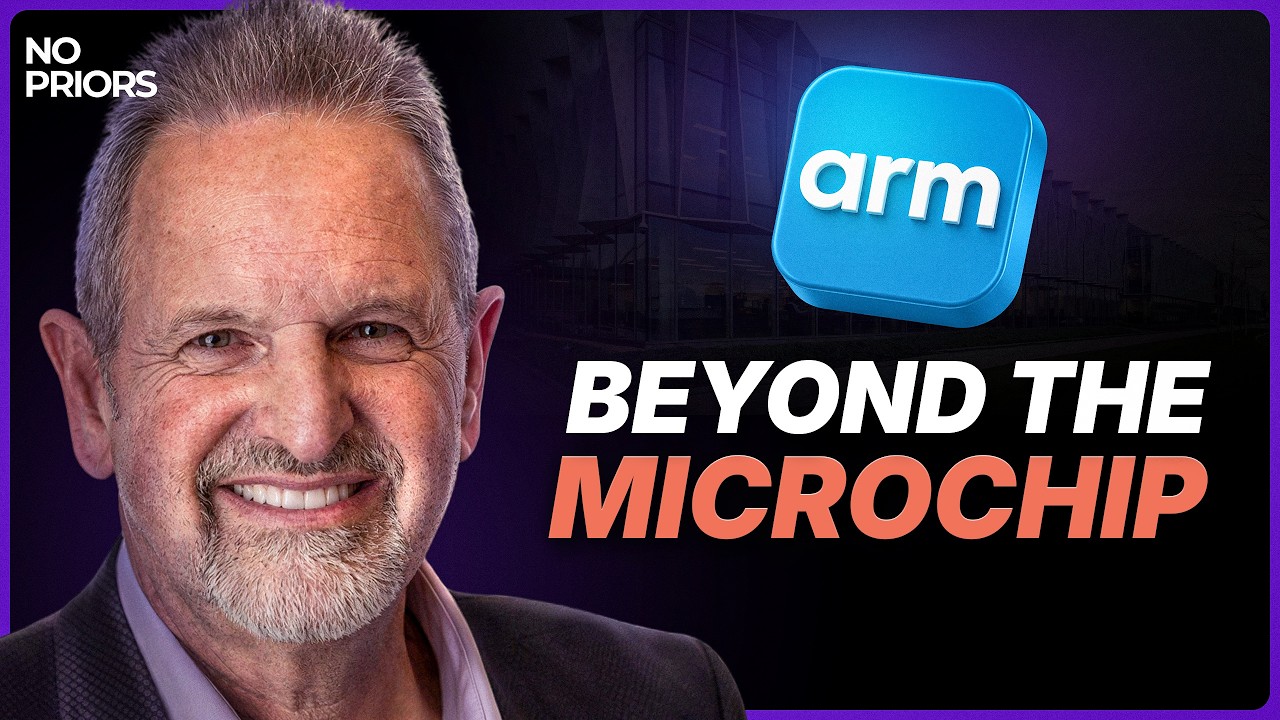
Rene Haas, CEO of Arm, discusses the company’s pivotal role in the evolving landscape of AI and computing. Arm operates primarily through IP licensing, providing CPU cores for diverse markets including smartphones, data centers, and automotive. This broad exposure grants Arm a comprehensive view of the global chip supply chain.
Evolution to Physical CPU Manufacturing
Arm has transitioned from licensing individual IP components to offering compute subsystems (likened to Lego blueprints) and, more recently, physical CPUs like the Arm AGI CPU, developed for Meta. This move was driven by accelerating product cycles and the need for faster solutions. The physical product initiative, despite being a departure from Arm’s traditional fabless model, was positively received by the ecosystem, as increased software availability (both proprietary and open-source) benefits all participants. This shift necessitated building new capabilities in supply chain operations, memory allocation, and advanced engineering, leveraging expertise from executives with backgrounds in companies like Broadcom, Qualcomm, and Nvidia.
AI’s Impact on Chip Design and Time-to-Market
Haas views AI as a fundamental utility that will boost productivity across all industries, including chip design. Internally, Arm uses AI extensively, particularly in verification, validation, debug, and documentation, which constitute the majority of the 24-36 month chip design cycle. He notes that 80-90% of Arm engineers use AI daily, emphasizing its indispensability. While current AI tools face limitations in RTL generation and physical design due to proprietary data, Arm is actively collaborating with model makers and fine-tuning models using its extensive, well-documented IP portfolio. Haas predicts that within 5-10 years, AI could significantly shorten the design cycle for straightforward designs, radically accelerating the industry’s clock speed. This trend also diversifies Arm’s customer base, bringing in new players who rely on Arm IP for their chip designs.
Supply Chain Bottlenecks and Data Center Growth
The industry faces significant supply chain constraints, which Haas believes will persist for 3-5 years. Beyond packaging and memory, the most critical bottleneck is the build-out of data centers, often delayed and encountering local opposition. He dismisses the notion of an “AI bubble,” asserting that demand is insatiable, especially due to the compute-intensive nature of transformer models. Haas views local resistance to data center construction as misguided fear, as these facilities create numerous jobs (e.g., electricians) and drive economic growth, rather than causing job loss.
SoftBank’s Strategic Role and Robotics Opportunities
As part of SoftBank Group International, Haas oversees strategic initiatives that leverage SoftBank’s vast ecosystem and capital. This offers Arm unique advantages, including a broad industry perspective and potential “home” for its products within SoftBank’s verticals (robotics, energy, data centers). Haas sees immense opportunities in robotics, moving beyond purpose-built machines to adaptable, learning robots that will automate construction, service, and distribution. Arm is poised to power this revolution, providing microprocessors for real-time sensing at the edge and supporting the “brains” of these robots. He anticipates that distribution centers and factory automation will be among the first sectors to be fully automated.
US Semiconductor Manufacturing and CPU’s Enduring Importance
Haas, speaking as an American citizen, stresses the critical importance of domestic semiconductor manufacturing for national security and supply chain diversification, advocating for more US fabs. He argues that leadership in technology is paramount, driving innovation and ecosystems, with “no downside” to being a leader. Regarding CPUs, he firmly believes they remain the “heart of everything” in computing, indispensable for orchestration, arbitration, and decision-making in AI workloads, particularly as data shifts from training to inference. CPUs are fundamental across all devices—data centers, automotive, robotics, phones, and wearables. For power-constrained edge devices, Arm’s efficient CPUs are especially critical, enabling local AI processing where large GPUs are impractical.