What is OpenClaw? Inside AI Agents, LLMs and the Agentic Loop
AI agents represent a paradigm shift from conversational AI to autonomous systems that can perform actions. This is achieved through an 'agentic loop' combining Large Language Models (LLMs) with tools, as exemplified by the OpenClaw framework, which enables complex, automated workflows while also raising important security considerations.
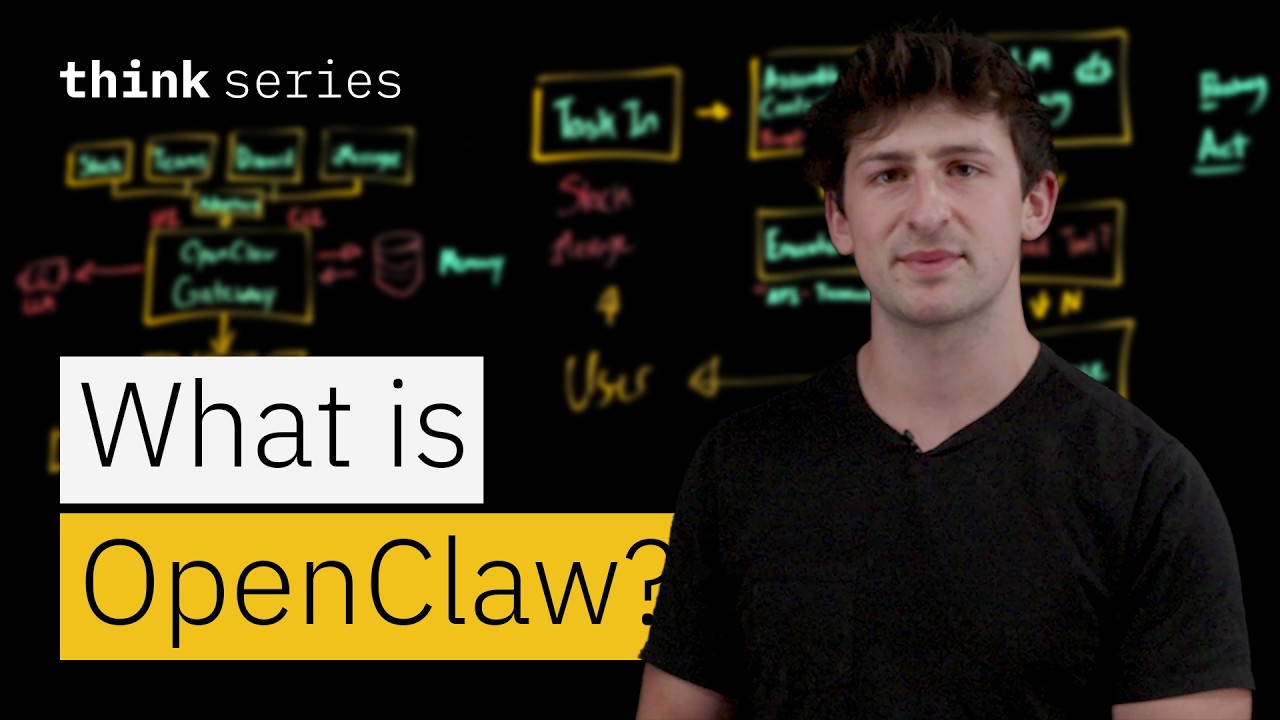
The evolution from AI chatbots to AI agents marks a significant shift from “knowing” to “doing”. While a chatbot can tell you how to schedule a meeting, an AI agent can access your calendar and schedule it for you. This leap is accomplished by connecting Large Language Models (LLMs) with tools, creating an autonomous system capable of executing tasks that previously required human intervention, such as switching tabs, copy-pasting information, and clicking buttons.
The Agentic Loop: The Core of Autonomous AI
Unlike the simple prompt-response interaction of a chatbot, an AI agent operates in a continuous cycle known as an “agentic loop”. This process, often based on the ReAct (Reasoning and Acting) pattern, allows the agent to plan, execute, and observe until a task is complete.
The loop proceeds as follows:
- Task Ingestion: The agent receives a task from a user through a communication platform like Slack, iMessage, or Teams.
- Context Assembly: The agent gathers all relevant context. This includes conversation history, long-term memory, system instructions, and, crucially, a list of available tools it can use.
- Reasoning: The assembled context is passed to the LLM, which decides on the next step. It determines if it has enough information to respond or if it needs to use a tool to gather more data.
- Action (Tool Use): If a tool is required, the agent executes it. This could involve running a terminal command, searching the web, reading a local file, or calling an API.
- Observation: The result from the tool execution is added to the context window.
- Iteration: The loop repeats, sending the updated context back to the LLM for further reasoning. This cycle of reasoning, acting, and observing continues until the initial task is fully resolved.
- Final Response: Once no more tools are needed, the agent delivers the final response back to the user.
A Deeper Look at OpenClaw’s Architecture
OpenClaw is a prominent open-source AI agent that exemplifies these principles. It runs on a local Node.js service and is built on a hub-and-spoke model centered around a core component.
- The Gateway: This is the central control plane, operating as an always-on WebSocket server. It manages message routing, session management, agent creation, and tool usage.
- Adapters: To communicate with the Gateway, various messaging platforms (Slack, Discord, etc.) connect through adapters. These adapters standardize incoming messages into a unified internal format that the Gateway can process.
- Context and Memory: The Gateway assembles the full context for the LLM. This includes not only the user’s request but also long-term memory stored in databases and core agent behaviors defined in Markdown files like
agents.mdandsoul.md. - LLM Integration: OpenClaw can be configured to work with either a locally running LLM or an external model via an API call.
Extending Capabilities with Tools and Skills
The true power of an agent like OpenClaw lies in its extensibility through tools and skills.
- Built-in Tools: It comes with fundamental capabilities, such as the ability to use a web browser for automation or a terminal for running command-line operations.
- Skills: The framework is designed to be extended with “skills,” which are folders containing Markdown files with instructions. These skills teach the agent how to perform specific workflows, such as managing Trello boards, editing Google Calendar events, running Docker containers, or interacting with a CRM.
- Context-Aware Skill Injection: To avoid overwhelming the LLM’s context window, OpenClaw does not load every available skill by default. Instead, it provides the LLM with brief metadata about the skills. The LLM can then intelligently select the most relevant skill for a given task and read its full instructions on-demand.
Crucial Security Considerations for AI Agents
With great power comes great responsibility. Since agents like OpenClaw can run locally with access to the file system and terminal, security is paramount.
- Misconfiguration Risks: A poorly configured agent can become a powerful backdoor on a machine. Thousands of internet-exposed OpenClaw instances already exist due to misconfigurations.
- Prompt Injection: Agents are vulnerable to prompt injection, where malicious instructions embedded in untrusted inputs (like an email or a web page) are executed by the LLM as if they were legitimate commands.
- Best Practices: To mitigate these risks, it is essential to:
- Run agents in an isolated, sandboxed environment.
- Thoroughly review the code for all skills before implementing them.
- Encrypt all credentials and sensitive information before they are passed to an LLM.
Ultimately, the rise of AI agents signals a move from a conversational paradigm to an orchestration model, where the AI plans and executes complex tasks. While frameworks like OpenClaw and LangGraph are pioneering this space, it is crucial to adopt responsible security, governance, and deployment practices.