The Power of AI Agents and Agentic AI Explained
AI agents represent a paradigm shift from traditional reactive AI models. This summary explores their proactive, goal-driven nature, detailing how they autonomously plan and execute complex workflows by interacting with a diverse ecosystem of models, APIs, hardware, and even other agents to solve real-world problems.
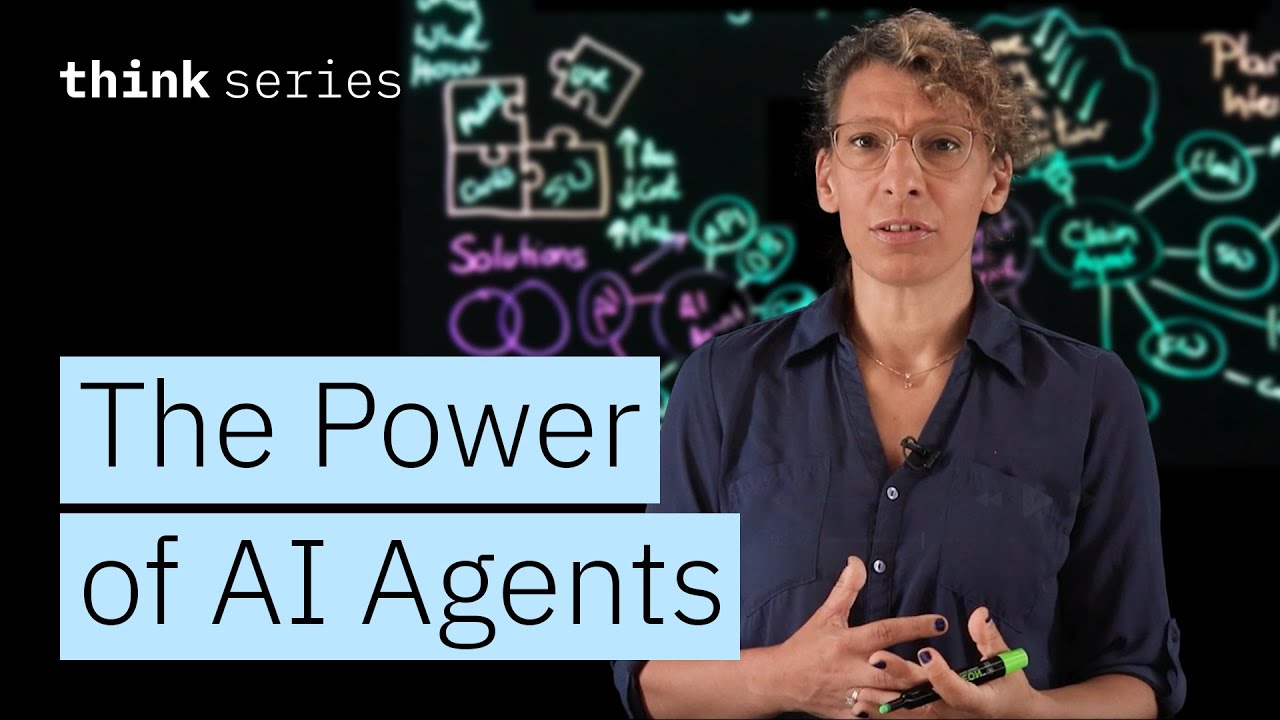
The evolution of the AI ecosystem highlights that the true power of the technology is unlocked through the strategic integration of its various capabilities into holistic, end-to-end solutions. Agentic AI is key to automating this integration, simplifying the complex task of combining different models, software, and hardware.
The Power of Proactive AI Agents
Unlike traditional AI models which are primarily reactive and predictive, AI agents are initiative-taking and goal-driven. Their key characteristics include:
- Autonomy and Goal-Orientation: They are designed to achieve specific goals.
- Context-Awareness: They maintain short- and long-term memory, allowing them to learn, reflect, and adjust future behaviors based on past interactions.
- Complex Planning: They can devise and execute complicated, multi-step workflows.
- Interaction: They can interact within their digital environment (the “metaverse” or software ecosystem) to execute their plans.
This autonomous power helps overcome the significant hurdles in incorporating AI into infrastructure. Agentic AI can autonomously assemble the “puzzle pieces”—various models, software, and AI accelerators—to create more effective solutions. This leads to higher inference accuracy, improved decision-making, and lower operational costs by reducing manual effort and boosting team productivity.
How AI Agents Interact with Their Ecosystem
An AI agent’s effectiveness stems from its ability to interact with a wide range of components within its software ecosystem. An agent can connect with:
- APIs: To interact with customer applications and other services.
- Databases: To retrieve and store data for model processing.
- Cloud Resources: To access a vast array of tools and models.
- Local Software & Hardware: To utilize the resources of the computer it is running on.
- Firmware: To interact directly with specialized hardware like AI accelerator cards.
- Other AI Agents: They can delegate tasks to other specialized agents, which then execute their sub-tasks and return control.
Real-World Example: An AI-Powered Insurance Claim Process
To illustrate these concepts, consider a car insurance company modernizing its claims process with an AI Claim Agent.
-
Planning the Workflow: Upon receiving claim data, the agent autonomously plans a multi-step workflow. A simplified version of this plan could include:
- Parsing the claim details.
- Matching the claim against the policyholder’s information.
- Processing images associated with the claim.
- Detecting potential fraud.
- Auditing the process for compliance.
- Interacting with the client.
-
Executing Tasks via the Ecosystem: The agent then executes this plan by delegating each step to the most suitable resource available in its ecosystem:
- Claim Parsing: It might send the text data to a powerful NLP model available in the cloud.
- Policy Matching: It could use an LLM running on a specialized, locally attached PCIe acceleration card for efficiency.
- Image Processing: The task of analyzing photos could be offloaded to a dedicated bank of GPUs.
- Fraud Detection: If available, the agent could send the data to firmware controlling a card specifically optimized for fraud detection models.
- Auditing: It would interact with a database to log all actions and ensure a complete audit trail.
- Client Communication: Recognizing that client interaction requires a different skill set, the primary agent delegates this final step to a second, specialized Client Interaction Agent. This second agent has the specific tools and capabilities to manage communication with the user, retrieve any additional data needed, and deliver the final results.
This example demonstrates how agents can work together, each with a different specialty, to form a cohesive and efficient solution. By breaking down complex problems and leveraging a diverse ecosystem of tools, AI agents provide a powerful framework for building the next generation of intelligent systems.