How Google’s Nano Banana Achieved Breakthrough Character Consistency
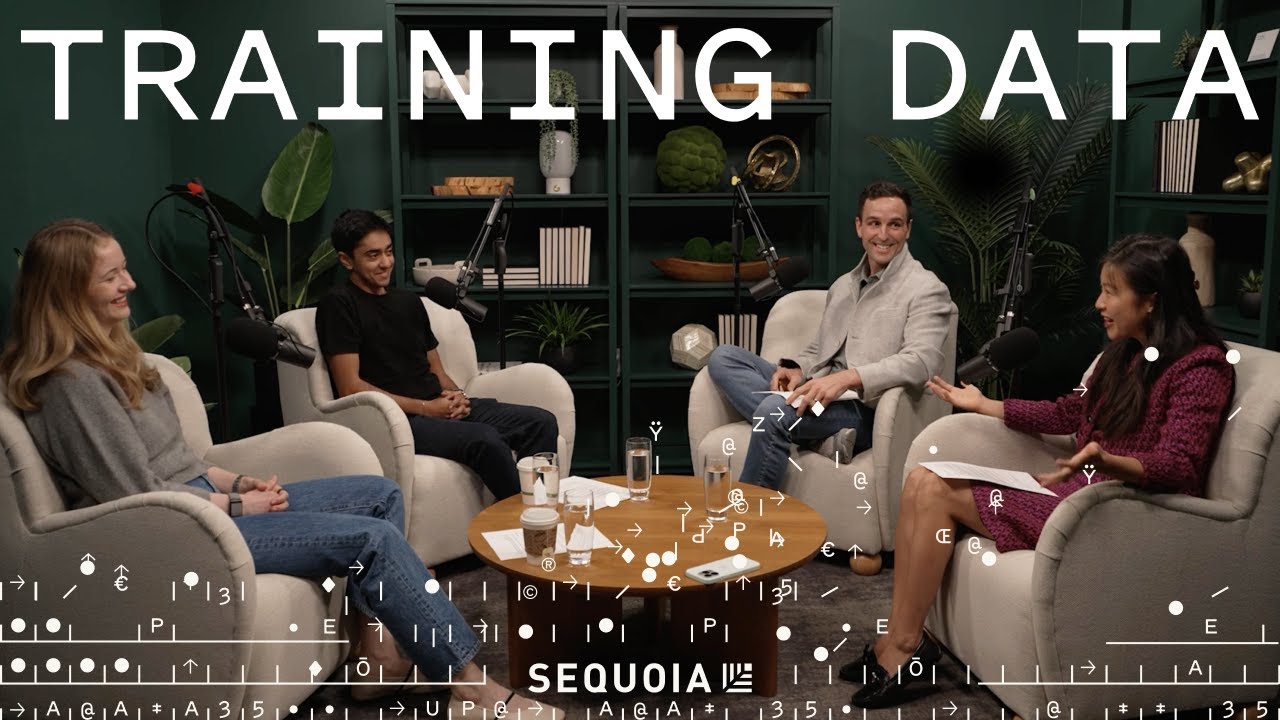
Nicole Brichtova and Hansa Srinivasan, the leads behind Google's Nano Banana image model, detail the technical breakthroughs in character consistency. They discuss how a focus on high-quality data, Gemini's multimodal architecture, and rigorous human evaluation enabled the model to realistically represent individuals from a single photo. The conversation covers the future of visual AI, moving beyond text prompts to specialized UIs, and the ultimate goal of a single, powerful model that can transform any modality into another, unlocking new applications in personalized education, professional design, and creative storytelling.
Visual media provides an intuitive and exciting gateway to utility, moving beyond simple fun to capture people’s imagination. While photography allowed us to capture reality, generative AI gives us the tools to visually express the ideas in our minds.
Achieving Breakthrough Character Consistency
A primary goal for the Nano Banana model was achieving character consistency, a known gap in previous models. This capability is crucial not only for consumer applications like placing oneself in a new scene but also for professional workflows, such as advertisers placing products in lifestyle shots where 100% fidelity is required. The team was surprised by how effective the final model was at this task.
The success in consistency is not merely an emergent property of scale but a result of a specific recipe combining model architecture and data.
- Foundation in Gemini: The model is built on Gemini, a multimodal foundational model with strong generalization capabilities. This is the “secret sauce” that allows the model to understand and replicate features from a single reference image without extensive fine-tuning.
- Data Quality over Quantity: There is a strong emphasis on the “craft” of AI development. Success comes from meticulous attention to detail and the quality of the data used for training. Numerous small design decisions and a focus on high-quality data selection are more critical than just using vast quantities of data.
- Multimodality and Long Context: Leveraging Gemini provides a long context window, allowing users to provide single or multiple reference images. It also enables a conversational workflow where users can iterate across multiple turns, and the model maintains context to refine the output.
The Critical Role of Human-Centric Evaluation
For subjective visual tasks like generating a person’s face, standard quantitative benchmarks are insufficient. You can only truly judge the consistency of a face you are familiar with, which makes automated evaluation difficult.
- Human Evals as a Game Changer: The team relies heavily on a structured human evaluation process to assess subtle qualities like aesthetic appeal and facial similarity. This qualitative feedback is foundational to their development process.
- Qualitative Narrative: Beyond formal evals, the team uses “eyeballing” and internal community testing with artists and executives at Google. This helps build a qualitative narrative, capturing the emotional impact of seeing yourself accurately represented, which a simple metric like “10% better” cannot convey.
From Fun to Utility: Product Philosophy
The model was designed to be a “snappy” conversational editor, making it inherently consumer-centric. The accessibility and fun aspects, exemplified by the accidental-but-viral code name “Nano Banana,” served as a gateway for users to discover deeper utility. Users start with playful prompts and then realize the model’s power for practical tasks like photo editing, creating diagrams, or understanding complex topics.
This approach helps break down the intimidating barrier of AI, making it accessible to a broader audience who can then discover its practical applications in their daily lives.
The Future of Visual AI and Multimodal Interaction
The ultimate goal is to build a single, powerful model that can seamlessly take any modality as input and transform it into any other modality. While not there yet, specialized models like Veo for video push the frontier, with learnings being integrated back into Gemini. Developments in image generation often precede similar advancements in video by 6-12 months.
- Beyond the Chatbot: While chatbots are an easy entry point, they are limiting for visual modalities. The future lies in creating new visual creation canvases and specialized user interfaces. There’s a spectrum of user needs, from “hands-off” agentic behavior (e.g., automatically creating a slide deck from notes) to “hands-on” creative workflows that require fine-grained, pixel-level control.
- Personalized Learning: A key application is the potential for personalized learning. Instead of one-size-fits-all textbooks, AI could generate personalized tutors and educational content tailored to an individual’s learning style, interests, and starting point (e.g., explaining physics using basketball analogies).
- Visualizing Information: The models are moving beyond text-only outputs. The ability to generate diagrams, sketch notes, and other visuals to explain complex topics will become a natural part of the user experience, reflecting how humans consume information more effectively.
Responsible Development and Startup Opportunities
Balancing creative freedom with preventing harm is a constant, evolving challenge. Google employs a multi-layered approach:
- Visible and Invisible Watermarking: Outputs are marked with a visible “generated with Gemini” label. More importantly, they embed SynthID, an invisible, robust watermark that verifies content as AI-generated.
- Continuous Testing: As models become more capable, new attack vectors emerge. The team continuously invests in testing and developing new mitigations.
For startups, significant opportunities exist in building workflow-based tools for specific verticals (e.g., creative, consulting, sales, finance). These tools can integrate multiple modalities (LLMs, image, video, audio) into a seamless UI, addressing niche user needs that larger companies may not focus on.