Image generation

AI Apps in a Flash: Ship to GPUs Without Docker — Dean Quiñanola, Runpod

AI Apps in a Flash: Ship to GPUs Without Docker — Dean Quiñanola, Runpod

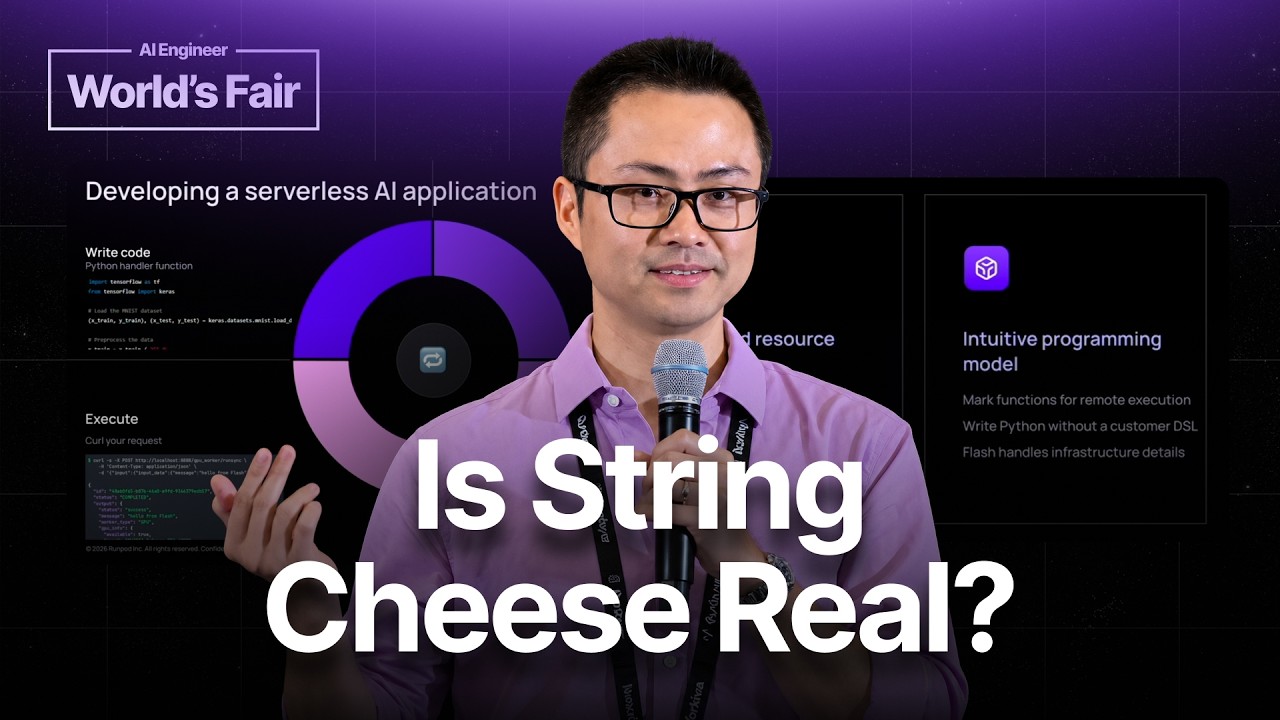
Dean Quiñanola, a staff engineer at Runpod, presents Runpod Flash, a way to run Python on cloud GPUs as if they were local, with no Dockerfiles, image builds, or registry pushes. The talk covers serverless and load-balanced endpoints, endpoint-to-endpoint calls, network volumes with warm caching, and live serverless iteration. A live demo moves from GPU detection to text and image generation and then deploys to production with a single command.
Training Krea 2: What matters in generative model training — Sangwu Lee, Krea.ai

Training Krea 2: What matters in generative model training — Sangwu Lee, Krea.ai

The talk by Sangwha Lee discusses Krea 2's open-source medium variant, emphasizing stylistic diversity and rapid iteration over the consistency-focused approach of larger models. A significant portion details their robust data curation pipeline, including unique methods for deduplication, filtering out AI-generated images, utilizing sparse autoencoders for unsupervised tagging, and ensuring world knowledge coverage. He outlines an LLM-inspired multi-stage training process, culminating in a prompt expander, and shares insights on fast iteration and future directions for image generation, highlighting the increasing integration of VLM advancements.

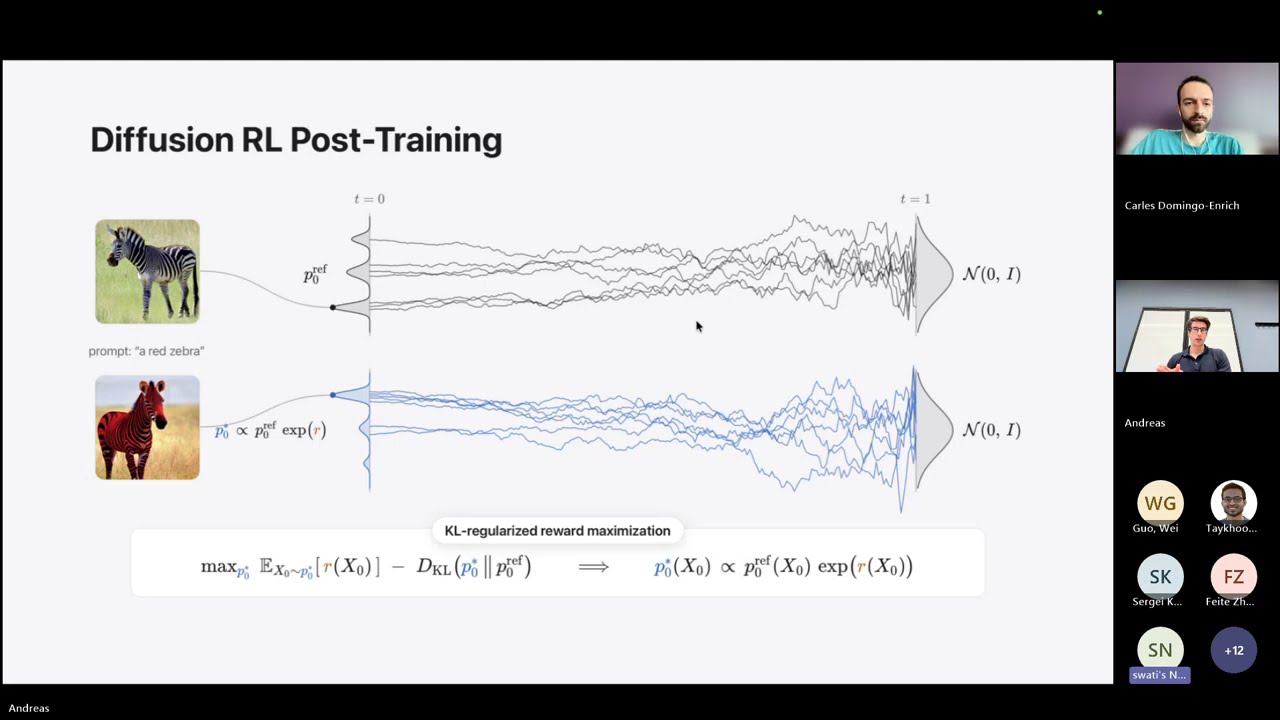
Reinforce Adjoint Matching: Scaling Diffusion RL

Reinforce Adjoint Matching: Scaling Diffusion RL

Andreas Bergmeister presents Reinforce Adjoint Matching (RAM), a novel method for scalable reinforcement learning post-training of diffusion models. RAM sidesteps the complexity of existing RL approaches by deriving a consistency loss that directly corrects the pre-training target with a reward signal, eliminating the need for costly SDE rollouts or reward gradients. This approach achieves superior performance and up to 50x faster convergence on challenging image generation tasks like complex composability, text rendering, and human preference alignment.

Inside image generation’s Renaissance moment — the OpenAI Podcast Ep. 19

Inside image generation’s Renaissance moment — the OpenAI Podcast Ep. 19

Product lead Adele Li and researcher Kenji Hata from OpenAI discuss the significant advancements in Images 2.0, covering breakthroughs in photorealism, text rendering, and multilingual support. They explore new productivity and creative use cases, the evaluation process, and the future of image generation as a creative assistant.

How Google’s Nano Banana Achieved Breakthrough Character Consistency

How Google’s Nano Banana Achieved Breakthrough Character Consistency

Nicole Brichtova and Hansa Srinivasan, the leads behind Google's Nano Banana image model, detail the technical breakthroughs in character consistency. They discuss how a focus on high-quality data, Gemini's multimodal architecture, and rigorous human evaluation enabled the model to realistically represent individuals from a single photo. The conversation covers the future of visual AI, moving beyond text prompts to specialized UIs, and the ultimate goal of a single, powerful model that can transform any modality into another, unlocking new applications in personalized education, professional design, and creative storytelling.

Google DeepMind Developers: How Nano Banana Was Made

Google DeepMind Developers: How Nano Banana Was Made

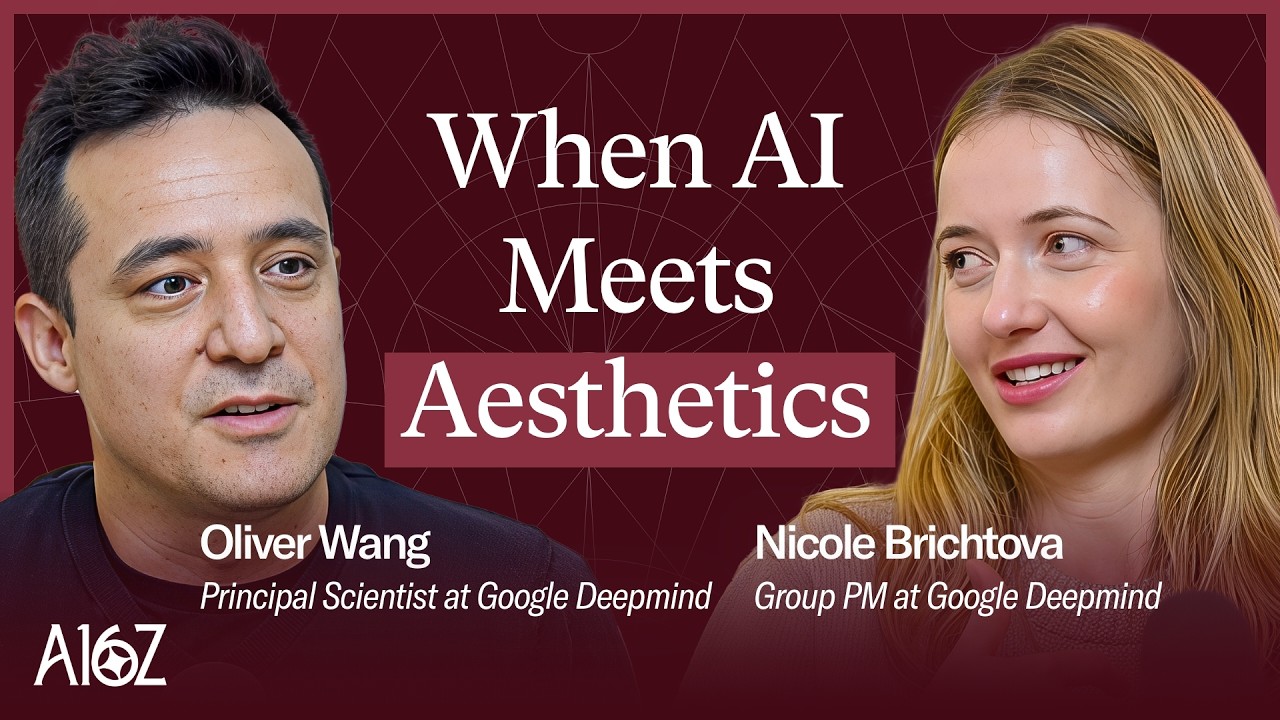
Google DeepMind's Oliver Wang and Nicole Brichtova discuss the creation of the Nano Banana image model, its viral success driven by character consistency, and the future of AI in creative work, from user interfaces and 2D/3D world models to the next frontier of video generation and high-fidelity reasoning.