Google DeepMind Developers: How Nano Banana Was Made
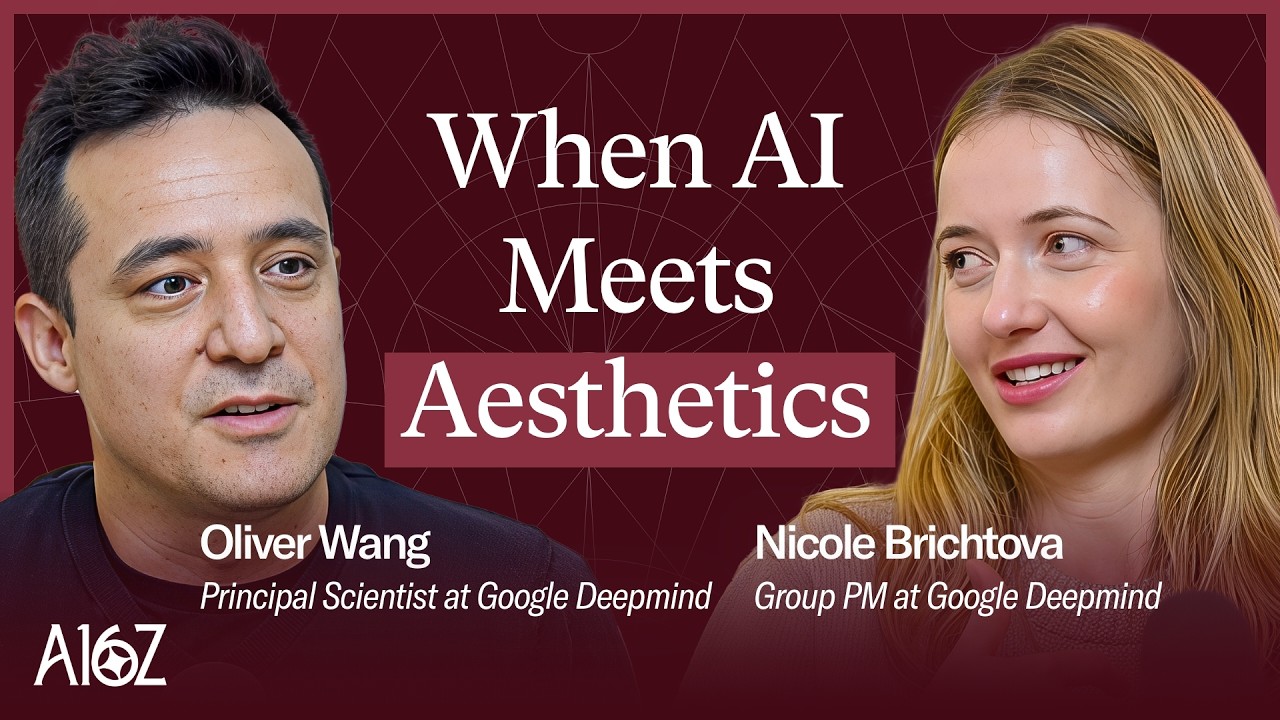
Google DeepMind's Oliver Wang and Nicole Brichtova discuss the creation of the Nano Banana image model, its viral success driven by character consistency, and the future of AI in creative work, from user interfaces and 2D/3D world models to the next frontier of video generation and high-fidelity reasoning.
The Genesis of Nano Banana
Nano Banana originated from the goal of merging the “best of both worlds”: the state-of-the-art visual quality of Google’s Imagine family of models with the multimodal, conversational, and editing capabilities of the Gemini models. While previous Gemini models showcased the magic of interacting with images through text, their visual fidelity wasn’t at the desired level. The team combined the strengths of both model families to create a new model focused on interactive, conversational editing with top-tier visual output. The name “Nano Banana” was an internal moniker that was easier and “cooler” to say than its official designation, and it ultimately stuck.
Virality Through Personalization and Control
The team’s “wow” moment came not during internal development, but after its release when they observed an unexpectedly massive volume of use on the Ellarina benchmark platform. A key driver of this viral adoption was the model’s unprecedented ability to achieve character consistency from a single image (zero-shot). Previously, this required complex fine-tuning methods like LoRA with multiple images. For the first time, users could see a recognizable version of themselves, their kids, or even their pets in generated images, creating a powerful emotional and personal connection that resonated deeply.
This level of control was a significant breakthrough for artists and creatives who previously found AI tools too restrictive. They highlighted two main aspects:
- Character and Object Consistency: The ability to maintain a consistent character across multiple images is crucial for compelling narrative and storytelling.
- Multi-Image Control: Artists praised the ability to upload multiple images to direct the model, for example, by saying, “use the style of this on this character.”
A New Paradigm for Art and Creativity
The emergence of powerful editing models like Nano Banana is set to change visual arts forever by empowering creators and automating tedious tasks.
- For Professionals: These models act as a powerful new tool, allowing artists to offload tedious, manual operations and dedicate more of their time—up to 90%—to the creative process itself. The most important element in art is intent, and these models serve as a tool for individuals with creative intent to realize their vision.
- For Consumers: Use cases range from fun, personal projects like creating Halloween costumes for kids to practical applications like generating visuals for a slide deck, potentially handled by an autonomous agent in the future.
The discussion posits that the line between a tool and the art itself is defined by control and intent. As models become more controllable, they become more legitimate tools for artistic expression, moving away from the “one-shot” text-to-image results that some in the creative community initially dismissed.
Interfaces, Workflows, and Education
The future of interacting with these models will not be one-size-fits-all. A spectrum of interfaces is needed, from simple, voice-driven controls on a phone to complex, node-based systems like ComfyUI for power users who want maximum control. The ideal future interface might not require users to learn hundreds of controls but would instead have the model intelligently suggest the next steps based on the user’s ongoing work.
The world is moving towards a diversity of models and workflows, where a model like Nano Banana might be just one node in a larger, customized creative process, rather than a single model trying to do everything.
In education, these models hold immense potential as visual learning aids. Since most people are visual learners, AI tutors can move beyond text to provide diagrams, figures, and visual explanations, making learning more accessible and effective. This also highlights the model’s powerful reasoning capabilities, which can be used to solve visual problems, such as geometry exercises.
The Debate: 2D vs. 3D World Models
While the physical world is 3D, the vast majority of training data available is in the form of 2D projections (images and videos). There’s an ongoing debate about whether true world understanding requires explicit 3D representations.
The perspective offered is that we can solve most, if not all, problems by working directly on the 2D projection and allowing the models to learn the latent 3D world representations. Humans are naturally adept at interpreting and creating in 2D, and our interfaces are built around it. Video models already demonstrate a strong implicit understanding of 3D space. While explicit 3D models are likely critical for robotics, 2D representations may be sufficient for a vast range of planning and creative tasks.
The Future: Raising the Quality Floor and Expanding Context
The next major frontier for image models is not just about generating a perfect “cherry-picked” image, but about improving the quality of the worst image. This is the shift from “cherry-picking” to “lemon-picking.” By raising the quality floor and making the model’s output consistently reliable, a vast number of productivity and information-seeking use cases can be unlocked, particularly those that require high factuality, such as in education.
Looking ahead, two key areas of development are:
- Video Generation: Video is the obvious next step, evolving from the current “slow frames-per-second” interactive editing into a fully interactive, real-time medium.
- Leveraging Context: A major challenge is to make the model fully utilize its large context window to follow complex, precise instructions, such as adhering to a 150-page corporate brand guide. This would involve the model generating, self-critiquing against the provided context, and iterating until the output is fully compliant, building a new level of trust for professional applications.