Tavus: The AI Human Platform
Founders Hassaan Raza and Quinn Favret detail Tavus's evolution from a personalized video tool to an AI research lab building real-time, agentic AI humans. They explore the foundational models for perception and rendering, the launch of Tavus PALs, and their vision for AI humans as the next major computing interface.
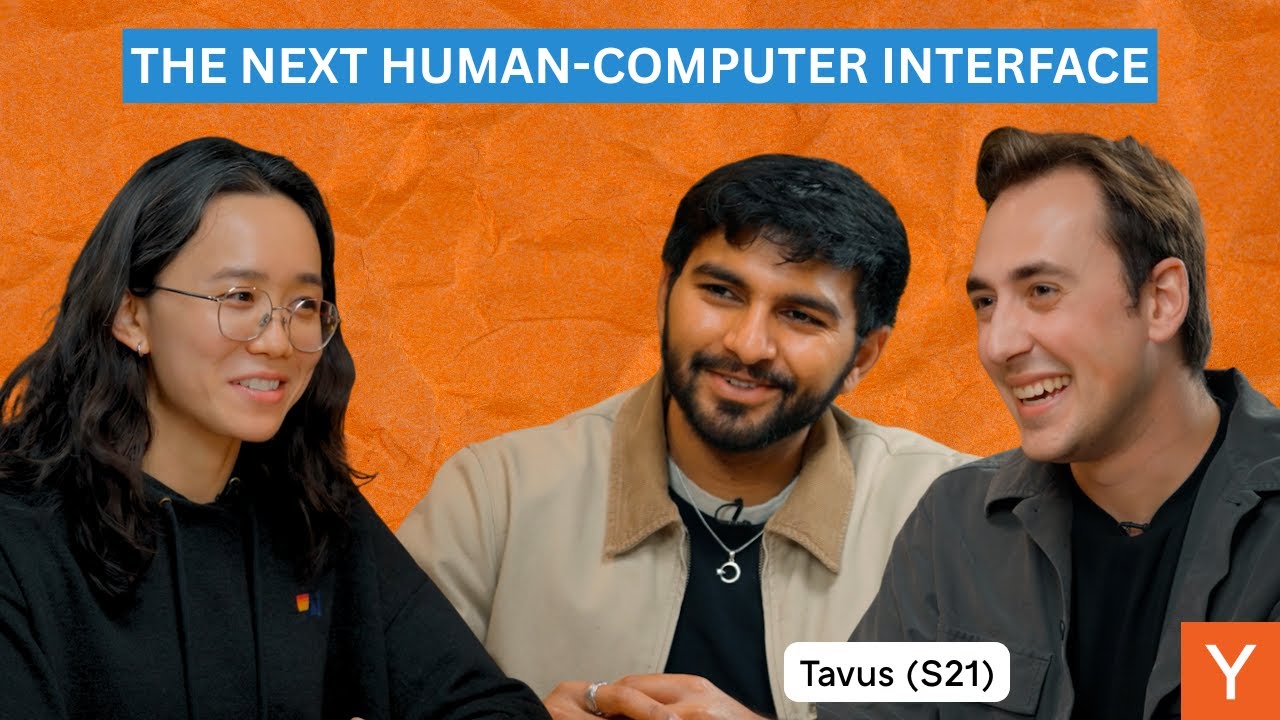
Tavus has evolved from a tool for personalized video into an AI research lab dedicated to building AI humans. These systems are designed to see, hear, respond, and act with human-like nuance, aiming to become the next major interface for communication and work.
The Evolution from Personalized Video to Foundational Models
Initially, during their YC batch in Summer 2021, Tavus focused on what the generative models of the time could handle: “lip-sync infill” for personalized videos. This allowed sales teams to record one video and scale it into thousands of personalized versions.
However, the founders faced a “crucible moment” after their Series A, realizing their team’s DNA was not in building an “AI sales company” but in deep technical research. They made the pivotal decision to pivot from a direct sales application to building a foundational API and SDK. This involved churning their existing customers to focus on a larger vision: creating the next generation of models for human behavioral analysis and simulation.
The Core Technology: Perception and Rendering Models
Tavus’s technology is built on two interconnected types of foundational models, described as a yin-and-yang relationship:
- Rendering Models: These are responsible for the visual and auditory output, making the AI human look and sound real.
- Perception Models: This is the key to creating natural interaction. These models teach the machine to see and understand human communication beyond words. They analyze expressions, gestures, and reactions in real-time, capturing nuanced signals like an eyebrow twitch or a slight smile.
The founders emphasize that the rendering models can only achieve true realism when informed by sophisticated perception. The system must understand the relationship between what was said, how it was said, and the user’s facial expression in response. The goal is to create “human simulation models” that can engage in the “waltz” of human conversation, which requires a response latency of less than 200 milliseconds.
Introducing PALs: Agentic and Emotionally Intelligent AI Humans
With their recent $40M Series B, Tavus is launching PALs (Personalized AI Liaisons), moving beyond a developer-only SDK to a consumer and prosumer product. PALs are described as agentic, proactive, and multimodal AI humans that a user can interact with via video call, audio call, or text.
Powered by the underlying perception models, PALs possess a high degree of emotional intelligence, allowing for natural and empathetic conversations. This launch represents a shift from the “command line era of AI” to a more intuitive, GUI-like interface where anyone can deploy an AI human.
Use Cases and Vision for the Future
Tavus’s models are currently used by customers ranging from startups to Fortune 10 companies like Amazon and Alibaba. The primary application buckets are:
- Learning and Development: Training and education.
- Healthcare: Patient intake, nutrition coaching, and elderly companionship.
- Go-to-Market: AI Sales Development Representatives (SDRs), solutions engineers, and customer support managers.
The long-term vision is to solve the “human convenience problem,” making computer interaction as natural as talking to a friend or co-worker. They envision a future where everyone has an AI sidekick, doctor, or therapist that understands them deeply.
On Ethics and Job Displacement
The founders address the concern of job displacement by stating their goal is not to replace humans, but to replace “bad machines” and inefficient systems already in place. For example, an empathetic AI intake assistant can provide a better experience than current automated telehealth systems.
They also make the case for accessibility, arguing that while an AI therapist may not be a perfect replacement for a human, it provides a valuable alternative for the majority of people who have no access to mental healthcare. The goal is to deliver an “80 to 90% good experience” where the alternative is nothing.