How AI Agents and Decision Agents Combine Rules & ML in Automation
A detailed breakdown of a multi-method Agentic AI architecture, combining Large Language Models (LLMs) with traditional automation like workflow and decision engines to solve complex, real-world problems like loan processing.
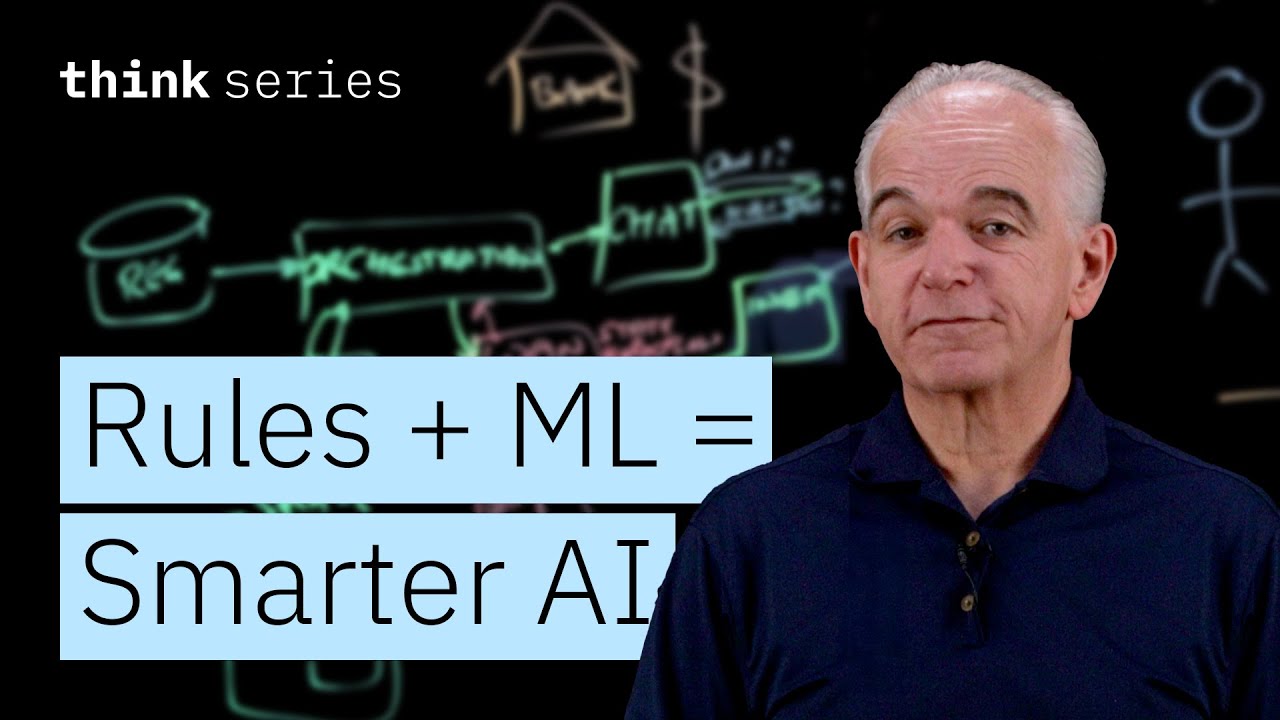
Agentic AI, particularly when powered by Large Language Models (LLMs), presents a powerful architecture. However, LLMs have well-known constraints. To build adaptable, transparent, and regulatory-compliant systems for complex problems, a multi-method Agentic AI approach is necessary. This involves combining LLMs with other proven automation technologies like workflow, business rules, and machine learning, ensuring that LLMs are a vital tool, but not the only tool, in the toolbox.
To illustrate this architecture, consider a common complex problem: a bank deciding how to lend a customer money for a boat.
The Agentic Framework for Loan Processing
The modern customer expects a conversational experience, not a static form. This process can be broken down into a series of interactions handled by a network of specialized agents.
1. Initial Interaction and Information Gathering
The initial phase is conversational and relies heavily on LLM-based agents.
-
Chat Agent: This is the customer’s first point of contact. As a classic LLM use case, it excels at understanding natural language, user intent, and tone. Its primary role is to parse the customer’s unstructured input and classify it as either a question (e.g., “What is your policy for boat loans?”) or an action (e.g., “I want to apply for a loan”).
-
Orchestration Agent: This LLM-based agent acts as a central router. It takes the structured output from the Chat Agent and consults an agent registry to find and invoke the most suitable agent for the task.
-
Loan Policy Agent (RAG): If the customer asks a question about policy, the Orchestration Agent directs the query here. This agent uses Retrieval-Augmented Generation (RAG) to provide answers.
- It queries a vector database containing the bank’s vast collection of documents (risk policies, product descriptions, marketing materials).
- This content is managed by a file system that automatically updates, vectorizes, and redeploys document collections, ensuring policy agents always have up-to-date information.
- The agent then delivers a concise, natural language answer with references, which is far more helpful than simply handing the customer raw documents.
2. Executing the Loan Application
When the customer decides to act and apply for the loan, the system transitions from purely conversational agents to agents designed for transactional, stateful processes.
- Loan Application Agent (Workflow): The Orchestration Agent initiates this agent to handle the application process. This is not an LLM-based agent. Loan applications are multi-step processes where a customer may get interrupted and need to resume later. LLMs are inherently stateless and not well-suited for managing such long-running processes.
- Instead, this agent is built on a workflow platform using standards like Business Process Model and Notation (BPMN).
- The platform maintains the state for each customer’s application in a database, reliably tracking their progress.
- It is exposed to the agentic framework via a mapping protocol, allowing it to be consumed like any other agent.
3. Core Decisioning and Data Management
The workflow relies on specialized agents to handle logic and data access, areas where consistency and transparency are paramount.
-
Decision Agent (Eligibility): To determine if a customer is eligible, the workflow calls a Decision Agent. This is also not an LLM. Business decisions must be consistent, transparent, and explainable to regulators and auditors—all are current weaknesses of LLMs.
- This agent is built on a business rules management system or a decision platform that executes logic consistently every time.
-
Data Agent: The workflow and decision agents require data. Data Agents are tasked with fetching information from internal customer systems or external sources like credit bureaus.
4. Handling Unstructured Data with LLMs
A key part of the application is gathering details about the asset—in this case, the boat.
- Document Ingestion Agent: The customer provides a brochure, which may be a blurry photo with a handwritten price and a stapled business card. Asking them to fill out a form with this data is inefficient.
- This is a perfect task for an LLM-based agent. LLMs are remarkably proficient at extracting structured data from messy, unstructured documents.
- The agent is given the data requirements from the loan application (e.g., make, model, year, price) and intelligently extracts the relevant information from the image, passing it back to the workflow.
5. Human-in-the-Loop and Explainability
Sometimes, the automated decision is not a clear “yes” or “no,” but a “maybe” that requires human intervention.
- The stateful Workflow Agent knows exactly where the process was paused. When the customer is ready to proceed, it routes them to a call center representative.
- The representative is aided by two LLM agents:
- Companion Agent: This agent acts as a “copilot,” synthesizing all the customer’s information—bank records, credit data, the application, boat details—into a single, easily searchable interface for the representative.
- Explainer Agent: The rule-based Decision Agent produces a detailed technical log explaining why it reached a “maybe” decision. This log is for internal use and uses technical jargon. The Explainer Agent translates this log into a clear, natural language explanation that the representative can use to talk to the customer (e.g., “The issue is a discrepancy between the income on your credit report and the W-2 you provided.”).
Once the representative resolves the issue with the customer, they don’t approve the loan themselves. They update the information and signal the Workflow Agent to re-run the Decision Agent. This time, with the corrected data, the decision is “yes,” and the process is complete.