Orchestrating Complex AI Workflows with AI Agents & LLMs
Eric Pritchett, President and COO of Terzo, explains the transformative impact of AI agents and LLMs on workflow orchestration. He contrasts the goal-oriented, flexible nature of AI agents with the limitations of traditional RPA, illustrating how a multi-agent system can automate complex processes like quote generation, marking a paradigm shift in automation capabilities.
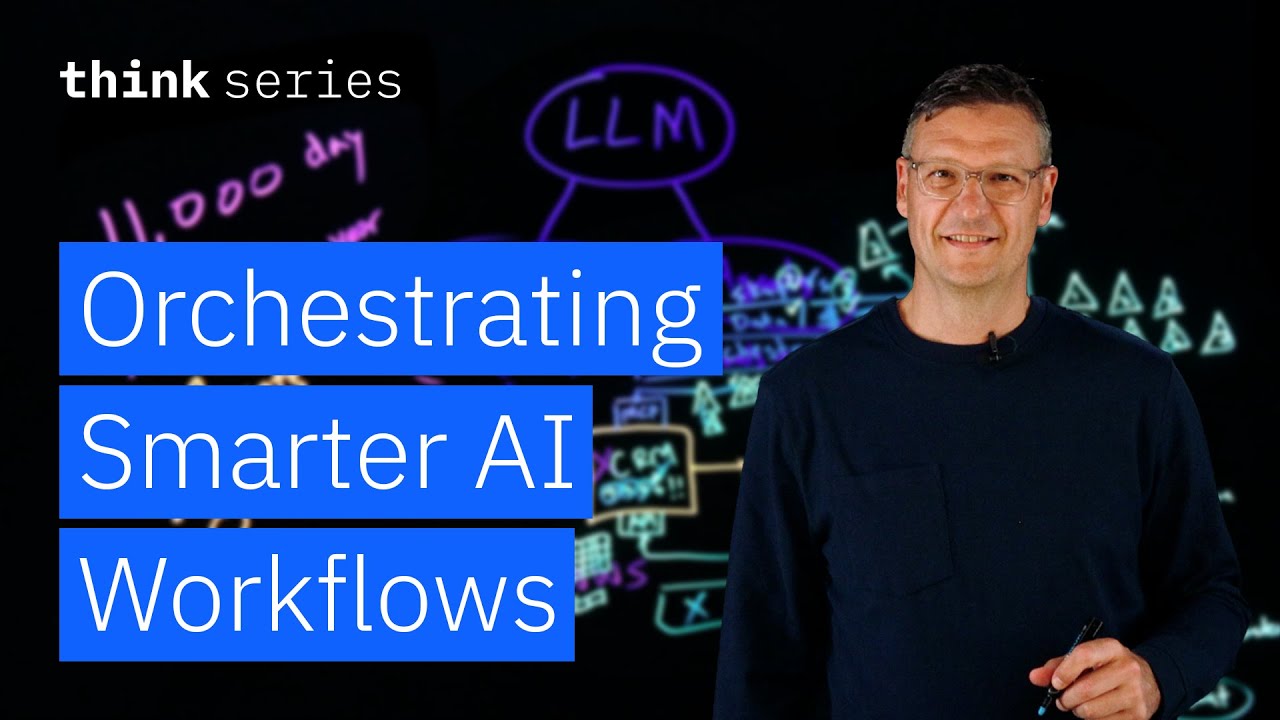
The proliferation of AI is poised to revolutionize IT, with estimates suggesting thousands of new AI agents are being created daily. For developers and software engineers, this means that working with AI agents and orchestration platforms is becoming an inevitable part of the landscape. Fortunately, these new frameworks are an extension of established software engineering principles, allowing professionals to leverage their existing best practices and experience.
Redefining Automation: From Assistants to Agents
At the heart of this transformation are Large Language Models (LLMs), which introduce a powerful language faculty that fundamentally changes the logic of business process automation. This gives rise to two primary types of AI constructs: assistants and agents.
- Assistants operate within a simple prompt-response framework. They are passive and wait for a specific question or command (a prompt) before providing an answer (a response).
- Agents, in contrast, are designed around goals and outcomes. They are given a defined objective and possess “agency”—the autonomy to take discretionary actions within set boundaries to achieve that goal. They do not need to be constantly prompted.
While there are many new buzzwords, it’s crucial to remember that this is fundamentally software development.
Orchestration vs. RPA: A Paradigm Shift
A common question is whether modern AI orchestration is merely Robotic Process Automation (RPA) with an LLM added. The reality is that it represents a significant paradigm shift, not just an incremental improvement.
The Limitations of Traditional RPA
Traditional RPA relies heavily on well-defined APIs and highly structured data. To automate a multi-step business process, like generating a customer quote, RPA would require:
- Explicit Triggers: A clear, programmatic signal (like a button click) to initiate the process.
- Structured Data Access: Interaction with systems via APIs that expose specific actions and neatly organized data tables or key-value pairs.
RPA would struggle with the ambiguity inherent in determining when a quote is needed or interpreting unstructured information from various sources like a CRM, product catalogs, and financial systems.
The Agentic Approach to Orchestration
AI orchestration takes a more flexible and powerful approach by using an “army” of specialized agents, each with a tightly defined job. An orchestration layer manages a master agent that delegates parts of a complex process to these specialized agents. This ensures control and prevents agents from going “off the rails.”
A Practical Example: Automating Quote Generation
Consider the goal of creating a complete and accurate sales quote. An agentic system would break this down into a series of managed tasks.
-
CRM Interaction & Data Extraction:
- The master agent deploys two initial agents to interact with the CRM.
- Agent 1 analyzes the opportunity to determine if it’s the right time to generate a quote.
- Once confirmed, Agent 2 (a “grabber agent”) extracts key information like the customer’s name, address, and any attached documents detailing the products discussed. This data is cached in the orchestration layer.
-
Product & Catalog Validation:
- The master agent releases the first two agents and deploys two new ones.
- Agent 3 takes the extracted data and compiles a corresponding list of product SKUs.
- Agent 4 validates this SKU list against a product catalog. It performs complex checks for compatibility, shipping constraints, legal terms, and even higher-level logic, such as aligning the proposed products with current sales goals.
-
Financial & Legal Application:
- With a validated SKU list, the master agent deploys the next set of agents.
- Agent 5 connects to a financial application to accurately price the SKU list, inferring quantities as needed.
- Agent 6 interacts with a legal database to pull the correct Terms and Conditions (T’s & C’s) based on the specific combination of products.
-
Final Assembly:
- All the contextual data—customer info, validated SKUs, pricing, and legal terms—is now aggregated in the orchestration layer.
- A final Agent 7 is deployed to assemble all this information into a polished, consistently formatted quote, ready for the sales team.
Conclusion: Beyond Incremental Improvement
While both RPA and agentic orchestration aim to automate low-value tasks to improve productivity, the agentic approach enables a far richer and more intelligent automation. By leveraging LLMs to interpret data, make decisions, and manage a team of specialized agents, orchestration can handle complex, nuanced workflows that were previously beyond the reach of traditional automation, marking a true paradigm shift in what is possible.