Three experts discuss the evolving landscape of data in AI, covering its critical role in model performance, challenges in sourcing and evaluating expert data, the development of advanced data generation techniques for diffusion models, and the complexities of multilingual pre-training.
Why Robotics Still Isn't Solved - But Could Be Soon | YC Paper Club
This Paper Club delves into the current state of robotics, addressing roadblocks like the sim-to-real gap and embodiment drift. Speakers present advancements in multi-scale memory for long-horizon tasks, self-supervised embodied reasoning, zero-shot dexterous manipulation via massive simulation, and the economic imperative of teleoperation-first robotics companies, concluding with optimizations for efficient, real-time World Action Models.
The New Primitives: Building AI Native Software — Kwindla Kramer, Daily
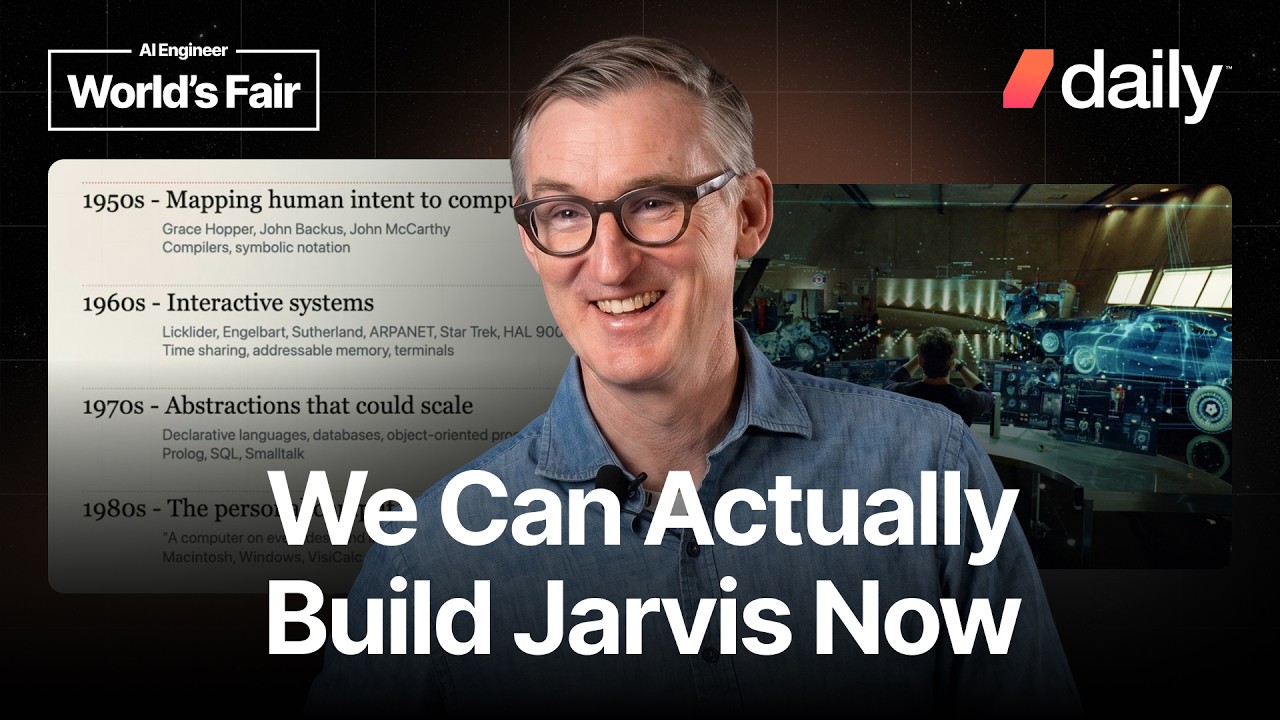
Kwindla Hultman Kramer argues that current AI agents are akin to 1995 web pages – a foundational primitive, not the ultimate destination. Drawing a historical parallel, he predicts the emergence of "AI native software" that will build upon and surpass agents, much like web applications evolved from simple web pages. He illustrates this through computing history, highlighting transformative shifts like VisiCalc's impact on accounting and the vision of Apple's Knowledge Navigator, and concludes by showcasing a game, Gradient Bang, that demonstrates the core primitives of this future AI native software.
Local Agentic Theory For Mobile Games — Shafik Quoraishee & Joanne Song, The New York Times
This presentation explores the innovative concept of running agentic AI entirely on mobile devices to enhance game accessibility and personalization. It delves into the technical challenges of local AI (space, time, energy budgets), contrasts agentic systems with traditional reinforcement learning, and demonstrates practical applications with a Space Invaders agent and a crossword solver. A key takeaway is the transformation of accessibility from fixed toggles to dynamic, real-time adjustments based on player needs, ultimately envisioning a future of billions of small, personalized local AI brains.
Voice In, Visuals Out: The Agony and the Ecstasy - Allen Pike, Forestwalk Labs
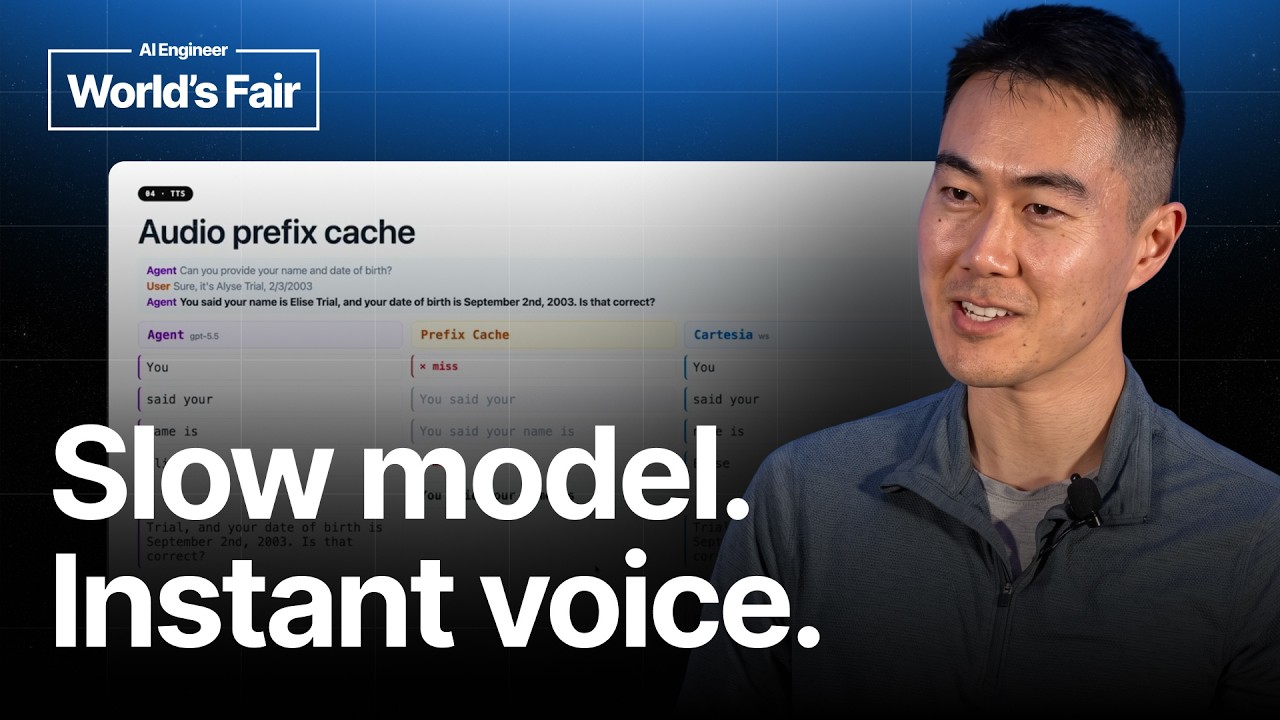
Allen Pike (Forestwalk Labs) discusses the power of "voice-in, visuals-out" AI experiences, a paradigm championed by Andrej Karpathy. He highlights the critical challenge of latency in real-time AI interactions and shares three key techniques for achieving low-latency, delightful user experiences: utilizing fast models, employing short inference intervals, and implementing stable caching regimens.
You Might Not Need 50 Diffusion Steps — Ziv Ilan, Nvidia
Ziv Ilan from NVIDIA details how latency in video diffusion models can be drastically reduced to achieve real-time generation. He presents a layered approach combining dynamic quantization for memory and speed, chunk-based caching to skip redundant denoising computations, and, most critically, step distillation—training models to achieve high-quality output in significantly fewer steps. These techniques, packaged in the open-source FastGen repository, offer additive performance gains, enabling real-time video on a single Blackwell B200 GPU.