RevenueCat: Powering Subscriptions for the App Economy
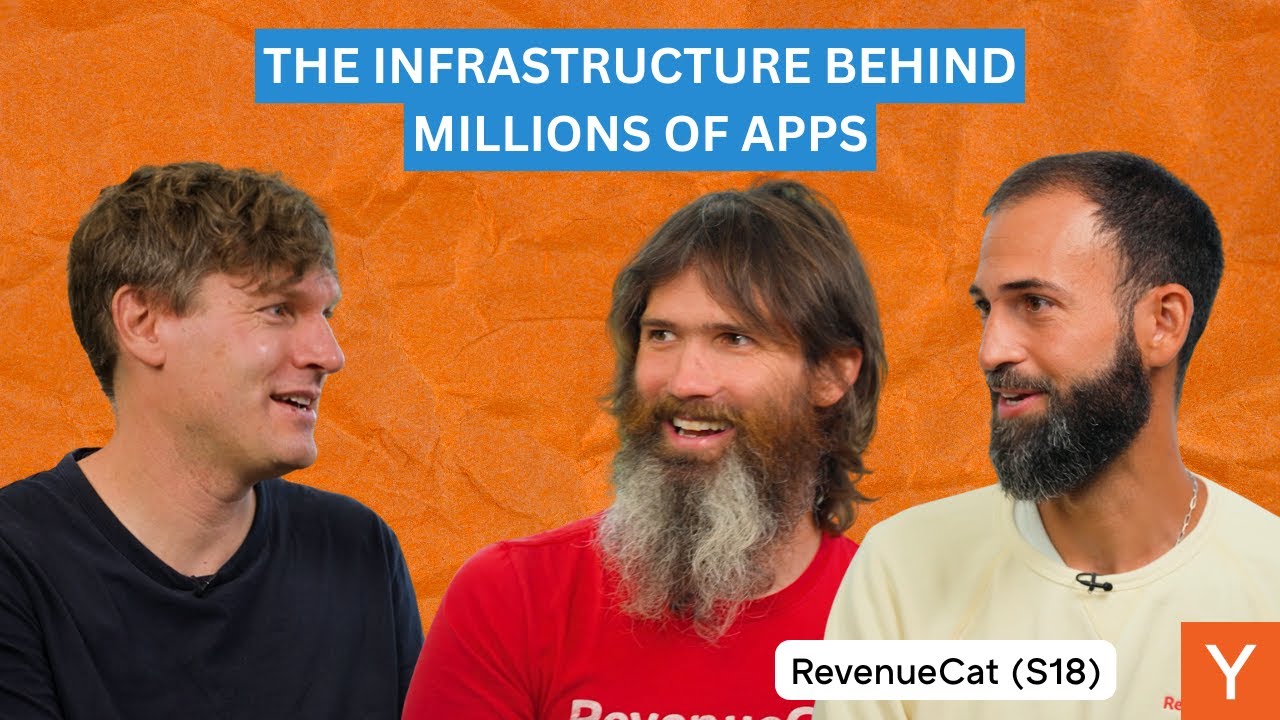
In a YC interview, RevenueCat co-founders Jacob Eiting and Miguel Carranza discuss their journey from experiencing the pain of in-app purchases to building a critical piece of infrastructure for the mobile economy. They cover their early-stage conviction, the keys to selling to developers, and the operational and personal lessons learned while scaling to a globally distributed team.
The Genesis: Solving a Universal Developer Pain
RevenueCat was born from the direct, painful experience of its co-founders, Jacob Eiting and Miguel Carranza. While working together at a previous company, they found that a disproportionate amount of their engineering effort—nearly half for a small team—was spent on building and maintaining monetization infrastructure, specifically mobile subscriptions. This was “undifferentiated work” that distracted them from their core value proposition.
The problem was multifaceted:
- Complexity: The App Stores provided powerful but difficult-to-use systems.
- Fragmentation: Developers needed to handle multiple stores (Apple, Google) which were not designed to work together, requiring a unifying layer to get a full picture of the business.
- Lack of Incentive: As platform monopolies, Apple and Google had little incentive to improve the developer experience or ensure interoperability.
This pain was universal. Developers were spending valuable time on a problem that consumers don’t see or care about, benefiting nobody.
From YC to Product-Market Fit: A Clear Vision
Unlike many startups that pivot, the RevenueCat team entered YC with a crystal-clear vision, having lived the problem for years. They had a document from 2018 outlining the product roadmap and business strategy, much of which is still being realized today. This deep understanding made initial customer conversations easy, as they could genuinely say, “I know what you’re going through.”
Getting the first customers involved a hands-on, developer-centric approach:
- Direct Outreach: Jacob, an iOS developer, would email companies and offer to fix their code in exchange for integrating the RevenueCat SDK.
- The “Collison Install”: They would go to a customer’s office for a day, integrate the SDK, and fix other unrelated bugs as a gesture of goodwill.
- Leveraging the YC Network: The YC brand provided crucial social proof, helping them land their first 10-20 serious apps, many of whom are still customers today.
Product-market fit became undeniable when the challenges shifted from customer acquisition to managing growth. The signs were clear:
- Inbound Demand: Customers started coming in without direct outreach.
- System Strain: The servers started breaking under the load.
- Overwhelming Feedback: The list of feature requests from enthusiastic customers grew faster than their ability to build them.
“If you’re having to like decide what to do every week, you probably don’t have product-market fit yet… If you have it, you just have no—there’s a list of 9,000 things to work on.”
Go-to-Market: Building for Developers
Selling to developers is fundamentally different from traditional SaaS sales. The key is to remove friction and empower the developer.
- Self-Serve First: Developers don’t want to talk to salespeople. The product should be easy to find, adopt, and integrate without a meeting. The goal is to let them pull your product into their workflow.
- Focus on the Long Tail: Indie developers and small teams are invaluable. They are early adopters, provide crucial feedback, and act as champions. Their word-of-mouth marketing is powerful, and they often move on to work at larger companies, bringing your tool with them.
Scaling with Intention
Staying Close to the Customer
As the company grew to over 100 people, staying connected to users required deliberate effort.
- Be Accessible: Jacob remains active on X (formerly Twitter), follows every customer back to fill his feed with their perspectives, and takes almost any meeting a customer requests.
- Empower the Team: They foster a culture where anyone on the team can and should talk to customers. There is no formal process or gatekeeping. “They’re not the pope. You can just talk to the customer.”
Operations and Culture
- Discipline and Transparency: Jacob sends a detailed investor update within the first three days of every month, a practice he started in 2018. The metrics have barely changed, creating a consistent “grounding truth” for himself, investors, and the team. This discipline fosters honesty and clarity.
- Remote-First by Necessity: The company went remote before COVID-19 to overcome the intense hiring competition in the Bay Area. This allowed them to build a more diverse, global team and avoid office politics. The key to making it work is a strong communication culture built on writing, documentation, and async artifacts like Looms.
Navigating the App Store Ecosystem
Building a business dependent on platforms like Apple and Google carries inherent risk. However, as RevenueCat has scaled, it now represents a significant portion of the stores’ customers, creating a form of “mutually assured destruction” that encourages a stable relationship.
Regarding the Epic vs. Apple lawsuit, which allowed alternative payment methods, the founders noted the impact has been “slightly positive, somewhat minimal.” It demonstrates that while the App Store model isn’t perfect, it’s not as far from market optimal as many believed.
Advice for Founders
- On the Co-Founder Relationship: Described as a “marriage without the good parts,” the relationship must be built on mutual respect and philosophical alignment. It’s crucial to invest time in the relationship outside of day-to-day work.
- On Perseverance: The startup journey involves periods that are not fun; you have to “eat glass.” The key to not giving up is to have a mission you care about and to build a company where you genuinely want to work.
- On Growth: Focus on making a little bit of progress every single month. Don’t worry about how it will compound over ten years. “Suddenly you wake up one day and you look backwards and you’re at the top of this like exponential slope.”
- On Self-Belief: YC pushed them to envision a billion-dollar outcome, a scale they initially dismissed. A core motivation became proving that early self-doubt wrong. Trust yourself, because if your investors could do what you do, they would.