Numeral: Building the Global Tax Platform
Co-founder Sam Ross discusses Numeral's journey from a personal e-commerce pain point to a venture-backed global tax platform. He covers the market opportunity created by outdated incumbents, the 'do things that don't scale' approach to finding product-market fit, lessons from fundraising, and how Numeral leverages AI to automate complex compliance workflows, shifting from a tool to a full-service solution.
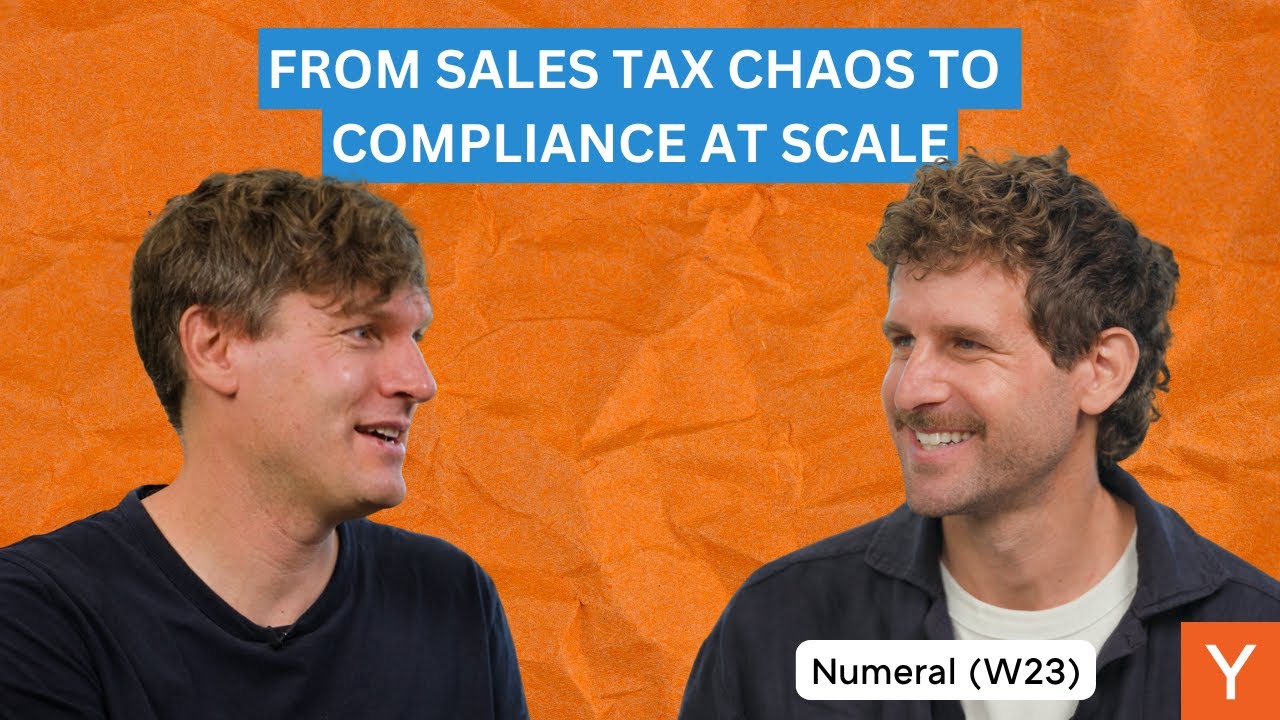
From Personal Pain to a Venture-Backed Vision
Numeral’s origin was a linear and deliberate process, born from co-founder Sam Ross’s direct experience running bootstrapped e-commerce businesses. While his jewelry and vitamin gummy shops were successful, generating tens of millions in sales, the most tedious and frustrating aspect was managing sales tax compliance. As a small, two-to-three-person team, he was personally responsible for filing and paying taxes in over 40 different US states, dealing directly with various Departments of Revenue. This firsthand pain highlighted a clear market need.
Initially, Ross’s ambition was geared towards cash-flow-positive, bootstrapped businesses that offered lifestyle freedom. However, the lack of retention in direct-to-consumer models created anxiety about long-term durability. This, combined with a desire to build something more substantial and a renewed interest in software, led to an intentional shift. He decided to build a venture-backed company, accepting the higher pressure and expectation of building a business worth over $10 billion, a stark contrast to the bootstrap mindset where the total addressable market is less of a constraint.
The Market Opening: A Supreme Court Decision and Outdated Incumbents
A pivotal 2018 Supreme Court decision fundamentally changed the sales tax landscape. Previously, businesses only needed to collect sales tax in states where they had a physical presence. The ruling established “economic nexus,” meaning that selling a certain dollar amount or number of orders into a state (e.g., $100,000 into Illinois) now required businesses to register and remit taxes there. This created immense complexity, with rules varying down to the city level (e.g., Chicago has its own specific software tax rules).
This regulatory shift created a massive new market of SMBs needing a solution. However, the incumbent software was ill-equipped to serve them for several reasons:
- Outdated Technology: Built in the early 2000s on frameworks like .NET, their user experience was clunky and unintuitive.
- Enterprise Focus: They were designed for large corporate controllers, not for the founders of small-to-medium-sized businesses.
- Hostile Sales Process: The sales experience often relied on fear tactics rather than demonstrating value.
- Lack of Innovation: Owned by private equity, these companies had largely stopped innovating. A key competitor, TaxJar, was acquired by Stripe and subsequently sunsetted, creating an even larger opening for a modern solution.
Early Days: Manual Work and Finding Product-Market Fit
Numeral’s journey began with a “do things that don’t scale” ethos. On the first day of Y Combinator (W23), the team had no software and almost no customers. They acquired their first clients by offering to do their sales tax compliance manually. Ross and his co-founder found themselves on the phone with state revenue departments, figuring out the filing process on the fly. They managed everything with spreadsheets and didn’t even have a customer dashboard until they had over 20 paying clients.
This demand-first approach, contrasted with a typical supply-first software build, gave them immediate customer growth and validation. They knew they had achieved product-market fit when:
- Customers were willing to pay thousands of dollars a month for a solution that didn’t fully exist yet.
- Every new go-to-market channel they tested—from cold emailing to Google Ads—worked to a significant degree, proving a widespread and urgent need.
The YC experience was crucial in elevating their ambitions. Being surrounded by highly ambitious founders helped shift their mindset from potentially building another bootstrapped business to aiming for a massive, venture-scale outcome.
Fundraising: From a Seed Round Grind to a Series A with Benchmark
The fundraising journey highlighted the different dynamics of early and later stages. The seed round was a grueling, four-week process involving hundreds of calls and a 95% rejection rate. The primary learning was that at the seed stage, traction is secondary; investors are betting on the team and the market.
In contrast, the Series A round with Benchmark was swift and straightforward. With strong traction, Numeral had the leverage. The Benchmark partner understood the market immediately, and the deal was closed within a week. The experience underscored that fundraising is often either extremely difficult or relatively easy, depending on which party holds the leverage.
Scaling Globally and Leveraging AI
Numeral’s scope quickly expanded from US sales tax for e-commerce to global VAT (Value Added Tax) for software companies. Software businesses often sell globally from day one, creating an immediate need to handle VAT in dozens of countries, each with its own rules and rates. Numeral is now building a true global platform, serving customers in over 60 countries by handling calculations, registrations, and ongoing filings.
The advent of LLMs has been transformative for Numeral’s “solution-as-a-service” model. The goal was never to just build a better tool for compliance, but to provide a complete service that abstracts the problem away. An early feature was scanning and processing physical mail from tax authorities. This began with the founders reading the mail, then evolved to a dedicated two-person team, and is now a fully automated workflow powered by AI. LLMs can scan a government letter, classify its type, extract relevant information, and trigger the necessary actions. This allows Numeral to build a product where the ideal user experience is one where the customer rarely, if ever, needs to log in.
Culture and the Long Game
The company’s culture draws inspiration from the founders’ past experiences. From Airbnb, they learned the value of high talent density, a collaborative environment, and maintaining founder-level scrutiny on product quality. From his co-founder’s time at Stripe and Notion, they adopted a strong documentation and writing culture.
Building a durable SaaS company is viewed as a marathon, not a sprint. The key to navigating the inevitable hard times is consistency and a deep psychological commitment to the long-term vision. For Ross, the motivation comes from viewing the startup journey as a game—one that requires continuous feedback, strategic action, and the satisfaction of winning over a 10-20 year timeline.