Designing Claude Code
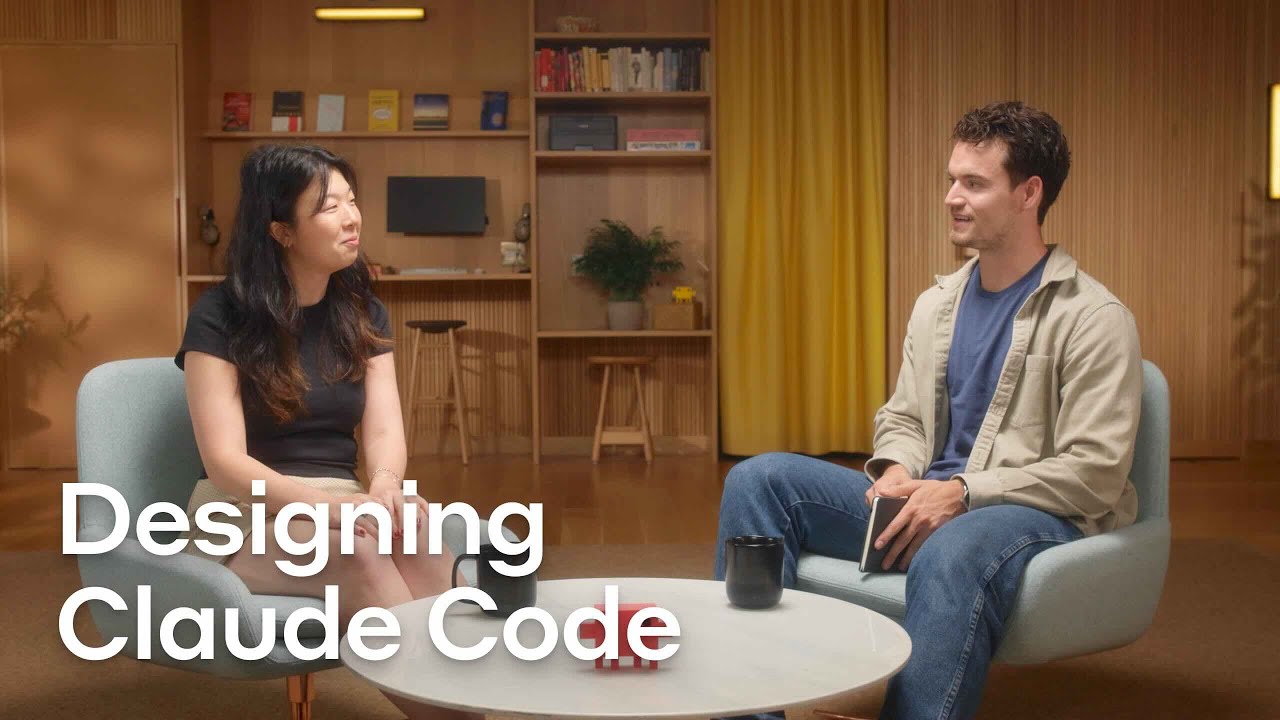
Anthropic’s Meaghan Choi and Alex Albert explore the design philosophy behind Claude Code, discussing its terminal-first approach, the evolution of developer workflows in the age of LLMs, and how agentic coding empowers both engineers and designers.
The Terminal as the Perfect Form Factor for LLMs
The decision to build Claude Code within a Command Line Interface (CLI) began as a practical choice for rapid iteration but quickly evolved into a core design principle. The terminal is a ubiquitous and versatile tool already integrated into every developer’s workflow, whether they primarily use an IDE or are a vim user. This allows Claude Code to meet developers where they are, without requiring the adoption of a new tool.
The rise of LLMs represents a “full circle” moment for user interfaces. The industry moved from the first UIs—text-only terminals—to rich, polished web interfaces, and has now returned to conversational, text-in, text-out interactions. As Design Lead Meaghan Choi notes, “terminal, interestingly, is actually the perfect form factor for an LLM… it just is like so native to how you think about using like a command line interface that it was like a beautiful marriage.”
Evolving the Developer Workflow
Claude Code aims to fundamentally up-level the abstraction layer at which developers operate. The traditional workflow with LLMs involved significant friction, such as copying prompts and code snippets between a web UI and a local editor. By integrating directly into the local environment, Claude Code streamlines this process.
The evolution of AI-powered coding assistance can be seen in stages:
- Word/Function Level: Early tools focused on line-level assistance like tab-to-autocomplete.
- File/Task Level: The first generation of Claude Code elevates this to handling full file changes or entire tasks, operating at a level similar to a pull request.
- Project Level: The future vision involves moving toward project-level orchestration, where a developer directs multiple, more autonomous Claude agents to accomplish complex, longer-running tasks.
Design Principles for a Conversational CLI
Designing an AI tool for a terminal presents unique challenges and requires a disciplined approach. The core design principles for Claude Code are:
- Simplicity and Focus: A CLI is a limited interaction surface. The design prioritizes keeping the interface as clean as possible, avoiding information overload and focusing the user on the current task.
- Let the Model Shine: The goal is for the CLI to be the “thinnest wrapper possible” around the language model. This ensures that the user has direct access to the raw power and capability of Claude, which is the product’s main strength.
- Embrace Personality: Despite the constraints, the team has found ways to inject personality and useful information through design elements like ASCII art for “thinking” animations and distinct modes (
planning,auto-accept) that communicate complex states in a simple, understandable way.
The architecture separates concerns in a way that is familiar to developers: prompting for interaction, slash commands for tools, and configuration files (settings.json, CLAUDE.md) for setup and context, mirroring conventions like README files.
A New Skill Set for Designers and Non-Technical Roles
Claude Code and similar agentic tools are unlocking a “new skill tree for non-technical folks,” empowering them to participate more directly in the development process. For product designers, this manifests in several powerful new workflows:
- Brainstorming and Scoping: A designer can use Claude Code to brainstorm feature ideas, identify potential edge cases, and even get development time estimates by feeding it design mockups. This facilitates more informed collaboration with engineering teams.
- Prototyping and Polishing: While the idea that “the cost of an idea is zero” is powerful, the more significant unlock is the ability to push code to production. Designers can now independently implement the final “2% of design polish” that often gets deprioritized, cleaning up minor UI issues before or after a product launch.
- Enhanced Collaboration: By being able to make a “first attempt” at a code change, designers can have more concrete and productive conversations with their engineering partners, strengthening the collaborative bond. This transforms the dynamic from making requests to co-creating solutions.