OpenAI’s IMO Team on Why Models Are Finally Solving Elite-Level Math
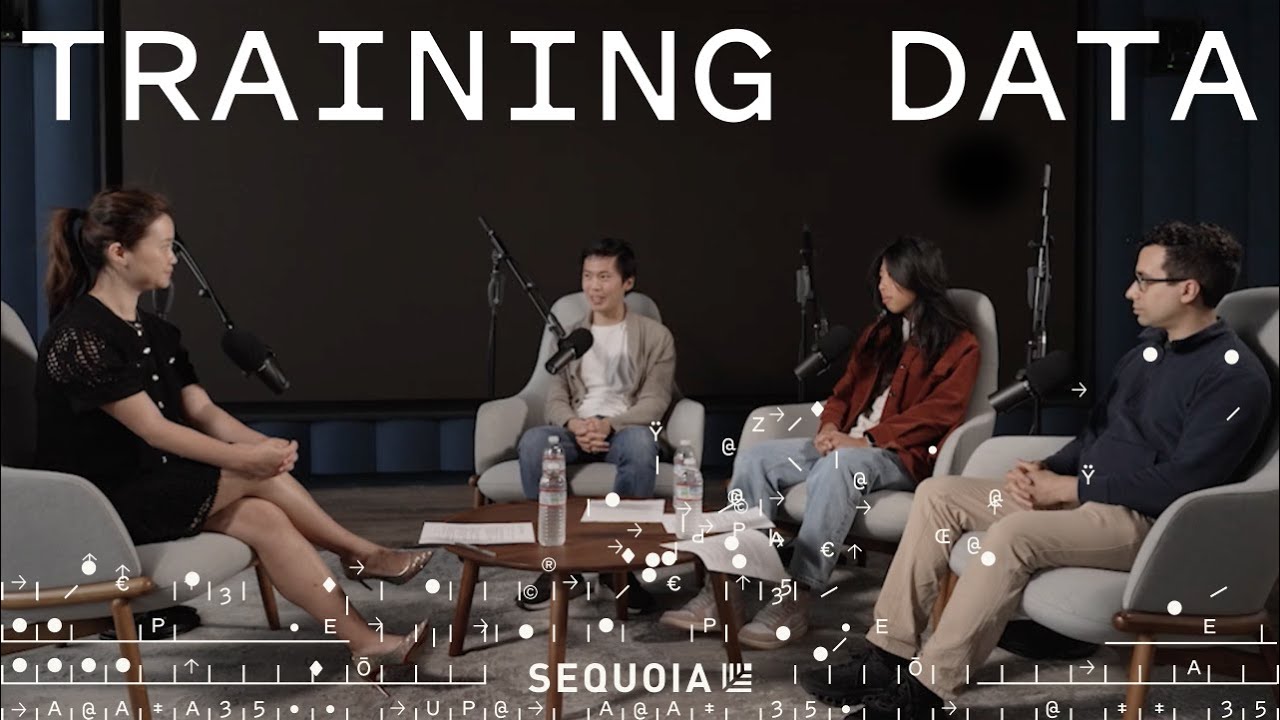
Members of the OpenAI team, Alex Wei, Sheryl Hsu, and Noam Brown, discuss their model's historic gold-medal performance at the International Mathematical Olympiad (IMO). They detail their unique approach using general-purpose reinforcement learning for hard-to-verify tasks, the model's surprising self-awareness, and the vast gap that remains between solving competition problems and achieving true mathematical research breakthroughs.
The Sprint to IMO Gold: A Scrappy Three-Person Effort
The goal of achieving a gold medal at the International Mathematical Olympiad (IMO) has long been a benchmark for progress in artificial intelligence, even appearing on OpenAI’s fundraising slides in 2021. While the ambition was long-standing, the final, intensive effort was remarkably swift. The core project team, consisting of just Alex Wei, Sheryl Hsu, and Noam Brown, embarked on a “scrappy,” two-month sprint to prepare the model for the 2024 IMO. This small team built upon the broader infrastructure and foundational models at OpenAI but drove the specific research direction and execution that led to the breakthrough.
A General-Purpose Approach to Hard Problems
A key strategic decision was to forgo specialized, formal verification tools like Lean, which are common in the AI math community. Instead, the team prioritized general-purpose techniques using reinforcement learning (RL) and natural language. The rationale was to develop methods that could be broadly applied to other difficult domains beyond mathematics.
Noam Brown explained, “We all really prioritized general purpose techniques… the techniques that we used for everything for scaling up the thinking time for working on hard-to-verify tasks and for the parallel compute are all general purpose techniques that we’re either planning or have used for other systems as well.”
The project was seen as a way to tackle a “kernel of difficulty” around scaling test-time compute and handling tasks with rewards that are difficult to verify—a common challenge across many AI applications. Alex Wei noted that “a lot more of the world can be approached with like informal reasoning than is like formalizable.”
Scaling, Verification, and ‘Atrocious’ Proofs
A significant challenge was scaling the model’s “thinking time” from the order of a tenth of a minute just a year ago to over 100 minutes for the IMO. As the model produced solutions, verifying their correctness was paramount. The style of the model’s output was described as “atrocious” and akin to an “alien language,” making it difficult for humans to read.
Despite the temptation to use another model to rewrite the proofs for clarity, the team decided to publish the raw, original outputs for full transparency. To ensure rigorous and unbiased evaluation, each proof was graded by three external, former IMO medalists, who had to reach a unanimous consensus on its correctness. This was necessary as the proofs were often “beyond the ability to comprehend” for even the team members with math backgrounds.
Insights from the Competition
The model’s performance on the notoriously difficult Problem 6 offered a key insight. The model invested significant compute but ultimately produced “no answer.” This was seen as a positive and crucial sign of progress.
- Model Self-Awareness: Rather than hallucinating a plausible but incorrect solution—a common failure mode in earlier models—the system demonstrated an ability to recognize its own limitations. Alex Wei called this an “amazing level of self-awareness.” This addresses a major pain point for researchers who have struggled with models that output convincingly wrong answers.
- Combinatorics as a Hurdle: Problem 6 was a combinatorics problem. The team noted that this area of mathematics remains particularly challenging for current models, likely because it is more “abstract,” “high-dimensional,” and often requires “leaps of insight” that models are not yet good at generating.
An Astonishing Pace of Progress
The achievement highlights the exponential progress in AI’s mathematical reasoning capabilities. The hosts and team reflected on the rapid evolution from models struggling with grade-school math (GSM8K) just a few years ago to quickly surpassing benchmarks like MATH, AIME, and USAMO, and now reaching the IMO gold standard. The pace was described as “really astonishing.”
The Gap Between IMO Gold and True Mathematical Research
While celebrating the milestone, the team offered a humbling perspective on the road ahead. They emphasized the massive gap between solving time-boxed competition problems and conducting novel mathematical research.
An IMO problem takes a brilliant student around 1.5 hours. A genuine research breakthrough, however, can require the same person to spend 1,500 hours or more. This represents a “thousand-x of more thinking time.” Millennium Prize problems are an even greater challenge, representing “tens of thousands, hundreds of thousands of hours of human thinking.”
What’s Next?
The focus is now shifting from competition math to problems that require longer and deeper periods of thought. The successful general-purpose RL techniques developed for this project are set to be integrated more broadly into OpenAI’s models to “improve the reasoning capabilities across the board.” The team is also exploring how to make this powerful math model accessible to mathematicians to see what new frontiers they can unlock with it.