Delphi’s Dara Ladjevardian: How AI Digital Minds Can Scale Human Connection
Dara Ladjevardian, founder of Delphi, discusses creating "digital minds" using an adaptive temporal knowledge graph. Inspired by Ray Kurzweil's theory of the mind, this technology aims to scale human thought and expertise, transforming content consumption from static feeds into interactive, conversational media while emphasizing the premium value of authentic human connection.
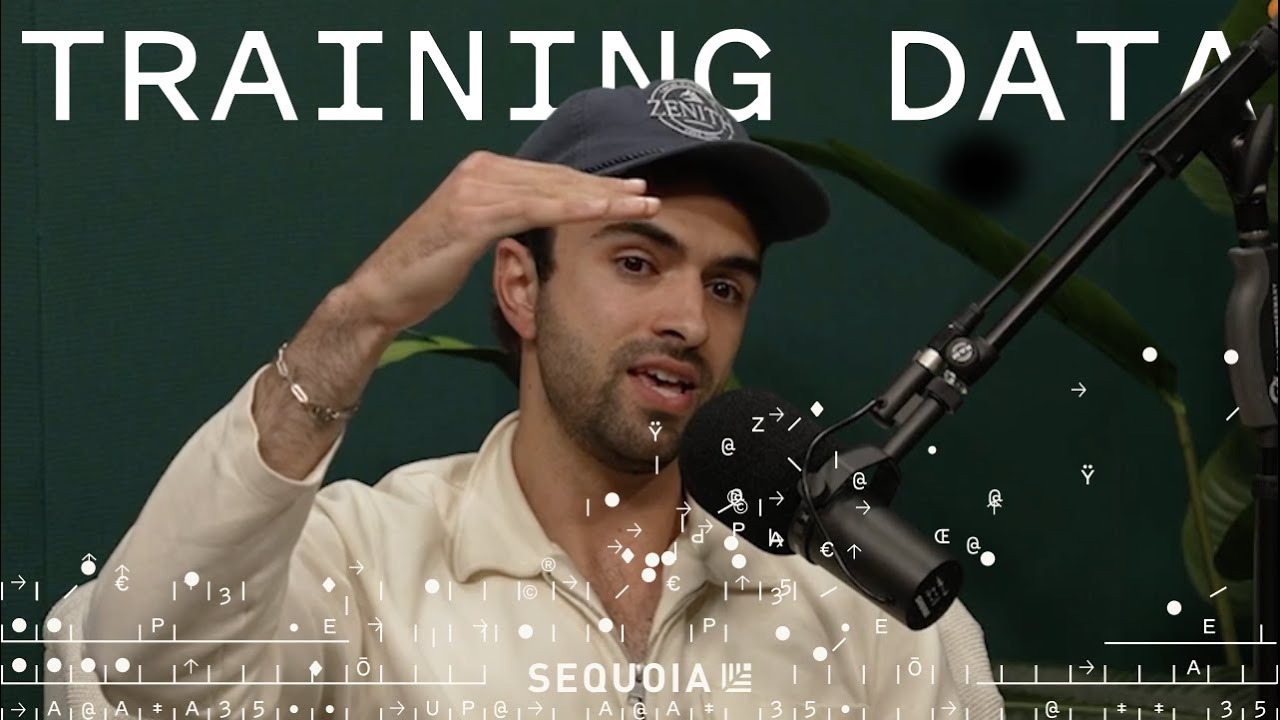
Dara Ladjevardian, founder and CEO of Delphi, posits that AI is driving a fundamental shift in media consumption, moving from passive information feeds to active “conversational media.” In this new paradigm, as AI-generated content becomes abundant, authentic human energy and connection become the premium experience. Delphi is built on this premise, offering a way to create “digital minds”—AI representations that don’t just mimic a person’s voice and knowledge, but also their unique ways of thinking and reasoning. The goal is not to replace human interaction, but to provide access and scale expertise in a way that is more convenient and personalized, ultimately increasing the desire for genuine connection.
The Genesis: From Personal Need to a Scalable Platform
The inspiration for Delphi has deep, personal roots. A pivotal moment for Ladjevardian was reading Ray Kurzweil’s book, How to Create a Mind, which introduced the theory of the mind as a hierarchy of pattern recognizers. This concept resonated years later when, as a lonely first-time founder, he wished he could seek advice from his grandfather, a principled and successful Iranian businessman who had suffered a stroke. Using early GPT-3 models and embeddings, he created a digital version of his grandfather from a book written about him, allowing him to ask questions and receive guidance based on his grandfather’s principles.
This experience, coupled with several key observations, built the conviction to turn the project into a company:
- The Problem of Mentorship: Realizing that his feeling of isolation and lack of mentorship was a universal problem for young people seeking to learn from experts.
- Rapidly Decreasing Costs: Observing the exponential drop in the cost of AI models, which made the technology financially feasible to scale. The digital mind of Tony Fadell, created from his book Build, was 10,000 times cheaper to operate than the initial version of his grandfather.
- The Power of Tutelage: Citing Bloom’s two-sigma problem, which demonstrates that students with one-on-one tutors perform two standard deviations better, Delphi aims to provide this level of personalized learning at scale.
The Technology: An Adaptive Temporal Knowledge Graph
At its core, Delphi is powered by what Ladjevardian describes as an “adaptive temporal knowledge graph.” This architecture is a direct implementation of Kurzweil’s theory, viewing Large Language Models (LLMs) as the foundational pattern recognizers.
- Organization Over Molecular Detail: The system is built on the insight that to recreate a mind, one must understand its organization and architecture, not necessarily its low-level molecular details.
- Knowledge Graph Structure: A knowledge graph is used to store not just information, but the connections, relationships, and uncertainties between concepts. It maps out how an individual reasons about events and heuristics, storing confidence weights for different statements.
- Temporal and Adaptive Nature: The “temporal” aspect allows the graph to evolve, reflecting how a person’s beliefs and knowledge change over time. This could enable querying what a younger version of oneself might have thought. The “adaptive” nature allows the digital mind to reason about novel situations. For example, by drawing on his grandfather’s principles for navigating uncertainty in the 20th-century oil industry, the model can infer how he might approach the uncertainties of the modern AI industry.
Authenticity, Trust, and Control
From early missteps, including receiving cease-and-desist letters for creating unauthorized digital versions of public figures, Delphi learned that trust and authenticity are paramount. The company pivoted to a model requiring explicit buy-in from the individuals being represented.
This required building a trustworthy brand and product features that give creators control:
- Strict Guardrails: The platform has a strict stance on anti-hallucination and only allows individuals to create a Delphi of themselves.
- Creator-Controlled Leniency: Creators can choose the level of strictness for their digital mind. It can be set to only use direct information from its training data, or it can be allowed to predict what the person might say in a new situation by extrapolating from their known principles and reasoning patterns.
- Data Scoping: The system is context-aware, allowing different data to be exposed in different settings (e.g., an internal version for a company vs. an external-facing version).
Use Cases and The Future of Interaction
Delphi is a horizontal platform enabling a wide range of applications that scale an individual’s thoughts and availability.
- Learning and Monetization: Creators are using it as a new form of teaching, offering an interactive and adaptive alternative to static books or low-completion-rate online courses. Some are already generating millions of dollars by selling access to their digital minds.
- Internal Company Scaling: CEOs and top salespeople use it to scale their thinking and train new hires, ensuring alignment and knowledge transfer as a company grows.
- Top-of-Funnel Filtering: It serves as an intelligent replacement for a personal website or LinkedIn profile, allowing people to “pick the brain” of an expert without sending another email. The digital mind can then flag important conversations for the real person to follow up on.
- Reducing Social Friction: A surprising use case is reducing the “anxiety of wasting someone’s time.” Users, even those with direct access to an expert, often prefer to ask the digital mind first to avoid bothering the person with a minor or ill-formed question.
Ladjevardian predicts that by 2026, interacting with digital minds will become mainstream, driven by lower friction in creation and growing cultural acceptance. The ultimate vision is a future with “less scrolling, more learning,” where technology proactively connects people for meaningful real-world interactions, moving beyond the paradigm of the infinite feed.