Agentic AI Meets Shadow AI : Zero Trust Security for AI Automation
The video explores the risks of Agentic AI, which acts rather than just chats, and the emergence of 'Shadow AI'—unofficial, unmonitored AI systems. It proposes a unified control plane for AI security and governance, using a continuous loop of discovery, assessment, governance, and auditing to ensure safe automation. The concepts are illustrated with practical use cases in healthcare and public services.
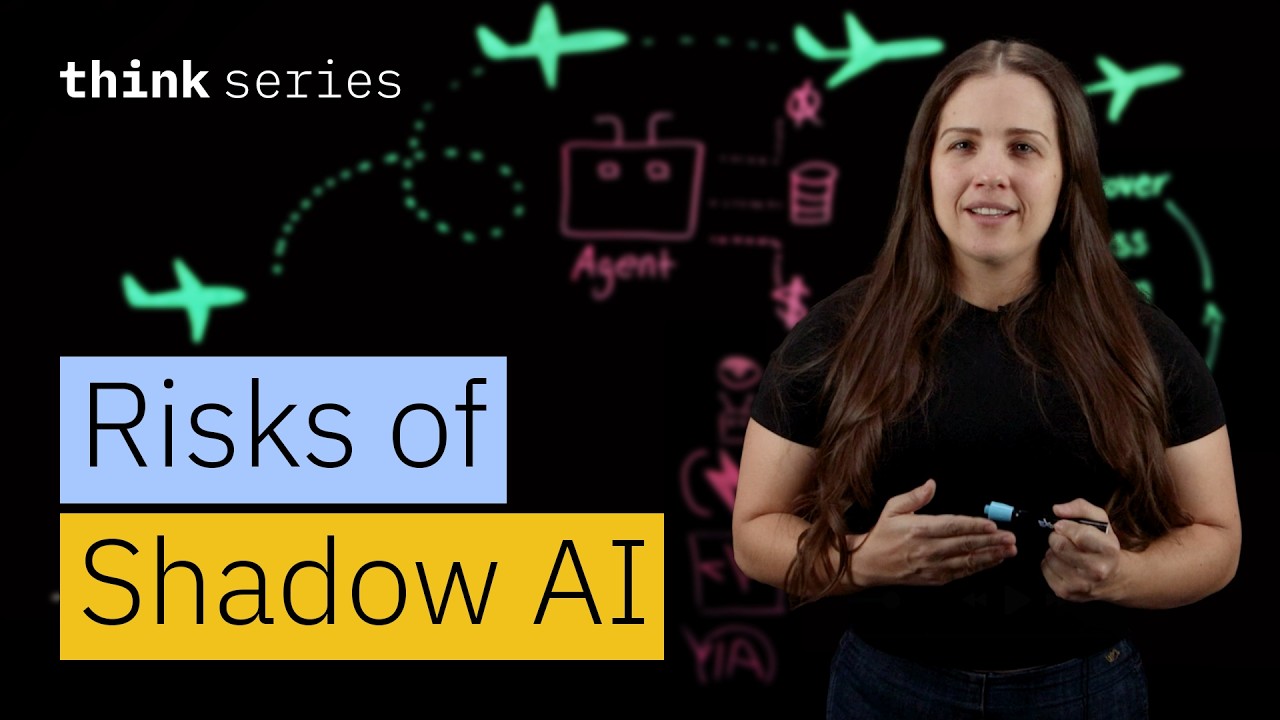
From Chatbots to Agentic AI
The landscape of AI is shifting from conversational chatbots to ‘doers’—agentic AI systems that actively perform tasks like booking appointments, filing tickets, updating records, and interacting with APIs. This evolution means the primary risk is no longer what an AI thinks or says, but what it does. When security and governance operate in silos, these autonomous agents can easily outpace oversight, creating significant operational and security risks.
The Challenge of Shadow AI
Shadow AI refers to unofficial AI systems—scripts, models, or agents—that teams create without formal approval or a paper trail to get work done faster. While well-intentioned, Shadow AI introduces several critical risks:
- Lack of Visibility: If security teams are unaware of an AI agent’s existence, they cannot secure it. It becomes a hidden liability that can access sensitive systems undetected.
- Data Leakage: These unofficial tools may use unsecured credentials or copy-paste sensitive information, creating pathways for data exfiltration.
- Compliance Failures: Without a record of an agent’s actions, it’s impossible to produce an audit trail, which is essential for demonstrating compliance with regulations.
- Excessive Access: For convenience, developers often grant shadow agents overly broad permissions. This practice violates the principle of least privilege and dramatically increases the potential damage if the agent is compromised.
- Messy Incident Response: When a hidden agent fails, a lack of clear ownership or documentation makes it difficult to determine the scope of the incident, delaying remediation.
To mitigate these risks, any new agent should be formally declared, its capabilities documented, its access rights limited to only what is necessary (least privilege), and its actions logged.
A Unified Control Plane for Agentic AI
A robust strategy for managing agentic AI requires a unified control plane, similar to air traffic control, that provides a single, living picture of risk. This system operates on a continuous loop of five key activities:
- Discover: Automatically find and catalog all AI agents, including shadow systems, and bring them under formal oversight.
- Assess: Proactively stress-test agents using automated red teaming to identify vulnerabilities like prompt injection, data leakage, and configuration weaknesses before attackers can exploit them.
- Govern & Secure: Enforce runtime policies such as least-privilege tool access, input/output guardrails, and active monitoring for risky behavior. All findings should be tied to a single risk register accessible to both security and governance teams.
- Audit: Implement automated logging and controls to generate actionable, evidence-based audit trails for every action an AI agent takes. This ensures full traceability and accountability.
Use Case 1: Enhancing Patient Care in Healthcare
An AI agent can assist a clinician by quietly working in the background during a patient consultation. It transcribes the conversation into a draft clinical note, flags discrepancies (e.g., a medication dosage mismatch between the conversation and the patient’s chart), and prepares draft orders and follow-ups. Safety is maintained through several key guardrails:
- Human-in-the-Loop: The agent cannot finalize any action; a clinician’s approval is required for all orders and notes.
- Least Privilege: The agent has read-only access to patient records, allowing it to flag inconsistencies but not to make unauthorized changes.
- Scoped Permissions: Each connected tool (e.g., scheduling, documentation) has the minimum permissions needed for its task, preventing an agent from gaining broad system access.
- Auditability: Every generated summary and instruction is linked back to its source in the approved note, ensuring verifiability.
Use Case 2: Streamlining Citizen Services in the Public Sector
An AI agent can simplify interactions with government services, such as filing taxes and renewing a license, through a single conversational interface. The agent guides the citizen, retrieves necessary records, and prepares forms for approval. Safety and trust are built through:
- Consent and Data Minimization: The agent requests explicit consent to access specific records and limits its reach to only what is necessary for the task.
- Transparency: The agent clearly shows the citizen which data sources it used, allowing for verification and correction.
- Least-Privilege Transactions: When submitting payments or filings, the agent uses minimal permissions and filters prompts and outputs to prevent data leakage.
- Comprehensive Audit Trail: The system logs every step—data accessed, rules applied, model versions used, and citizen approvals—to ensure full traceability.
Conclusion: Safe and Scalable AI
Agentic AI is no longer just about conversation; it’s about action. To manage the associated risks, organizations must achieve full visibility, make red teaming a default practice, enforce the principle of least privilege, and maintain robust audit trails. By unifying security and governance into a single control plane, organizations can move faster not by compromising on safety, but by making safety a prerequisite for speed. This is how agentic AI matures into a reliable, trustworthy, and scalable technology.