Security & AI Governance: Reducing Risks in AI Systems
The video explains the distinct but complementary roles of AI governance and security in mitigating AI risks. It contrasts their focuses, from self-inflicted policy violations (governance) to intentional external attacks (security), and proposes a layered framework combining both for comprehensive protection.
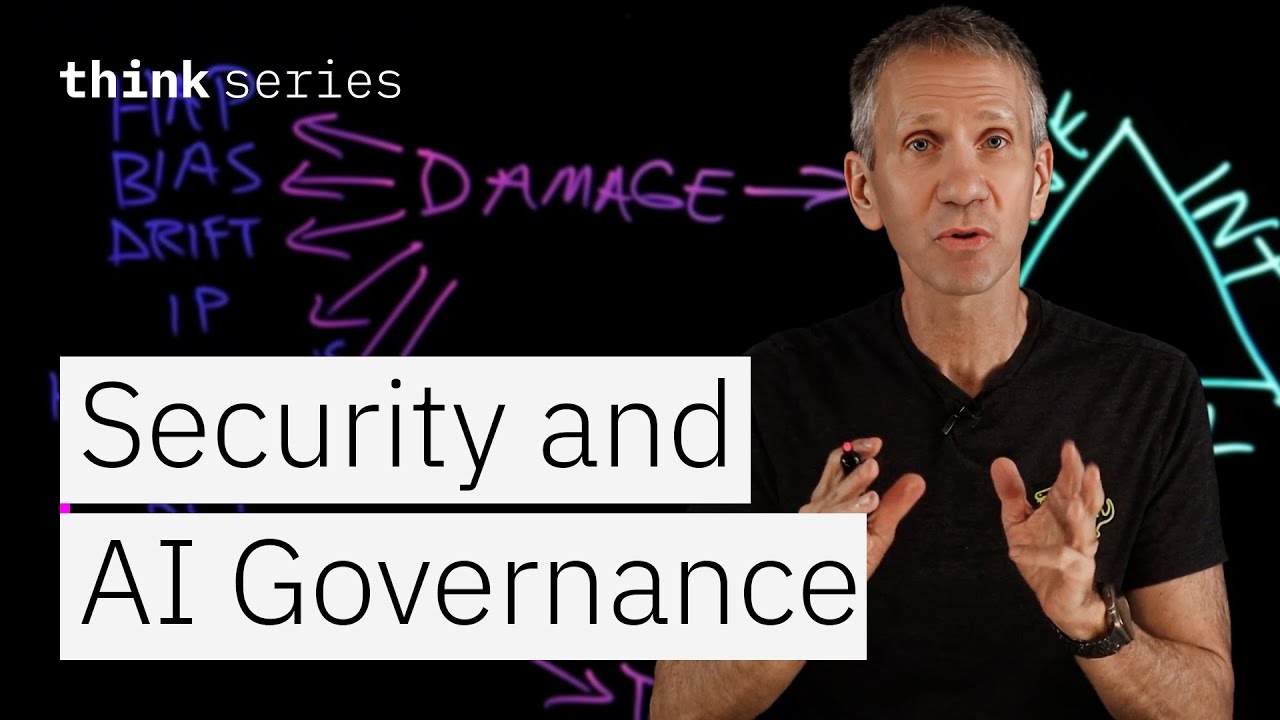
AI’s potential is vast, but it introduces significant business and reputational risks. To mitigate these, a robust strategy combining both AI governance and security is essential. These two disciplines are not interchangeable; they are complementary, addressing different facets of AI risk. While there is some overlap, they address distinct problems, stakeholders, and solutions.
Distinguishing Governance from Security
To effectively manage AI risk, it’s crucial to understand the different domains of governance and security.
- Primary Stakeholders: Governance typically falls under the purview of the Chief Risk Officer, while security is the domain of the Chief Information Security Officer (CISO).
- Core Concerns:
- Governance focuses on ensuring AI is responsible, explainable, and reliable. This involves thorough documentation and source attribution to build trustworthy systems. Key concerns include misalignments, policy violations, and ethical lapses.
- Security is concerned with vulnerabilities within the AI system itself. It addresses external attacks, unauthorized “shadow AI” instances, and potential data leaks.
- Root Cause of Issues:
- Governance primarily addresses “self-inflicted wounds”—unintentional issues arising from using a bad model, improper training, or poor data sources.
- Security, in contrast, focuses on damage inflicted by others, such as malicious insiders or external attackers, which is typically intentional.
- Potential Damage:
- Governance failures can lead to issues like hate, abuse, and profanity (HAP); unfair bias; model drift; intellectual property (IP) infringement (either by the model or against it); and hallucinations that damage the organization’s reputation.
- Security failures relate to the classic CIA triad:
- Confidentiality: Data exfiltration of sensitive information.
- Integrity: System manipulation or data poisoning to produce incorrect outputs.
- Availability: Denial-of-service attacks that make the AI unavailable to legitimate users.
A Layered Framework for Comprehensive AI Protection
Instead of viewing governance and security as separate, overlapping functions, a more effective approach is an integrated, layered solution framework built around the AI model.
The Governance Layer
The first layer of protection is governance, which establishes the rules and processes for the AI’s entire lifecycle.
- Discovery and Management: Define and manage AI use cases to ensure they align with intended business outcomes.
- Model Management: Track model lineage, sources, and versions to ensure authenticity and proper training.
- Risk and Compliance: Identify, quantify, and map risks. Ensure the system complies with industry regulations and performs due diligence.
- Monitoring: Continuously monitor the performance and behavior of the model.
- Lifecycle Management: Adopt a holistic view of the AI’s lifecycle, from inception and maturity to retirement.
The Security Layer
The outer layer adds technical protections against active threats.
- Discovery and Posture Management: Discover all AI models, especially shadow AI, and implement AI Security Posture Management (ASPM) to guard against misconfigurations, enforce access controls, and ensure compliance with security policies.
- Model Testing: Conduct penetration testing and model scanning to identify and remediate vulnerabilities like prompt injections or infections that could lead to data leaks.
- Real-time Protection (AI Firewall): Implement an AI gateway or firewall between the user and the AI. This inspects incoming prompts for attacks (like prompt injection) and outgoing responses for sensitive data exfiltration, allowing for real-time blocking or redaction.
- Threat Monitoring and Visualization: Use a threat monitor and a centralized dashboard to visualize the security posture, track active threats, view critical vulnerabilities, and monitor compliance against frameworks like the NIST Risk Management Framework.
Ultimately, the goal is to lower overall AI risk. This is achieved not by choosing between governance and security, but by integrating them into a unified strategy: AI + Governance + Security = Lower Risk.