Tokenless

Interactive discovery

Explore the topic map

Follow the connections between themes, people, and ideas across the Tokenless archive in an interactive topic modeling map.

Machine Learning

View All
Judge a Transaction by the Company It Keeps — Somya Rai & MD Sharique, EXL

Judge a Transaction by the Company It Keeps — Somya Rai & MD Sharique, EXL

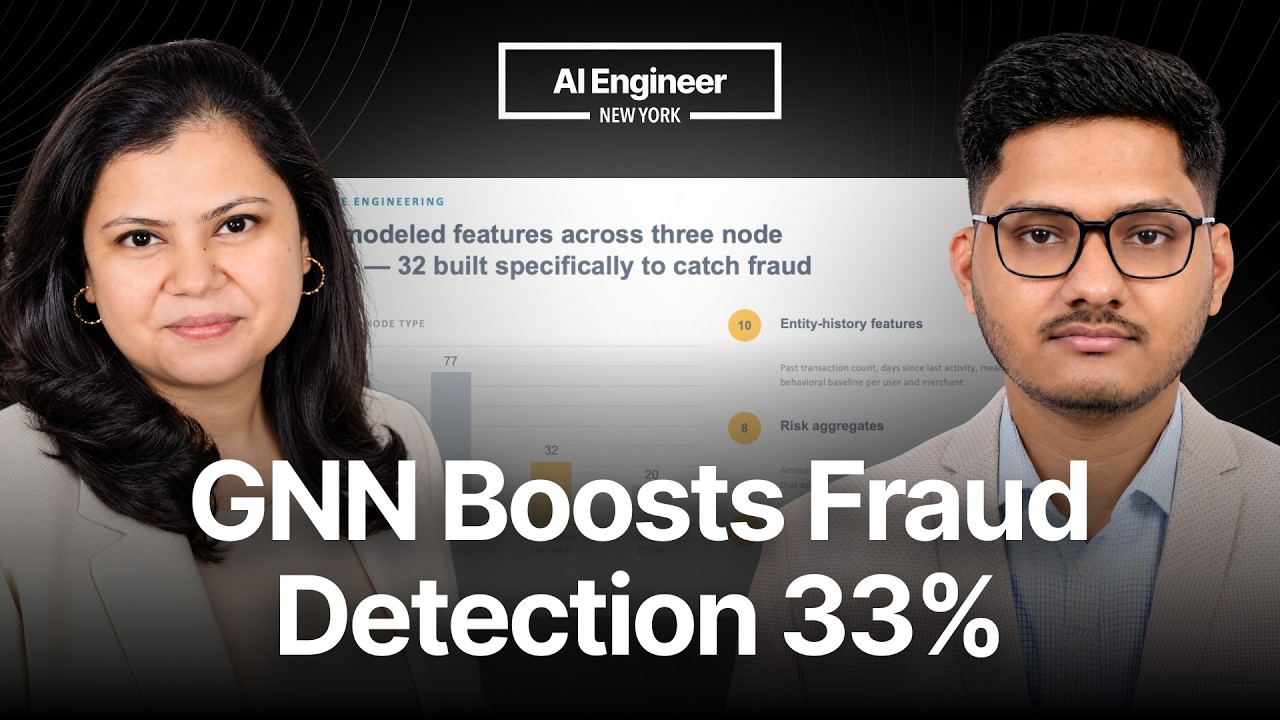
EXL developed an advanced fraud detection system that augments XGBoost with Graph Neural Network (GNN) embeddings. Traditional tabular models struggle to capture fraud signals residing in transaction neighborhoods. The system's innovative design includes meticulous sampling strategies, disjoint monthly graph construction for leakage control, and a GraphSAGE architecture that aggregates mean, max, and standard deviation of neighbor features to detect subtle fraud patterns. Emphasizing explainability for regulatory compliance and analyst trust, it also features a highly optimized serving architecture achieving 3ms P99 latency, pivoting to edge prediction to reduce cache footprint from 60GB to 2-3GB. This led to a 27-33% relative lift in true positive rates and a projected $65 million incremental fraud capture.

From 15% to 90% GPU Utilization: Fix the Data Pipeline, Not the Model

From 15% to 90% GPU Utilization: Fix the Data Pipeline, Not the Model

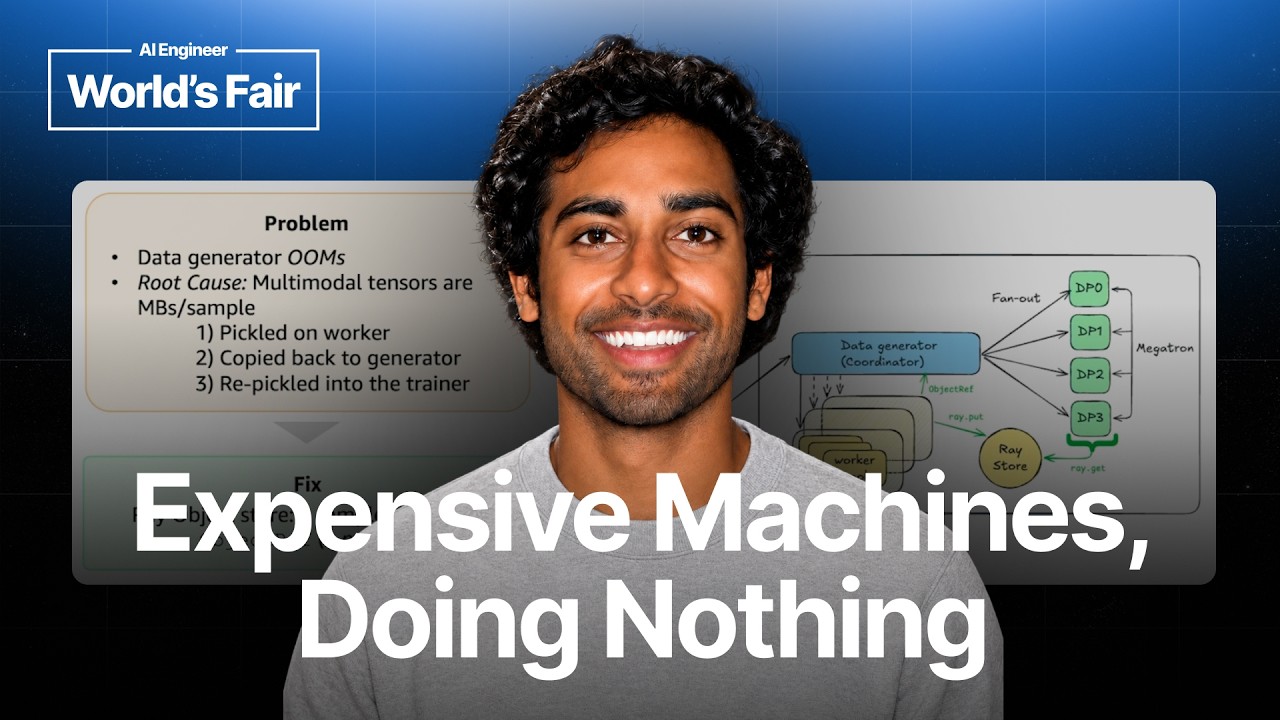
Tarun Sunkaraneni from Amazon AGI shows how a multimodal SFT pipeline that spent about 85% of its time waiting on data was brought to roughly 90% GPU utilization. He walks through concurrency with asyncio and Ray actors, prefetching, zero-copy transfer via Ray's object store, and a network-card bottleneck that appears only at scale, and argues that the hardest part of training throughput is often keeping GPUs fed rather than optimizing the model.

Small Models, Big Results: Training a Finance Agent for Under $500 — Charles Dickens, Snorkel AI

Small Models, Big Results: Training a Finance Agent for Under $500 — Charles Dickens, Snorkel AI

Snorkel AI and UC Berkeley's Sky Computing Lab show that a 4B Qwen3 model, trained with reinforcement learning for under $500 using the rLLM framework, beats its 235B sibling on expert-validated financial question answering built from SEC 10-K filings. The talk covers the FinQA dataset construction and verification, common failure modes of frontier models, transfer to multi-table and general tool-use tasks, and ablations showing that simple data and binary rewards outperform more elaborate setups, since the real bottleneck is disciplined tool use rather than reasoning depth.

Artificial Intelligence

View All
Why Humans Can't Keep Up With AI-Written Code - Tariq Shaukat, Sonar

Why Humans Can't Keep Up With AI-Written Code - Tariq Shaukat, Sonar

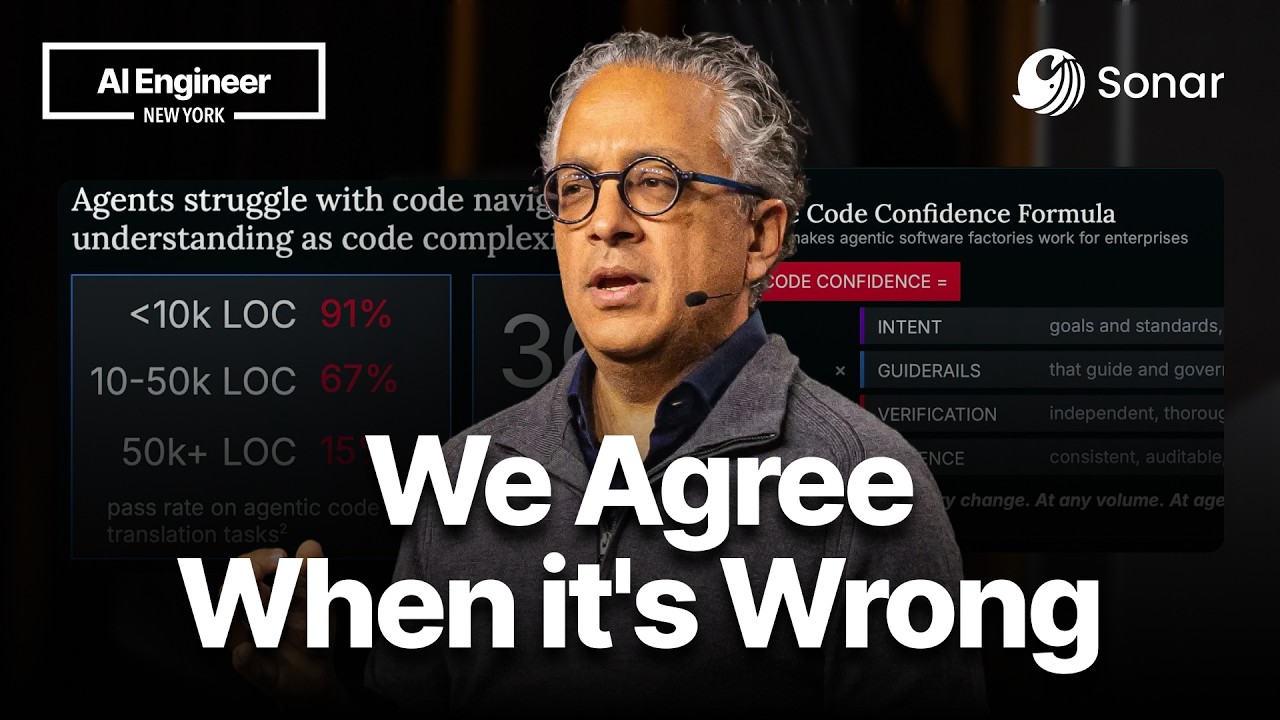
Sonar CEO Tariq Shaukat argues that agents have made code abundant but confidence scarce, and draws on Toyota's quality-first factory principles to show how to build software factories enterprises can trust. He covers five hard problems that break agentic development and presents Sonar's code confidence formula: intent, guide rails, verification, and evidence.

From AI Slop to Software Factories ft. Dexter Horthy

From AI Slop to Software Factories ft. Dexter Horthy

A tandem bike ride through Amsterdam turns into a wide-ranging conversation with Dexter Horthy, co-founder of HumanLayer, on code no one understands, computer use, MCP design, browser agents, chat interfaces, and the infrastructure every team needs for agent-based software factories.

Crusoe CEO Chase Lochmiller: Turning Stranded Energy Into Intelligence

Crusoe CEO Chase Lochmiller: Turning Stranded Energy Into Intelligence

Chase Lochmiller, founder and CEO of Crusoe, discusses building a vertically integrated AI infrastructure company spanning energy, data centers, manufacturing, and managed AI cloud. Topics include leading a complex organization, the Bitcoin-to-AI pivot, energy-first compute, executive coaching, firing decisions, community pushback on data centers, and lessons from climbing Everest.

Technology

View All
Why Founders Are Betting Big on Factories, Mines, and Energy

Why Founders Are Betting Big on Factories, Mines, and Energy

Erin Price-Wright and Connor Love unpack the AD50 and the rebuilding of America's industrial base, covering how defense demand is financing manufacturing capacity for commercial markets, how AI is reshaping factory economics, how a new generation of founders applies lessons from SpaceX, Tesla, Anduril, and Palantir to mining, energy, and manufacturing, and why private capital is now willing to fund physical infrastructure before government demand is guaranteed.

Mark Cuban’s Plan to Make Healthcare Affordable

Mark Cuban’s Plan to Make Healthcare Affordable

Mark Cuban and Julie Yoo discuss how transparency, direct contracting, and AI could reshape healthcare economics, from Cost Plus Drugs and modular pod manufacturing to personalized medicine, the future of physicians, and advice for founders who want to use AI to learn rather than to stop thinking.

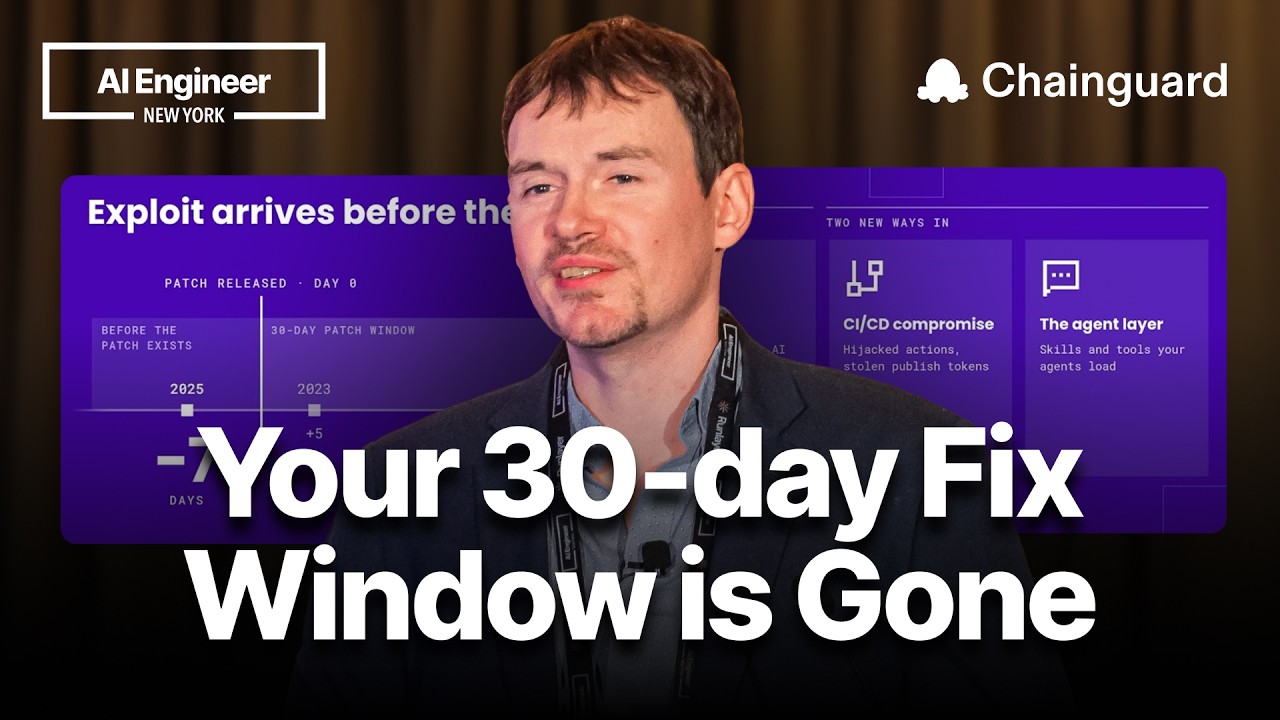
Exploits Now Beat Patches: Open Source Security in the AI Era - Patrick Smyth, Chainguard

Exploits Now Beat Patches: Open Source Security in the AI Era - Patrick Smyth, Chainguard

Patrick Smyth of Chainguard examines how frontier AI has compressed the time between vulnerability disclosure and exploitation, leaving 30-day remediation cycles obsolete. The talk covers AI-assisted attacks, waves of supply chain malware, four attack surfaces spanning malware, known CVEs, zero days, and side doors like CI/CD, developer laptops, and agent skills, and practical defenses including cooldown periods, faster CVE remediation, and signing artifacts with SLSA and Sigstore.


Recent Post

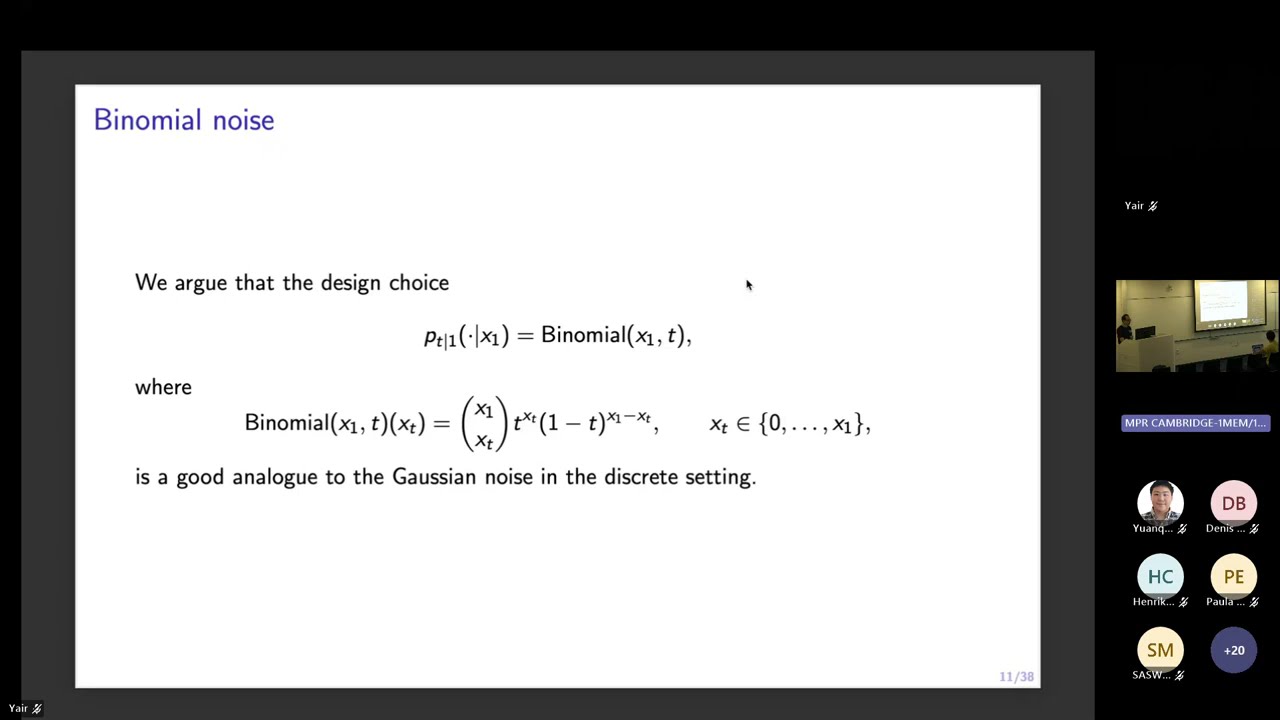
Binomial Flows: Denoising and flow matching for discrete ordinal data

Binomial Flows: Denoising and flow matching for discrete ordinal data

Shenfeld presents binomial flows, a discrete analogue of Tweedie-based diffusion for ordinal, non-negative integer data. The method pairs binomial thinning for noising with a Poisson-type continuous-time Markov chain whose rate is expressed through a learned denoiser, enabling training with MSE, sampling, and exact likelihood estimation. Results include the best reported CIFAR-10 FID among ordinal discrete diffusion models, obtained by adapting the EDM framework.

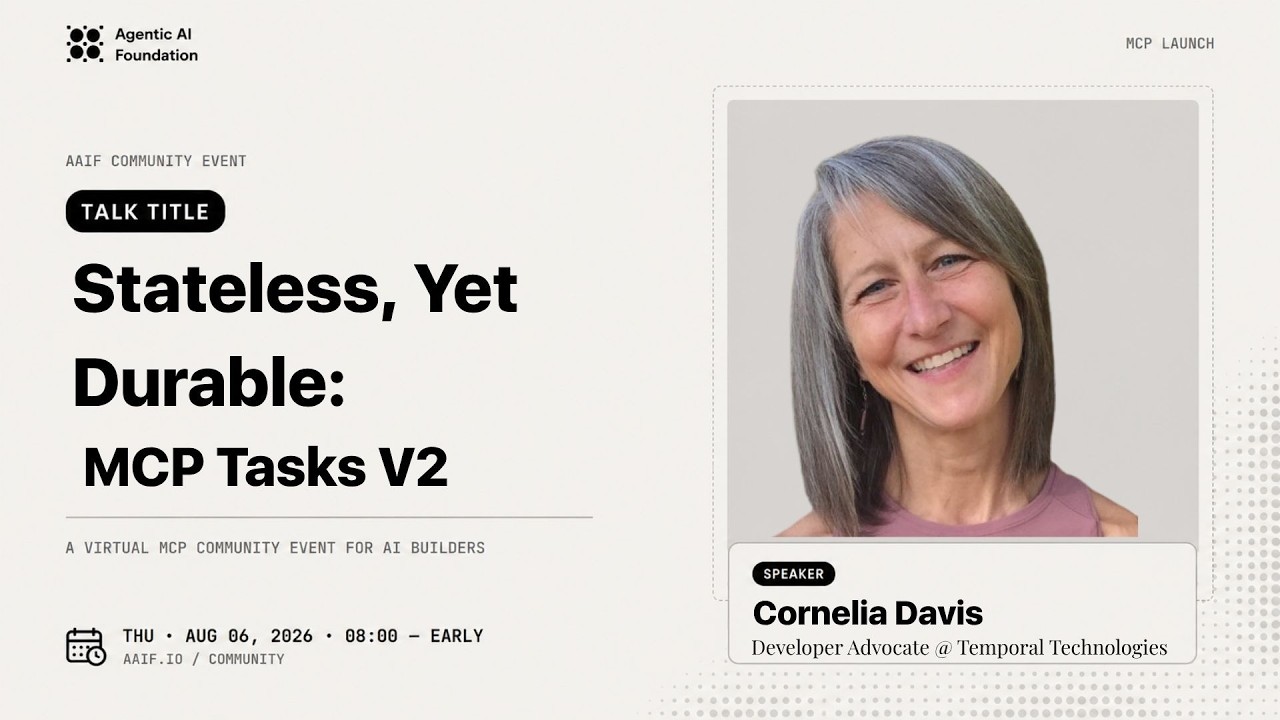
Stateless, Yet Durable: MCP Tasks v2

Stateless, Yet Durable: MCP Tasks v2

Cornelia Davis explores the evolution of MCP Tasks, detailing the transition from v1 to v2. She highlights how v2's stateless protocol design supports durable, long-running agentic workflows by shifting durability responsibilities to the client and simplifying elicitation. The presentation includes a demo of a purchase order process and discusses future scalability enhancements through a notification-based approach.

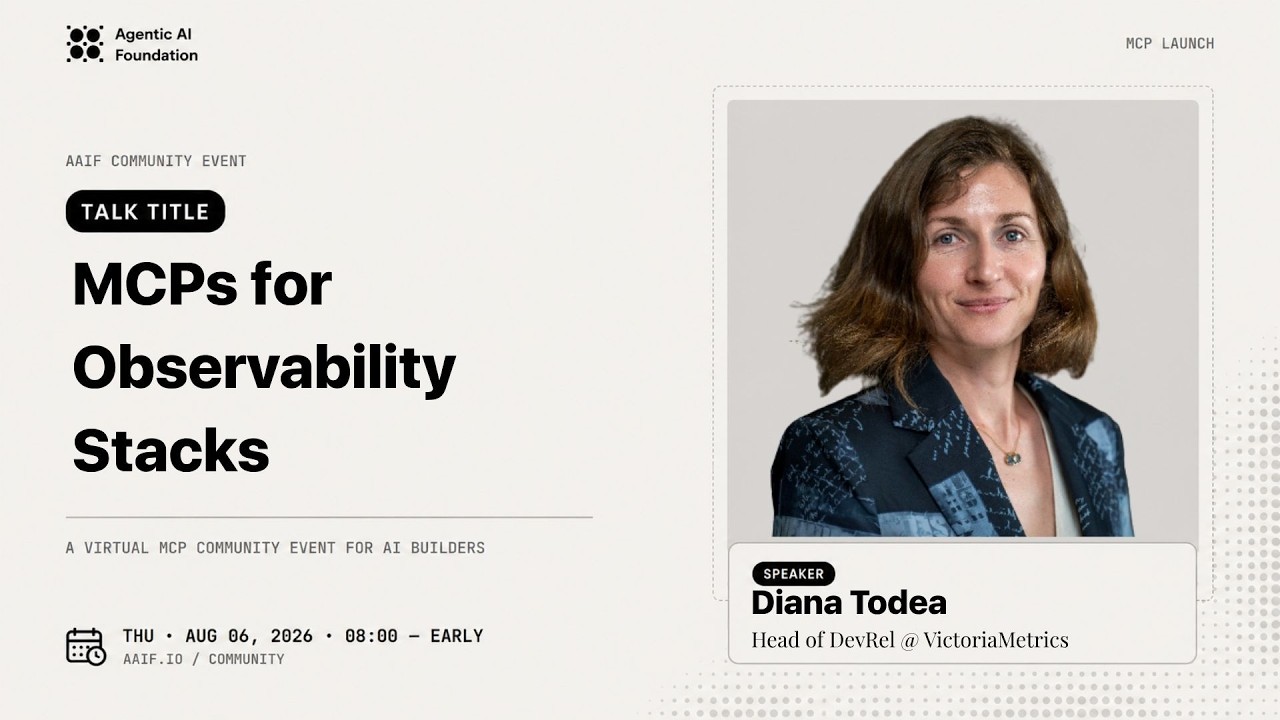
MCPs for Observability Stacks

MCPs for Observability Stacks

Diana Todea, Head of Developer Relations at VictoriaMetrics, demonstrates how Model-Controller-Pair (MCP) servers enhance observability stacks for faster, smarter troubleshooting. She highlights the use of AI-driven anomaly detection, natural language querying, and customizable "skills" to investigate production issues, manage metrics, and generate alerts, showcasing practical applications with two interconnected MCP servers.

Modern Enterprise Architecture: Architecting for Outcomes • Simon Rohrer • GOTO 2025

Modern Enterprise Architecture: Architecting for Outcomes • Simon Rohrer • GOTO 2025

Simon Rohrer challenges traditional Enterprise Architecture (EA) principles, proposing a modern approach focused on outcomes, continuous evolution, and socio-technical alignment. He outlines five key tenets: Aligning Value, People & Technology; achieving Better Value Sooner, Safer, Happier; implementing Continuous Conversational & Automated Governance; scaling DevOps across the enterprise; and fostering Evolutionary Enterprise Architecture.

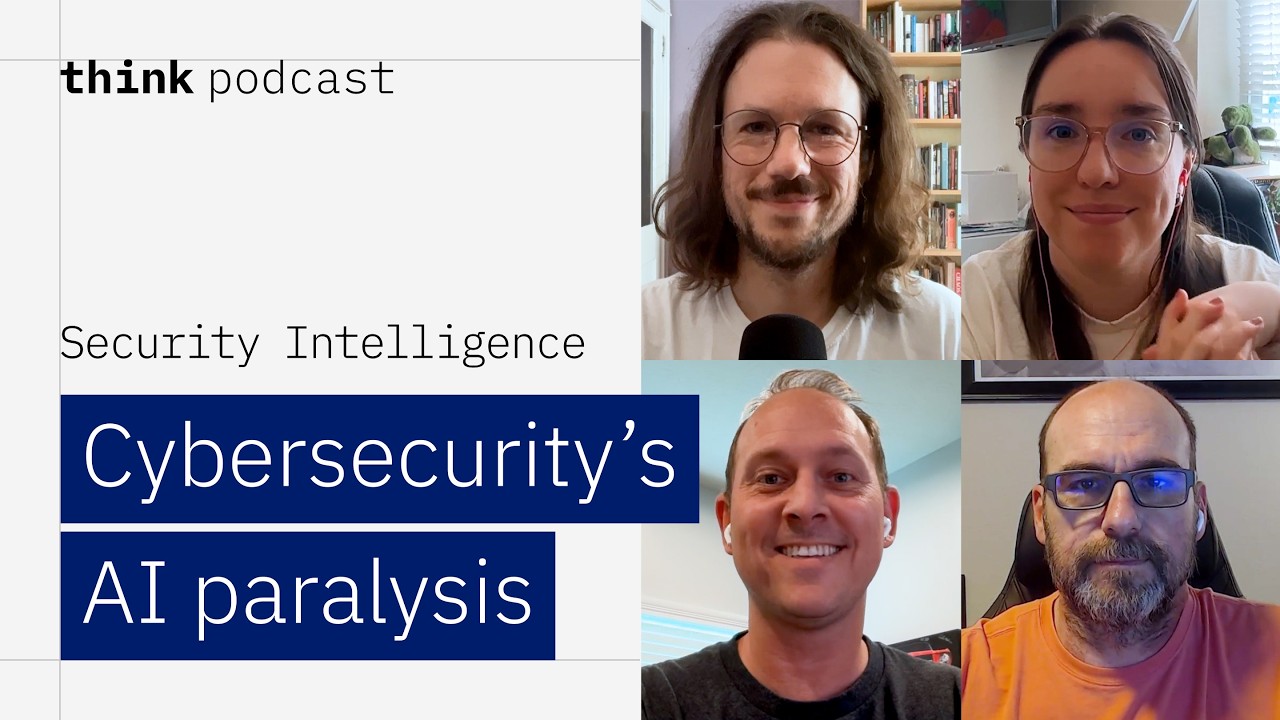
What should security leaders do with AI? They don’t know.

What should security leaders do with AI? They don’t know.

This podcast explores the challenges cybersecurity leaders face in adopting AI, the emergence of new threats like ghostjacking, and AI's current capabilities in patching vulnerabilities. It highlights the prevalent "AI decision paralysis" and offers strategic advice for integrating AI into security operations, advocating for a human-in-the-loop approach and a realistic assessment of AI's current

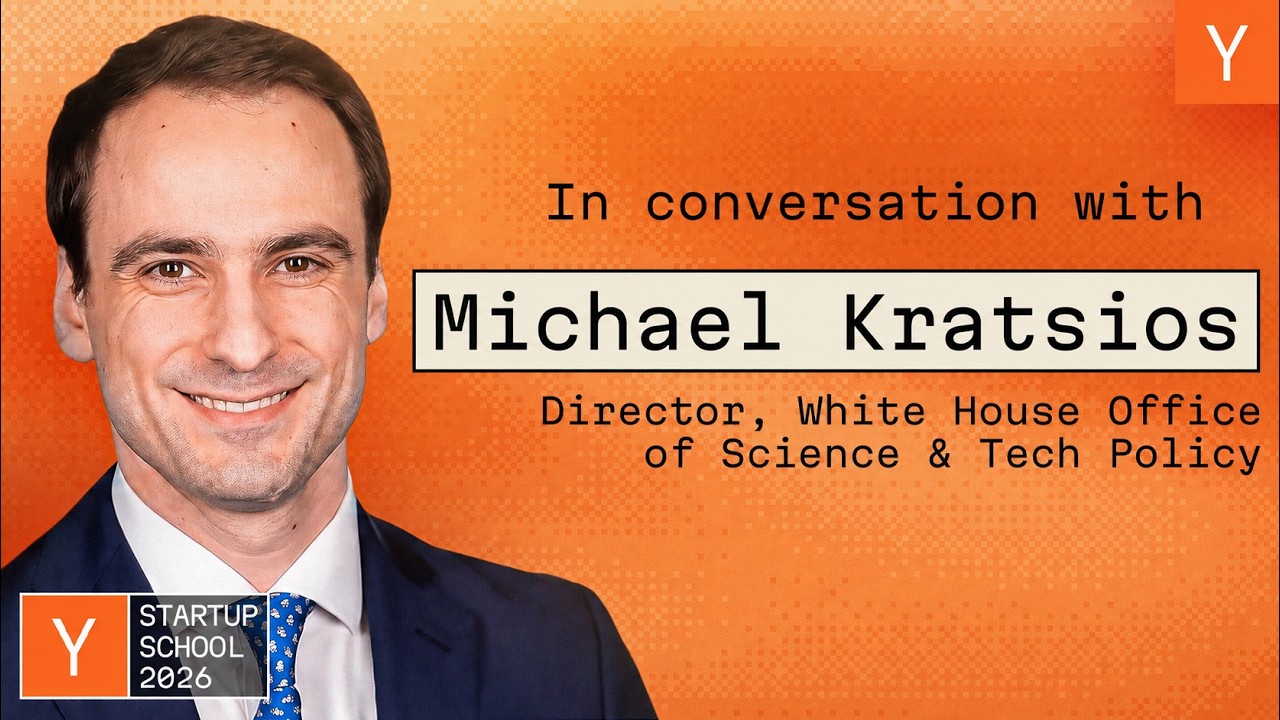
Michael Kratsios: Inside the White House's AI Strategy

Michael Kratsios: Inside the White House's AI Strategy

Michael Kratsios, from Scale AI and the White House, discusses US AI policy, advocating for open-source AI, flexible regulation, and supporting startups against incumbent moats. He outlines the White House's vision for AI-driven scientific discovery and the future focus on Quantum Information Science, while urging Congress to legislate on preemption and IP. He concludes with a call for technologists to engage in public service.

Stay In The Loop! Subscribe to Our Newsletter.

Get updates straight to your inbox. No spam, just useful content.