Tokenless

Interactive discovery

Explore the topic map

Follow the connections between themes, people, and ideas across the Tokenless archive in an interactive topic modeling map.

Machine Learning

View All
Frontier results, on device - RL Nabors, Arize

Frontier results, on device - RL Nabors, Arize

RL Nabors discusses the significant costs associated with using frontier AI models, covering security, latency, and financial implications. She introduces a framework for right-sizing AI solutions by leveraging smaller, task-specific models and Small Language Models (SLMs). The framework details how to prove task feasibility, establish success criteria with golden datasets, conduct capability evaluations (using tools like Phoenix), and select the most appropriate "Small And Good Enough" (SAGE) model. Nabors further demonstrates how prompt engineering, particularly few-shot prompting, and post-processing can close performance gaps with larger models, while advocating for continuous regression evaluations to maintain performance integrity. The overarching message is to "prototype big, deploy small" to optimize AI deployments.

Research to Reality: Bringing Frontier ML Research to Production - Vaidas Razgaitis, Higharc

Research to Reality: Bringing Frontier ML Research to Production - Vaidas Razgaitis, Higharc

Vaidas Razgaitis, Senior Research Engineer at Higharc, shares three tactical tips to accelerate the transition of novel AI/ML research into production-ready features. He emphasizes addressing the critical handoff challenge between ML researchers and software engineers through structured documentation (Research Prototype Taxonomy Document), a well-organized monorepo utilizing decoupled microservices, and a systematic approach to code decomposition and PR review. These strategies aim to improve legibility, maintainability, and delivery speed for ML-driven products.

Uncertainty-Guided Data Augmentation for Engineers | Deep Dive - Yongmin Kwon

Uncertainty-Guided Data Augmentation for Engineers | Deep Dive - Yongmin Kwon

This session details a data-efficient method for training engineering surrogate models by using uncertainty quantification (UQ) to guide geometric data augmentation. Instead of random deformations, the approach lets the deep ensemble model identify its own knowledge gaps (epistemic uncertainty), then uses Free-Form Deformation (FFD) to generate new shapes specifically in those uncertain regions. This ensures every expensive simulation run yields maximally informative data, significantly improving model accuracy for a fixed computational budget across domains like structural mechanics and aerodynamics.

Artificial Intelligence

View All
The Benchmark With No Instructions — Tufa Labs (ARC-AGI-3)

The Benchmark With No Instructions — Tufa Labs (ARC-AGI-3)

Tim Scarfe visits Tufa Labs to explore their top-ranking ARC-AGI-3 system, a benchmark for agentic intelligence that challenges LLMs in goal discovery and action efficiency. The team delves into the complexities of fractured representations, the role of human priors, and whether LLMs truly plan or merely simulate it effectively, all while balancing the bitter lesson with AI safety concerns.

Session on Reasoning

Session on Reasoning

This session features two talks on optimizing and verifying AI reasoning. Hongxiang Fan discusses cross-stack co-design for efficient AI, focusing on Test-Time Scaling (TTS) challenges, optimal verification granularity, and system-level optimizations for edge deployments. Nagarajan Natarajan introduces 'Advancing Verified Reasoning' with the InterVent platform, aiming to ensure AI agents comply with complex policies through formal verification, dynamic steering, and leveraging verification signals for training. Both emphasize addressing the computational and reliability costs of advanced AI.

Multimodal & Embodied Intelligence (Pt 1), Panel on Multimodal AI: Progress, Pitfalls, Possibilities

Multimodal & Embodied Intelligence (Pt 1), Panel on Multimodal AI: Progress, Pitfalls, Possibilities

This session explored Multimodal and Embodied Intelligence, featuring talks on hybrid AI in robotics (classical vs. end-to-end), AI's role in healthcare (focusing on NCDs, deployment, and uncertainty modeling), and fundamental perception challenges in multimodal reasoning (using educational video QA and visual puzzles). A panel discussed the impact of foundation models, the blurred lines between AGI and human-like AI, critical deployment pitfalls (human factors, efficiency, architectural limits), and future directions, emphasizing task-specific models and the redefinition of 'foundation models.'

Technology

View All
Are Your Tests Slowing You Down? • Trisha Gee • GOTO 2025

Are Your Tests Slowing You Down? • Trisha Gee • GOTO 2025

Trisha Gee delivers a compelling talk on Developer Productivity Engineering (DPE) for testing, dissecting common pain points in writing, troubleshooting, and running tests. She advocates for strategic use of IDEs, advanced tooling like build caches and predictive test selection (leveraging ML), and a disciplined approach to test design to overcome these challenges, emphasizing that good tests serve as crucial living documentation.

The new post-quantum cryptography executive order. Plus: What is Q-Day, really?

The new post-quantum cryptography executive order. Plus: What is Q-Day, really?

This episode delves into Q-Day, the anticipated future when quantum computers can break public key cryptography, and the U.S. Executive Order accelerating the transition to post-quantum cryptography. Experts discuss why Q-Day is a gradual process rather than a sudden event, the critical importance of "crypto-agility" as a long-term strategy, and the necessity for organizations to begin immediate discovery and planning to secure data against "collect now, decrypt later" threats. The discussion also touches upon the broader, transformative benefits of quantum computing beyond just security.

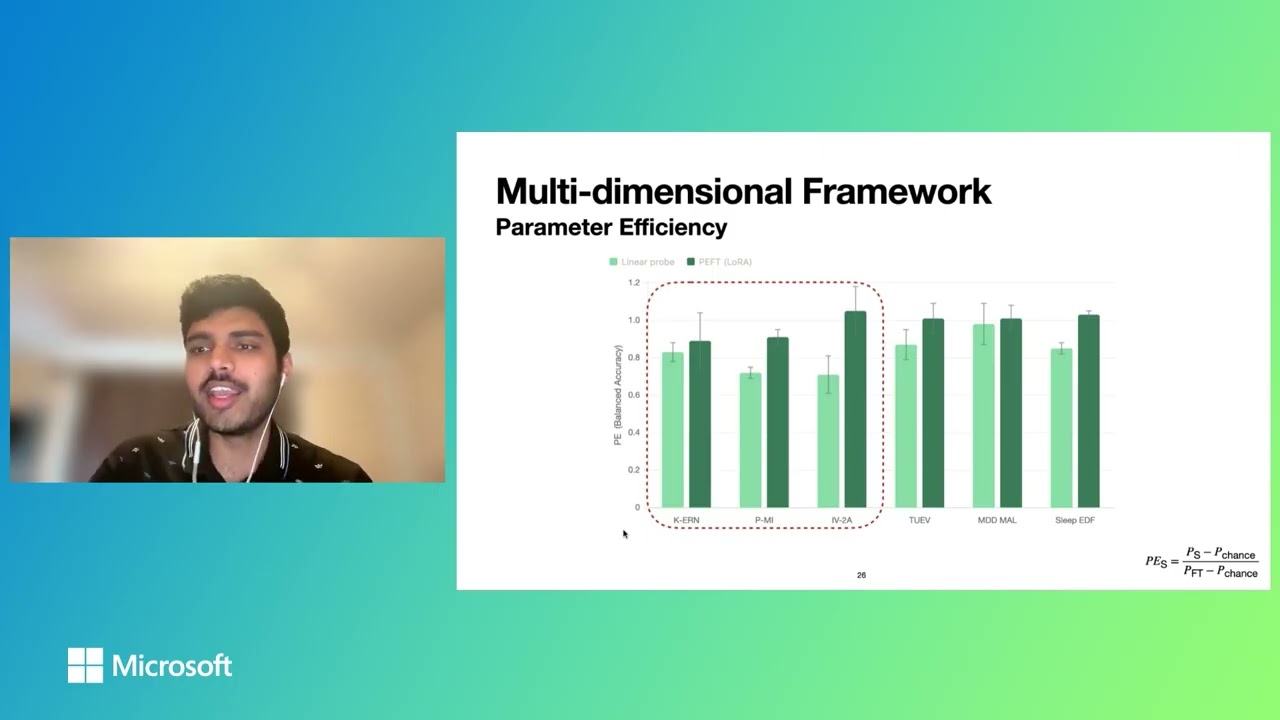
Plenary Talk 3​: Challenges and research opportunities for global hyperscale services

Plenary Talk 3​: Challenges and research opportunities for global hyperscale services

Jim Kleewein's talk outlines the immense challenges and critical research opportunities in building and operating global hyperscale services like Microsoft 365 and Azure. He emphasizes that at this scale, traditional approaches fail, necessitating a "new golden age of applied research" across areas like continuous availability, data management, security, and sustainability. Kleewein also discusses AI's powerful but limited role, stressing the ongoing need for human expertise, and highlights the ethical imperative to prevent failures that can have life-or-death consequences.


Recent Post

The Rush to Adopt AI: How to Get it Right & Business Risks • Nick Selby & Sarah Wells • GOTO 2026

The Rush to Adopt AI: How to Get it Right & Business Risks • Nick Selby & Sarah Wells • GOTO 2026

In this interview, Sarah Wells and Nick Selby discuss the significant business risks introduced by the current rush to adopt AI. They cover how AI vendors blur security terminology, how the insatiable need for data creates an enormous blast radius for breaches, and provide a framework for responsible AI adoption through threat modeling, cross-disciplinary governance, and a return to IT fundamentals.

How AI covered a human’s paternity leave // Quinten Rosseel

How AI covered a human’s paternity leave // Quinten Rosseel

A practitioner's guide to deploying a text-to-SQL agent in a real-world business environment. The talk covers the critical lessons learned in moving from concept to production, focusing on the importance of the communication channel (Slack), the necessity of a semantic layer over benchmark scores, and a pragmatic approach to system architecture, testing, and evaluation.

When Agents Learn to Feel: Multi-Modal Affective Computing in Production // Chenyu Zhang

When Agents Learn to Feel: Multi-Modal Affective Computing in Production // Chenyu Zhang

This talk explores the frontier of affective computing in AI agents, proposing a new architecture where emotion is a first-class component. It covers the technical challenges of deploying multi-modal, emotion-aware systems in production—from memory and learning to multi-agent orchestration—and delves into the critical ethical considerations of privacy, manipulation, and scientific validity.

Make Something Agents Want

Make Something Agents Want

The hosts explore the dawn of an agent-driven economy, spurred by tools like OpenClaw and social platforms like MoltBook. They discuss the critical shift for developers to build tools that AI agents, not just humans, will choose, focusing on the new go-to-market strategies, the rise of swarm intelligence, and the essential infrastructure required for this new paradigm.

MCP Security: The Exploit Playbook (And How to Stop Them)

MCP Security: The Exploit Playbook (And How to Stop Them)

Vitor, co-founder of Runlayer and former tech lead for Zapier Agents, provides a deep dive into the security vulnerabilities of the rapidly adopted MCP standard for AI agents. He outlines the primary attack vectors, including sophisticated prompt injections, supply chain attacks like 'rug-pulls', and tool schema manipulation, using real-world exploits as examples. The talk concludes with a multi-layered defensive strategy for users, developers, and enterprises to secure their AI agent deployments.

The Future of Coding: AI Agents & the Next Tech Revolution // Ricky Doar

The Future of Coding: AI Agents & the Next Tech Revolution // Ricky Doar

Ricky Doar, VP of Solutions at Cursor, shares best practices for leveraging AI in software development, focusing on effective problem decomposition, context management, and navigating both new and legacy codebases. He highlights common anti-patterns, such as over-reliance on AI, and offers strategies for debugging, model steerability, and building effective agent harnesses.

Stay In The Loop! Subscribe to Our Newsletter.

Get updates straight to your inbox. No spam, just useful content.