Tokenless

Interactive discovery

Explore the topic map

Follow the connections between themes, people, and ideas across the Tokenless archive in an interactive topic modeling map.

Machine Learning

View All
Frontier results, on device - RL Nabors, Arize

Frontier results, on device - RL Nabors, Arize

RL Nabors discusses the significant costs associated with using frontier AI models, covering security, latency, and financial implications. She introduces a framework for right-sizing AI solutions by leveraging smaller, task-specific models and Small Language Models (SLMs). The framework details how to prove task feasibility, establish success criteria with golden datasets, conduct capability evaluations (using tools like Phoenix), and select the most appropriate "Small And Good Enough" (SAGE) model. Nabors further demonstrates how prompt engineering, particularly few-shot prompting, and post-processing can close performance gaps with larger models, while advocating for continuous regression evaluations to maintain performance integrity. The overarching message is to "prototype big, deploy small" to optimize AI deployments.

Research to Reality: Bringing Frontier ML Research to Production - Vaidas Razgaitis, Higharc

Research to Reality: Bringing Frontier ML Research to Production - Vaidas Razgaitis, Higharc

Vaidas Razgaitis, Senior Research Engineer at Higharc, shares three tactical tips to accelerate the transition of novel AI/ML research into production-ready features. He emphasizes addressing the critical handoff challenge between ML researchers and software engineers through structured documentation (Research Prototype Taxonomy Document), a well-organized monorepo utilizing decoupled microservices, and a systematic approach to code decomposition and PR review. These strategies aim to improve legibility, maintainability, and delivery speed for ML-driven products.

Uncertainty-Guided Data Augmentation for Engineers | Deep Dive - Yongmin Kwon

Uncertainty-Guided Data Augmentation for Engineers | Deep Dive - Yongmin Kwon

This session details a data-efficient method for training engineering surrogate models by using uncertainty quantification (UQ) to guide geometric data augmentation. Instead of random deformations, the approach lets the deep ensemble model identify its own knowledge gaps (epistemic uncertainty), then uses Free-Form Deformation (FFD) to generate new shapes specifically in those uncertain regions. This ensures every expensive simulation run yields maximally informative data, significantly improving model accuracy for a fixed computational budget across domains like structural mechanics and aerodynamics.

Artificial Intelligence

View All
The Benchmark With No Instructions — Tufa Labs (ARC-AGI-3)

The Benchmark With No Instructions — Tufa Labs (ARC-AGI-3)

Tim Scarfe visits Tufa Labs to explore their top-ranking ARC-AGI-3 system, a benchmark for agentic intelligence that challenges LLMs in goal discovery and action efficiency. The team delves into the complexities of fractured representations, the role of human priors, and whether LLMs truly plan or merely simulate it effectively, all while balancing the bitter lesson with AI safety concerns.

Session on Reasoning

Session on Reasoning

This session features two talks on optimizing and verifying AI reasoning. Hongxiang Fan discusses cross-stack co-design for efficient AI, focusing on Test-Time Scaling (TTS) challenges, optimal verification granularity, and system-level optimizations for edge deployments. Nagarajan Natarajan introduces 'Advancing Verified Reasoning' with the InterVent platform, aiming to ensure AI agents comply with complex policies through formal verification, dynamic steering, and leveraging verification signals for training. Both emphasize addressing the computational and reliability costs of advanced AI.

Multimodal & Embodied Intelligence (Pt 1), Panel on Multimodal AI: Progress, Pitfalls, Possibilities

Multimodal & Embodied Intelligence (Pt 1), Panel on Multimodal AI: Progress, Pitfalls, Possibilities

This session explored Multimodal and Embodied Intelligence, featuring talks on hybrid AI in robotics (classical vs. end-to-end), AI's role in healthcare (focusing on NCDs, deployment, and uncertainty modeling), and fundamental perception challenges in multimodal reasoning (using educational video QA and visual puzzles). A panel discussed the impact of foundation models, the blurred lines between AGI and human-like AI, critical deployment pitfalls (human factors, efficiency, architectural limits), and future directions, emphasizing task-specific models and the redefinition of 'foundation models.'

Technology

View All
Are Your Tests Slowing You Down? • Trisha Gee • GOTO 2025

Are Your Tests Slowing You Down? • Trisha Gee • GOTO 2025

Trisha Gee delivers a compelling talk on Developer Productivity Engineering (DPE) for testing, dissecting common pain points in writing, troubleshooting, and running tests. She advocates for strategic use of IDEs, advanced tooling like build caches and predictive test selection (leveraging ML), and a disciplined approach to test design to overcome these challenges, emphasizing that good tests serve as crucial living documentation.

The new post-quantum cryptography executive order. Plus: What is Q-Day, really?

The new post-quantum cryptography executive order. Plus: What is Q-Day, really?

This episode delves into Q-Day, the anticipated future when quantum computers can break public key cryptography, and the U.S. Executive Order accelerating the transition to post-quantum cryptography. Experts discuss why Q-Day is a gradual process rather than a sudden event, the critical importance of "crypto-agility" as a long-term strategy, and the necessity for organizations to begin immediate discovery and planning to secure data against "collect now, decrypt later" threats. The discussion also touches upon the broader, transformative benefits of quantum computing beyond just security.

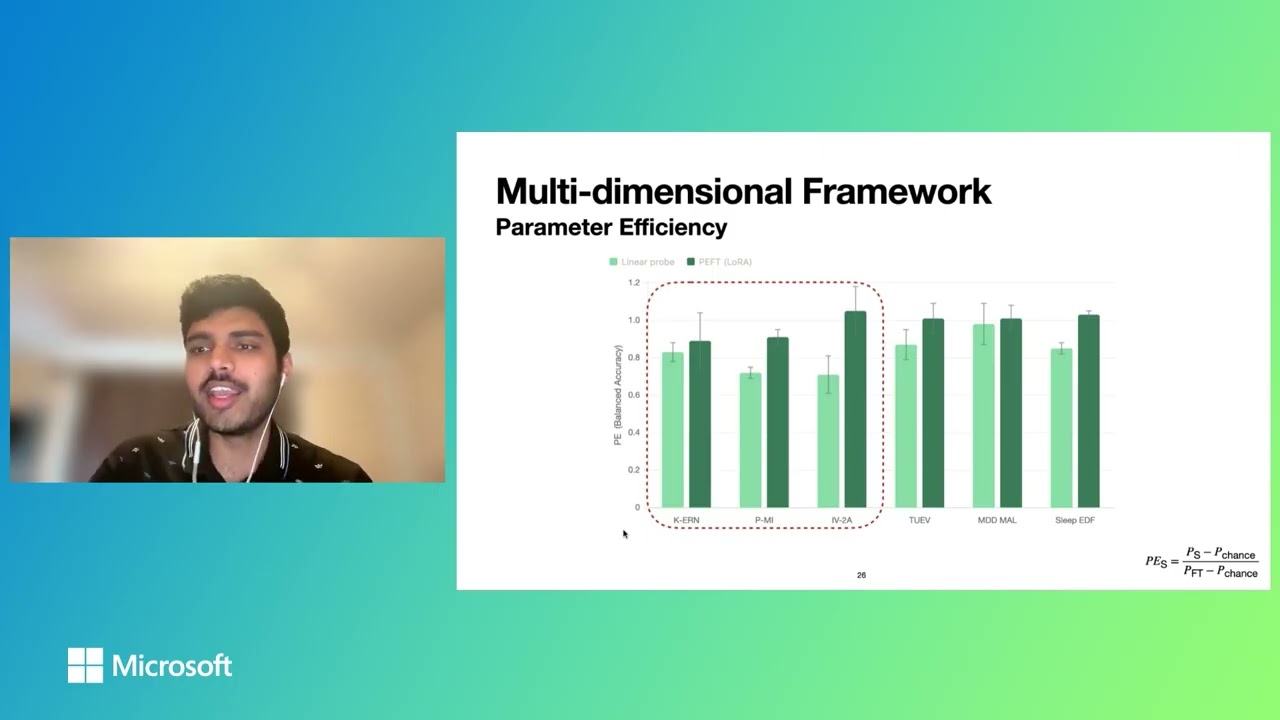
Plenary Talk 3​: Challenges and research opportunities for global hyperscale services

Plenary Talk 3​: Challenges and research opportunities for global hyperscale services

Jim Kleewein's talk outlines the immense challenges and critical research opportunities in building and operating global hyperscale services like Microsoft 365 and Azure. He emphasizes that at this scale, traditional approaches fail, necessitating a "new golden age of applied research" across areas like continuous availability, data management, security, and sustainability. Kleewein also discusses AI's powerful but limited role, stressing the ongoing need for human expertise, and highlights the ethical imperative to prevent failures that can have life-or-death consequences.


Recent Post

Beyond Swahili: Designing Inclusive AI for Bantu Languages

Beyond Swahili: Designing Inclusive AI for Bantu Languages

Alfred Malingo discusses the unique position of Swahili in AI, arguing that its structural similarities to other Bantu languages make it a far more effective pivot language than English for developing inclusive and accurate models. He deconstructs the failures of typologically mismatched transfer from Indo-European languages and presents a case study, AfriMT-a, to demonstrate how Swahili can serve as a technical bridge for machine translation and representation learning across the Bantu language family.

Platform Engineering • Ajay Chankramath & Nic Cheneweth • GOTO 2026

Platform Engineering • Ajay Chankramath & Nic Cheneweth • GOTO 2026

Ajay Chankramath and Nic Cheneweth discuss the critical elements of effective platform engineering, emphasizing a product mindset, the foundational role of control planes and API-first design, the common pitfalls of implementing Backstage, and the emerging impact of AI and agents on the platform landscape.

A2A vs MCP: AI Agent Communication Explained

A2A vs MCP: AI Agent Communication Explained

Discover how A2A (Agent2Agent) and MCP (Model Context Protocol) solve critical challenges in AI agent ecosystems. A2A enables seamless communication and collaboration between diverse AI agents, while MCP standardizes an agent's access to external tools and data, fostering robust and interoperable AI workflows.

Using Agents in Production: Past Present and Future // Euro Beinat

Using Agents in Production: Past Present and Future // Euro Beinat

A deep dive into how Prosus is deploying over 30,000 AI agents to create an 'AI Agentic Workforce'. The talk covers the transition from simple assistants to trusted senior colleagues, the internal tooling developed, and the crucial organizational strategies used to overcome adoption barriers and foster a bottom-up culture of innovation.

From Chat Fatigue to Instant Action // Donné Stevenson

From Chat Fatigue to Instant Action // Donné Stevenson

A discussion on the evolution of AI agent interaction, moving beyond simple text-based chat to create intuitive, GUI-driven experiences. The talk covers the practical challenges and solutions in building an impactful agent for busy professionals, focusing on quick actions, efficient data streaming, and enhanced interactivity.

Context Engineering 2.0: MCP, Agentic RAG & Memory // Simba Khadder

Context Engineering 2.0: MCP, Agentic RAG & Memory // Simba Khadder

Simba Khadder of Redis introduces Context Engineering 2.0, a new paradigm for AI agents that unifies structured data, unstructured data (RAG), and memory into a single, schema-driven surface. He critiques current methods like Text-to-SQL and direct API wrapping, proposing a unified context engine to provide reliable, observable, and performant data access for agents.

Stay In The Loop! Subscribe to Our Newsletter.

Get updates straight to your inbox. No spam, just useful content.