Building Agents Is Trivial Now, Context Is the Next Frontier — Jeff Ng, Unblocked
Building AI agents is now easier than ever, but they frequently make confident yet incorrect decisions. This is because agents often lack critical context that humans provide, such as historical discussions, postmortems, and tribal knowledge. The solution proposed is a 'context engine' that synthesizes and grounds information from across an organization's documents, code, tickets, and conversations, providing agents with a holistic and reconciled view, thus bridging the 'context gap' that current LLMs often miss.
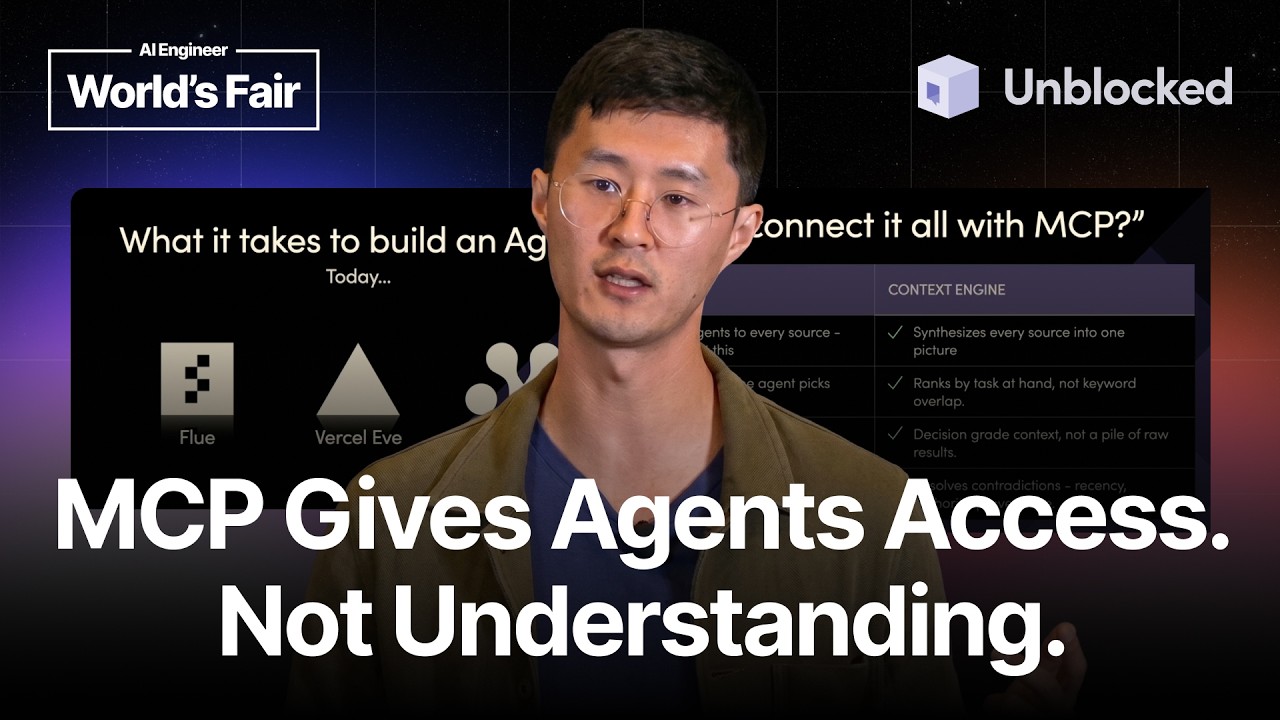
Jeff Ng, a founding engineer at Unblock, highlights a critical challenge in modern AI agent development: while building agents has become significantly easier, they still frequently make confident yet incorrect decisions due to a lack of complete context. The core argument is that “the gap isn’t intelligence, it’s context.”
The Evolution of Agent Development
Past Challenges (Six Months Ago): Ng explains that building production-ready agents previously required substantial effort, often taking a team a full quarter. This was largely due to the “taxes” involved in setting up the necessary infrastructure, none of which directly improved the agent’s core capabilities:
- Checkpointing and State Persistence: Agents are typically long-lived and stateful, but infrastructure is ephemeral. Crashes without durability led to state loss (message history, tool calls, loop position), making session resumption impossible or expensive (token cost, latency, duplicate side effects).
- Sandbox Infrastructure: Running agent-generated and third-party code necessitates isolated sandboxes to prevent security risks like unauthorized environment secret reads, network access, or host degradation.
- Observability: Tracking logs and traces across half a dozen systems was essential to diagnose failures.
Current Ease of Development: Fortunately, the ecosystem has matured. Cloud infrastructure providers (Cloudflare, Vercel, AWS) and agent frameworks (Flu, Vercel Ema SRA) have absorbed much of this complexity. This abstraction means that defining an agent now primarily involves:
- Choosing a model.
- Defining instructions (system prompt).
- Specifying tools (skills) the agent can access.
- Designating the sandbox location where operations are executed.
This shift removes the