Tokenless

Interactive discovery

Explore the topic map

Follow the connections between themes, people, and ideas across the Tokenless archive in an interactive topic modeling map.

Machine Learning

View All
SWE-Marathon: Evaluating Coding Agents at Billion-Token Scale - Rishi Desai, Abundant AI

SWE-Marathon: Evaluating Coding Agents at Billion-Token Scale - Rishi Desai, Abundant AI

SWE-Marathon introduces a benchmark for long-horizon autonomous software engineering, pushing coding agents from bug fixes to full project ownership. It highlights the critical need for robust, multi-layered verification and anti-cheat mechanisms to prevent reward hacking in tasks spanning hundreds of millions of tokens, revealing that current agents achieve only a 26% success rate.

Frontier results, on device - RL Nabors, Arize

Frontier results, on device - RL Nabors, Arize

RL Nabors discusses the significant costs associated with using frontier AI models, covering security, latency, and financial implications. She introduces a framework for right-sizing AI solutions by leveraging smaller, task-specific models and Small Language Models (SLMs). The framework details how to prove task feasibility, establish success criteria with golden datasets, conduct capability evaluations (using tools like Phoenix), and select the most appropriate "Small And Good Enough" (SAGE) model. Nabors further demonstrates how prompt engineering, particularly few-shot prompting, and post-processing can close performance gaps with larger models, while advocating for continuous regression evaluations to maintain performance integrity. The overarching message is to "prototype big, deploy small" to optimize AI deployments.

Research to Reality: Bringing Frontier ML Research to Production - Vaidas Razgaitis, Higharc

Research to Reality: Bringing Frontier ML Research to Production - Vaidas Razgaitis, Higharc

Vaidas Razgaitis, Senior Research Engineer at Higharc, shares three tactical tips to accelerate the transition of novel AI/ML research into production-ready features. He emphasizes addressing the critical handoff challenge between ML researchers and software engineers through structured documentation (Research Prototype Taxonomy Document), a well-organized monorepo utilizing decoupled microservices, and a systematic approach to code decomposition and PR review. These strategies aim to improve legibility, maintainability, and delivery speed for ML-driven products.

Artificial Intelligence

View All
GTM Is You - Victoria Melnikova, Evil Martians

GTM Is You - Victoria Melnikova, Evil Martians

Victoria Melnikova discusses optimal Go-To-Market strategies for developer tools and AI startups, asserting that a founder's personal brand is the most underrated competitive advantage in 2026. She covers foundational GTM hygiene, the strategic importance of San Francisco, effective advertising and event tactics, embracing unconventional marketing, and the critical role of authenticity and personal connection in building trust and cutting through digital noise.

Beyond the Harness: A Journey Towards Adaptative Engineering - Rajiv Chandegra, Annicha Labs

Beyond the Harness: A Journey Towards Adaptative Engineering - Rajiv Chandegra, Annicha Labs

Rajiv Chandegra introduces adaptive engineering, a new AI design philosophy. He argues that as AI models become more powerful and interact with complex, dynamic real-world problems, the traditional 'fixed harness' approach—predictable but brittle—will become obsolete. Drawing on complexity science, he explains how adaptive engineering allows the AI system's structure (harness) to emerge and adapt dynamically during runtime, mirroring natural self-organizing systems. This shift redefines the engineer's role to designing constraints and fostering horizontal intelligence in multi-agent coordination.

How we taught agents to use good retrieval - Hanna Lichtenberg, Mixedbread AI

How we taught agents to use good retrieval - Hanna Lichtenberg, Mixedbread AI

Mixedbread AI addresses the "Oracle Gap" – the disparity between LLM reasoning and retrieval capabilities – by developing agents trained to use advanced search tools effectively. They demonstrate how current LLMs generate poor queries due to training biases and introduce a sophisticated agent harness with diverse search tools and a unique training regimen, including supervised fine-tuning and reinforcement learning with custom rewards, to teach agents to form precise semantic queries. This approach significantly improves performance on benchmarks like Oblique Congress and Snowflake's Match QA, closing the gap between theoretical perfect retrieval and real-world agent performance.

Technology

View All
Inside Zipline's Autonomous System: 140M Miles, Zero Incidents

Inside Zipline's Autonomous System: 140M Miles, Zero Incidents

Zipline co-founder Keller Rinaudo Cliffton and Eric Watson discuss how their autonomous logistics system evolved from addressing critical needs in Rwanda to becoming the largest commercial autonomous system globally. They highlight that the drone is only 15% of the solution, emphasizing the deep integration of software, vertical hardware design, advanced safety protocols like compute failover, and extensive testing required. The discussion also covers the immense market potential for autonomous delivery, the impending cost-effectiveness over traditional methods, and the necessary transformation of air traffic control to support a future of pervasive aerial autonomy.

Are Your Tests Slowing You Down? • Trisha Gee • GOTO 2025

Are Your Tests Slowing You Down? • Trisha Gee • GOTO 2025

Trisha Gee delivers a compelling talk on Developer Productivity Engineering (DPE) for testing, dissecting common pain points in writing, troubleshooting, and running tests. She advocates for strategic use of IDEs, advanced tooling like build caches and predictive test selection (leveraging ML), and a disciplined approach to test design to overcome these challenges, emphasizing that good tests serve as crucial living documentation.

The new post-quantum cryptography executive order. Plus: What is Q-Day, really?

The new post-quantum cryptography executive order. Plus: What is Q-Day, really?

This episode delves into Q-Day, the anticipated future when quantum computers can break public key cryptography, and the U.S. Executive Order accelerating the transition to post-quantum cryptography. Experts discuss why Q-Day is a gradual process rather than a sudden event, the critical importance of "crypto-agility" as a long-term strategy, and the necessity for organizations to begin immediate discovery and planning to secure data against "collect now, decrypt later" threats. The discussion also touches upon the broader, transformative benefits of quantum computing beyond just security.


Recent Post

Monster prompt, OpenAI’s business play, nano-banana and US Open experimentations

Monster prompt, OpenAI’s business play, nano-banana and US Open experimentations

The panel discusses KPMG's 100-page prompt for its TaxBot, debating the future of prompt engineering versus fine-tuning. They also analyze OpenAI's potential move into selling cloud infrastructure, the impressive capabilities of Google's new image model, Nano-Banana, and new AI-powered fan experiences at the US Open.

Six Years of Rowhammer: Breakthroughs and Future Directions

Six Years of Rowhammer: Breakthroughs and Future Directions

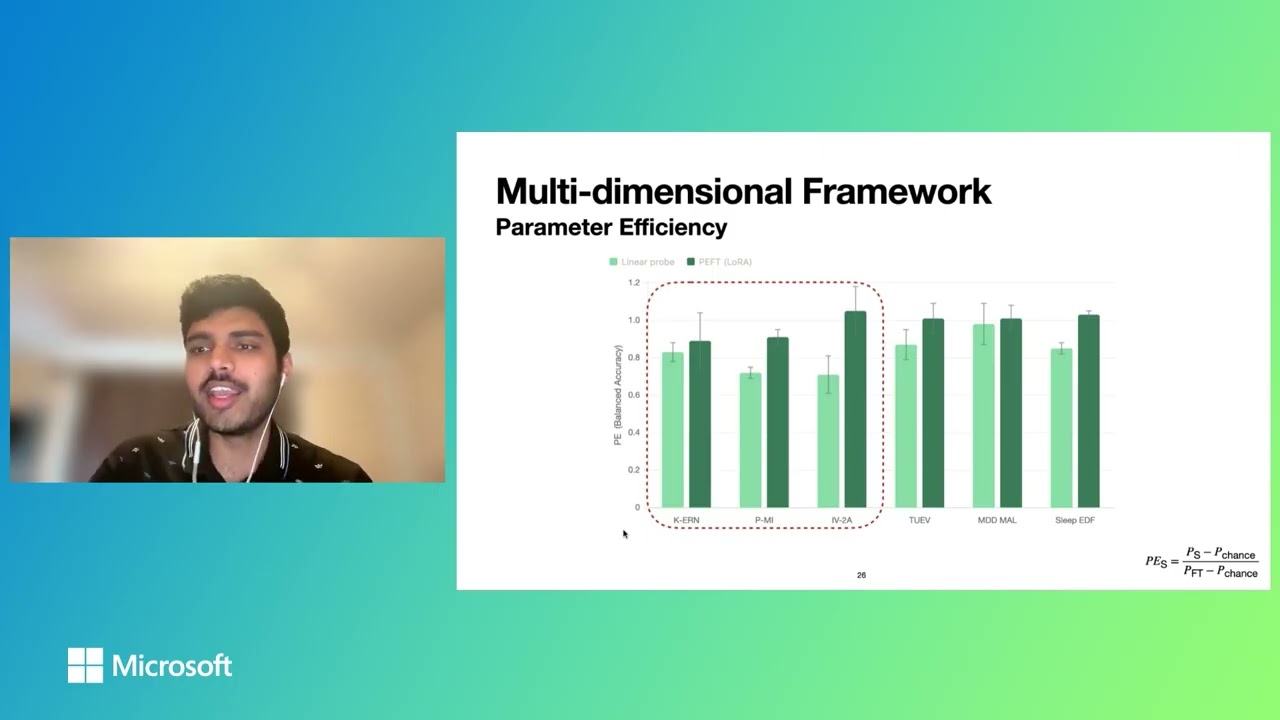
Stefan Saroiu from Microsoft Research details Project STEMA's six-year journey tackling the DRAM security flaw, Rowhammer. He discusses how academic research kept the industry honest about DDR4 vulnerabilities, the development of their in-DRAM defense, Panopticon, and its evolution into the industry standard PRAC for DDR5, while highlighting that significant challenges and research opportunities remain.

Introducing gpt-realtime in the API

Introducing gpt-realtime in the API

An overview of the new GPT-realtime speech-to-speech model and the general availability of the Real-Time API, detailing its architecture, advanced capabilities like image input and multilingualism, training methodology, and new enterprise-ready features.

Intelligence Isn't What You Think

Intelligence Isn't What You Think

Dr. Michael Timothy Bennett challenges conventional AI paradigms, arguing for a new approach inspired by the principles of living systems. He critiques the separation of software and hardware ("computational dualism"), redefines intelligence as efficient adaptation, and offers a novel theory of consciousness as a "tapestry of valence" essential for genuine intelligence.

Why 70% of Companies Are FAILING at AI Safety (Shocking Survey Data): 2025 AI Governance Survey:

Why 70% of Companies Are FAILING at AI Safety (Shocking Survey Data): 2025 AI Governance Survey:

Ben Lorica and David Talby of 'The Data Exchange' podcast analyze the 2025 AI Governance Survey, revealing a significant gap between AI adoption and mature risk management. While 30% of organizations have models in production, many lack robust governance frameworks, incident response plans, and comprehensive monitoring, often prioritizing speed-to-market over safety and compliance.

How 80,000 companies build with AI: Products as organisms and the death of org charts | Asha Sharma

How 80,000 companies build with AI: Products as organisms and the death of org charts | Asha Sharma

Asha Sharma, CVP of Product for Microsoft's AI Platform, shares insights from working with over 15,000 companies building AI. She discusses the shift from "product as artifact" to "product as organism," the rise of post-training as the new competitive moat, and how agents are transforming organizational structures from hierarchies ("org charts") into task-based networks ("work charts").

Stay In The Loop! Subscribe to Our Newsletter.

Get updates straight to your inbox. No spam, just useful content.