Tokenless

Interactive discovery

Explore the topic map

Follow the connections between themes, people, and ideas across the Tokenless archive in an interactive topic modeling map.

Machine Learning

View All
SWE-Marathon: Evaluating Coding Agents at Billion-Token Scale - Rishi Desai, Abundant AI

SWE-Marathon: Evaluating Coding Agents at Billion-Token Scale - Rishi Desai, Abundant AI

SWE-Marathon introduces a benchmark for long-horizon autonomous software engineering, pushing coding agents from bug fixes to full project ownership. It highlights the critical need for robust, multi-layered verification and anti-cheat mechanisms to prevent reward hacking in tasks spanning hundreds of millions of tokens, revealing that current agents achieve only a 26% success rate.

Frontier results, on device - RL Nabors, Arize

Frontier results, on device - RL Nabors, Arize

RL Nabors discusses the significant costs associated with using frontier AI models, covering security, latency, and financial implications. She introduces a framework for right-sizing AI solutions by leveraging smaller, task-specific models and Small Language Models (SLMs). The framework details how to prove task feasibility, establish success criteria with golden datasets, conduct capability evaluations (using tools like Phoenix), and select the most appropriate "Small And Good Enough" (SAGE) model. Nabors further demonstrates how prompt engineering, particularly few-shot prompting, and post-processing can close performance gaps with larger models, while advocating for continuous regression evaluations to maintain performance integrity. The overarching message is to "prototype big, deploy small" to optimize AI deployments.

Research to Reality: Bringing Frontier ML Research to Production - Vaidas Razgaitis, Higharc

Research to Reality: Bringing Frontier ML Research to Production - Vaidas Razgaitis, Higharc

Vaidas Razgaitis, Senior Research Engineer at Higharc, shares three tactical tips to accelerate the transition of novel AI/ML research into production-ready features. He emphasizes addressing the critical handoff challenge between ML researchers and software engineers through structured documentation (Research Prototype Taxonomy Document), a well-organized monorepo utilizing decoupled microservices, and a systematic approach to code decomposition and PR review. These strategies aim to improve legibility, maintainability, and delivery speed for ML-driven products.

Artificial Intelligence

View All
Software in the Age of Agents | The a16z Show

Software in the Age of Agents | The a16z Show

This conversation explores the shift in enterprise software as AI agents become primary users, moving towards 'headless' architectures where data and logic, rather than UIs, hold key value. It delves into the enduring stickiness of systems like SAP, driven by deep business process codification, and highlights that 'exception handling' is central to enterprise complexity. The discussion identifies new startup opportunities arising from AI, focusing on enhancing existing systems and bridging organizational functions rather than direct competition.

The AI Threat Almost No One Is Working On (with Benjamin Todd)

The AI Threat Almost No One Is Working On (with Benjamin Todd)

Benjamin Todd provides an updated career strategy for the AI era, explaining why 'follow your passion' is flawed and what truly builds fulfillment. He details the ABZ framework for planning under deep uncertainty and the 'moving bottleneck' concept to stay valuable as AI advances. The discussion highlights that a human-level digital worker quickly becomes superhuman and maps critical AI risks including power-seeking AI, extreme power concentration, and engineered pandemics, emphasizing that individual careers can be a powerful lever for good in these transformative times.

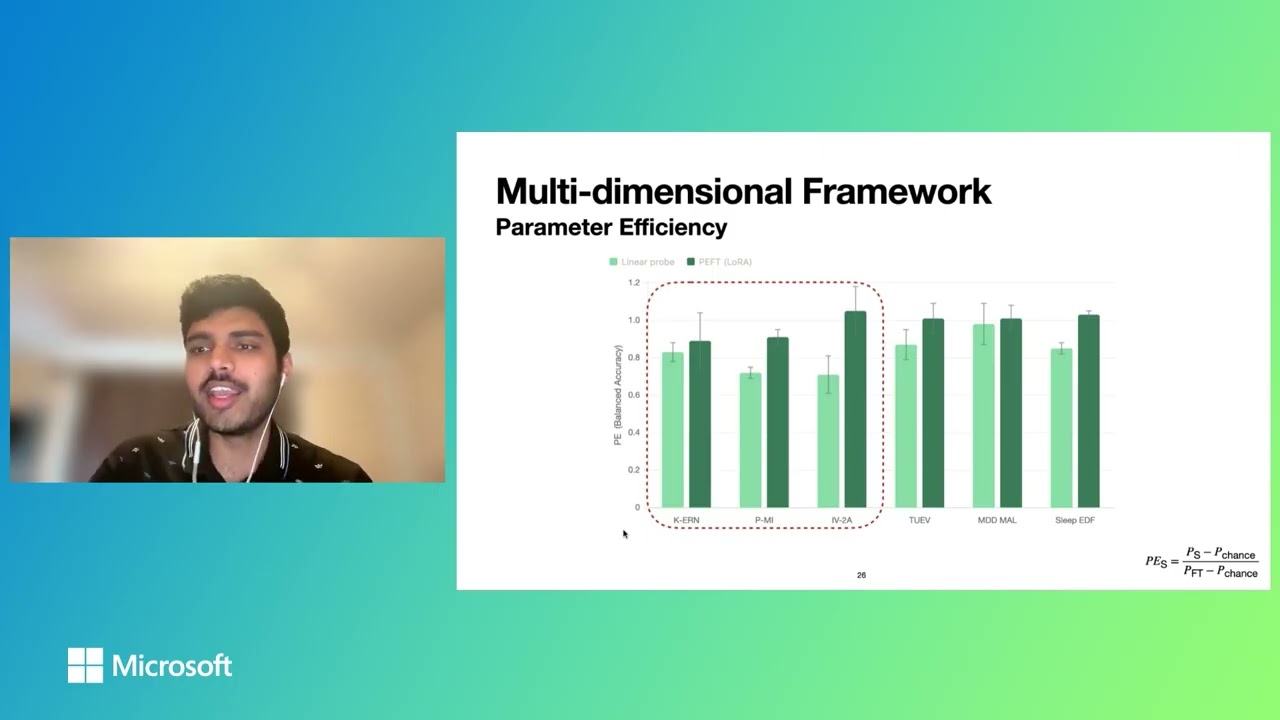
Session on Inclusive AI: Data, Models, Evaluation

Session on Inclusive AI: Data, Models, Evaluation

The Microsoft Research India Academic Research Summit 2026 session on "Inclusive AI" explored critical challenges in developing AI that serves diverse linguistic and cultural contexts. Speakers Niloy Ganguly, Danish Pruthi, Sunayana Sitaram, Anoop Kunchukuttan, and Ashutosh Modi addressed data gaps, model biases, and evaluation shortcomings, emphasizing the need for equitable and culturally relevant AI. Key themes included the use of synthetic data for low-resource languages, the impact of tokenization on model performance, geographical disparities in generative AI, and the application of AI for social good in legal and accessibility domains. The discussions underscored the importance of community involvement, open data, and designing AI for multilinguality from the outset, rather than as an afterthought.

Technology

View All
Inside Zipline's Autonomous System: 140M Miles, Zero Incidents

Inside Zipline's Autonomous System: 140M Miles, Zero Incidents

Zipline co-founder Keller Rinaudo Cliffton and Eric Watson discuss how their autonomous logistics system evolved from addressing critical needs in Rwanda to becoming the largest commercial autonomous system globally. They highlight that the drone is only 15% of the solution, emphasizing the deep integration of software, vertical hardware design, advanced safety protocols like compute failover, and extensive testing required. The discussion also covers the immense market potential for autonomous delivery, the impending cost-effectiveness over traditional methods, and the necessary transformation of air traffic control to support a future of pervasive aerial autonomy.

Are Your Tests Slowing You Down? • Trisha Gee • GOTO 2025

Are Your Tests Slowing You Down? • Trisha Gee • GOTO 2025

Trisha Gee delivers a compelling talk on Developer Productivity Engineering (DPE) for testing, dissecting common pain points in writing, troubleshooting, and running tests. She advocates for strategic use of IDEs, advanced tooling like build caches and predictive test selection (leveraging ML), and a disciplined approach to test design to overcome these challenges, emphasizing that good tests serve as crucial living documentation.

The new post-quantum cryptography executive order. Plus: What is Q-Day, really?

The new post-quantum cryptography executive order. Plus: What is Q-Day, really?

This episode delves into Q-Day, the anticipated future when quantum computers can break public key cryptography, and the U.S. Executive Order accelerating the transition to post-quantum cryptography. Experts discuss why Q-Day is a gradual process rather than a sudden event, the critical importance of "crypto-agility" as a long-term strategy, and the necessity for organizations to begin immediate discovery and planning to secure data against "collect now, decrypt later" threats. The discussion also touches upon the broader, transformative benefits of quantum computing beyond just security.


Recent Post

The Future of Software Creation with Replit CEO Amjad Masad

The Future of Software Creation with Replit CEO Amjad Masad

Amjad Masad, CEO of Replit, outlines a future where AI agents commoditize traditional software, fundamentally reshaping the economy, the nature of work, and how companies are built. He argues that the focus will shift from building applications to solving problems directly, empowering a new class of 'generalist' employees and 'sovereign individuals'.

Platform Engineering: A Deep Dive Conversation • Russ Miles & Kevlin Henney

Platform Engineering: A Deep Dive Conversation • Russ Miles & Kevlin Henney

In this interview from GOTO Copenhagen 2024, Russ Miles, interviewed by Kevlin Henney, explores a human-centric approach to platform engineering, encapsulated by the phrase "Don't feed the pigeons." He advocates for focusing on desired behavioral changes and empowering creative work over doubling down on existing, suboptimal tools and processes. The discussion delves into using OODA loops, creating a developer "habitat," and the critical role of empathy and storytelling in understanding and improving complex sociotechnical systems.

Why language models hallucinate, revisiting Amodei’s code prediction and AI in the job market

Why language models hallucinate, revisiting Amodei’s code prediction and AI in the job market

Experts discuss an OpenAI paper that reframes hallucinations as a feature driven by training incentives, not just a bug. The panel also revisits Dario Amodei's prediction on AI coding, explores AI's chaotic impact on the job market, and imagines the future of running LLMs on business-card-sized devices.

C++ Memory Management • Patrice Roy & Kevin Carpenter • GOTO 2025

C++ Memory Management • Patrice Roy & Kevin Carpenter • GOTO 2025

A conversation with C++ expert Patrice Roy, author of 'Memory Management in C++', exploring the core principles of modern memory management. The discussion covers the pitfalls of over-allocation, the nuanced use of smart pointers, the importance of measurement before optimization, and when to consider custom allocators for peak performance.

Beyond the Chatbot: What Actually Works in Enterprise AI

Beyond the Chatbot: What Actually Works in Enterprise AI

Jay Alammar, Director at Cohere, discusses the practical adoption of Large Language Models in the enterprise. He covers the evolution of Retrieval-Augmented Generation (RAG) from a simple anti-hallucination tool to complex, agentic systems, the critical role of evaluation as intellectual property, and future trends like text diffusion and the increasing capability of smaller models for specialized business tasks.

Recall.ai: Unlocking the World’s Conversations

Recall.ai: Unlocking the World’s Conversations

Co-founder David shares Recall.ai's journey from a YC hackathon project to the essential data infrastructure for over 1,000 AI companies. He covers their strategic pivot to an API, the fundraising grind, and the lessons learned in building a lean, high-agency team that powers the future of AI with conversation data.

Stay In The Loop! Subscribe to Our Newsletter.

Get updates straight to your inbox. No spam, just useful content.