Tokenless

Interactive discovery

Explore the topic map

Follow the connections between themes, people, and ideas across the Tokenless archive in an interactive topic modeling map.

Machine Learning

View All
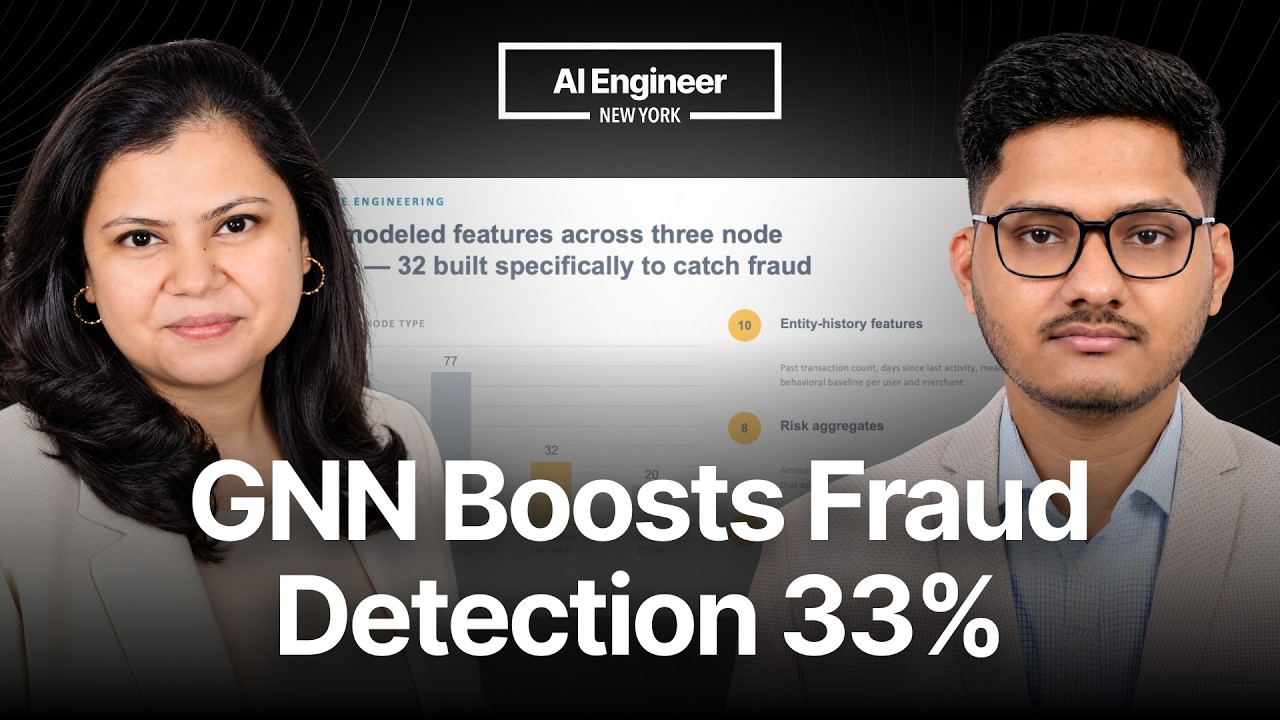
Judge a Transaction by the Company It Keeps — Somya Rai & MD Sharique, EXL

Judge a Transaction by the Company It Keeps — Somya Rai & MD Sharique, EXL

EXL developed an advanced fraud detection system that augments XGBoost with Graph Neural Network (GNN) embeddings. Traditional tabular models struggle to capture fraud signals residing in transaction neighborhoods. The system's innovative design includes meticulous sampling strategies, disjoint monthly graph construction for leakage control, and a GraphSAGE architecture that aggregates mean, max, and standard deviation of neighbor features to detect subtle fraud patterns. Emphasizing explainability for regulatory compliance and analyst trust, it also features a highly optimized serving architecture achieving 3ms P99 latency, pivoting to edge prediction to reduce cache footprint from 60GB to 2-3GB. This led to a 27-33% relative lift in true positive rates and a projected $65 million incremental fraud capture.
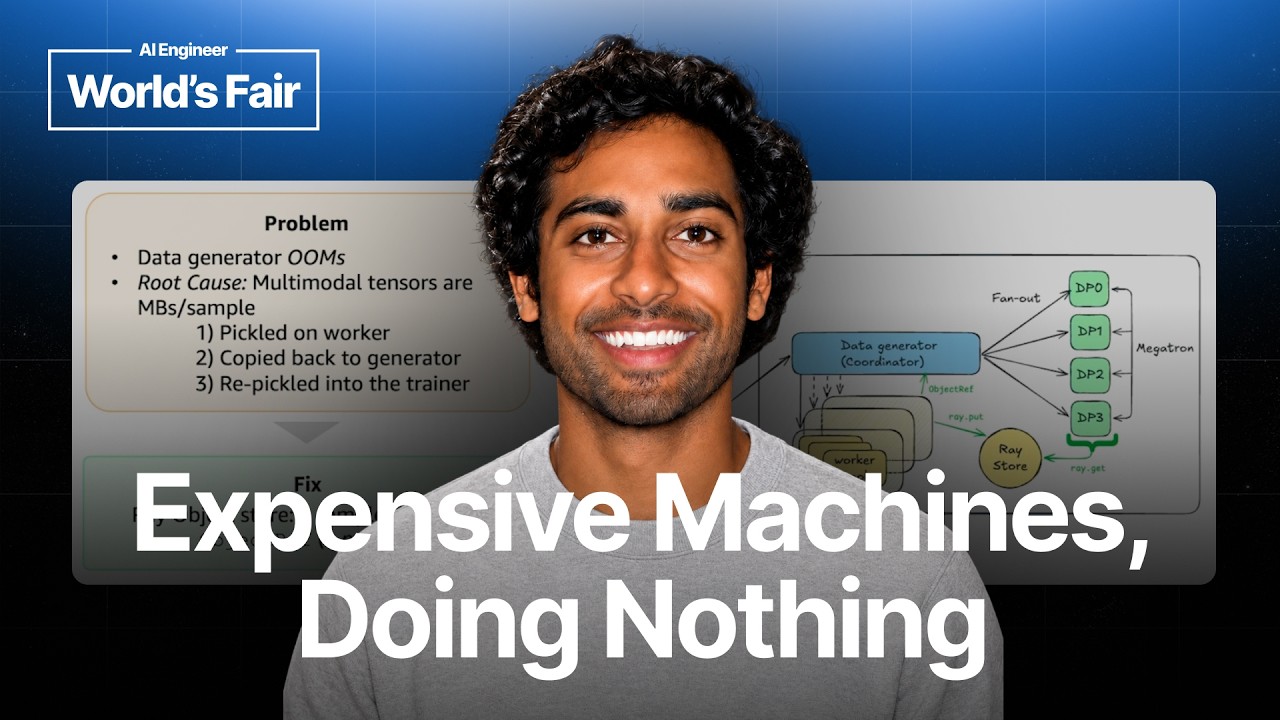

From 15% to 90% GPU Utilization: Fix the Data Pipeline, Not the Model

From 15% to 90% GPU Utilization: Fix the Data Pipeline, Not the Model

Tarun Sunkaraneni from Amazon AGI shows how a multimodal SFT pipeline that spent about 85% of its time waiting on data was brought to roughly 90% GPU utilization. He walks through concurrency with asyncio and Ray actors, prefetching, zero-copy transfer via Ray's object store, and a network-card bottleneck that appears only at scale, and argues that the hardest part of training throughput is often keeping GPUs fed rather than optimizing the model.

Small Models, Big Results: Training a Finance Agent for Under $500 — Charles Dickens, Snorkel AI

Small Models, Big Results: Training a Finance Agent for Under $500 — Charles Dickens, Snorkel AI

Snorkel AI and UC Berkeley's Sky Computing Lab show that a 4B Qwen3 model, trained with reinforcement learning for under $500 using the rLLM framework, beats its 235B sibling on expert-validated financial question answering built from SEC 10-K filings. The talk covers the FinQA dataset construction and verification, common failure modes of frontier models, transfer to multi-table and general tool-use tasks, and ablations showing that simple data and binary rewards outperform more elaborate setups, since the real bottleneck is disciplined tool use rather than reasoning depth.

Artificial Intelligence

View All
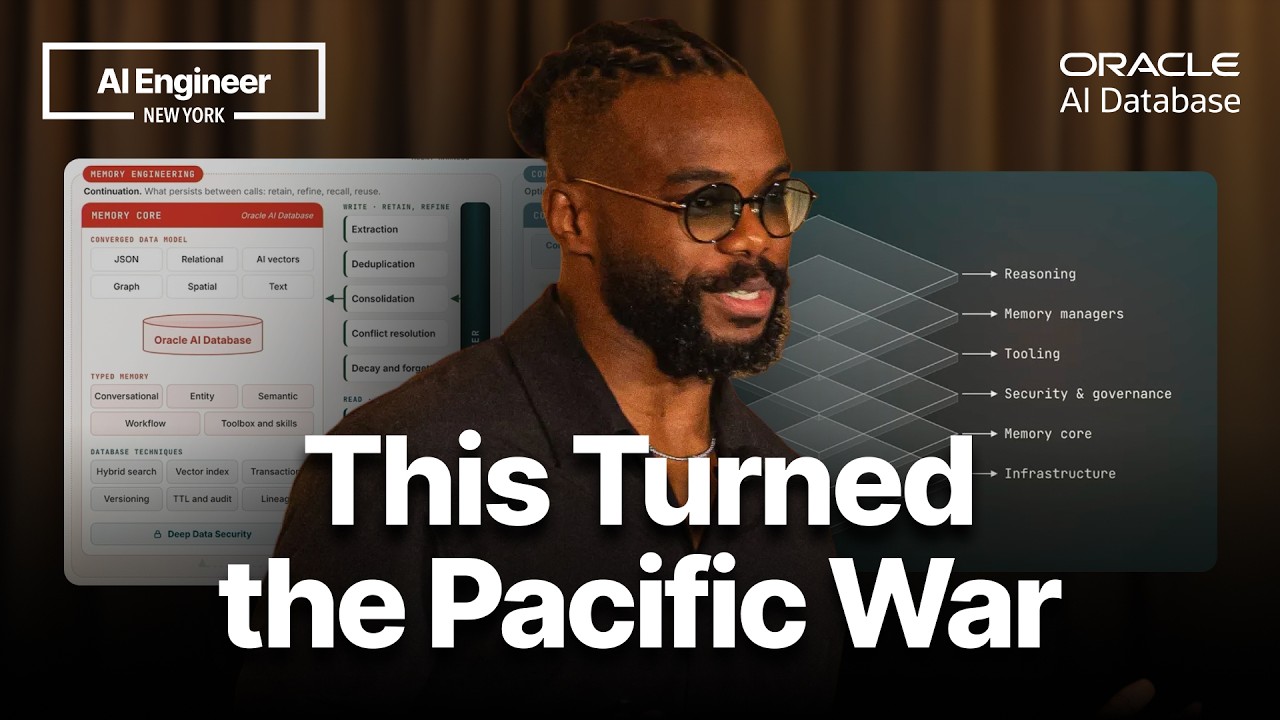
Everyone Has the Same AI Models. Here's What Sets Agents Apart - Richmond Alake, Oracle

Everyone Has the Same AI Models. Here's What Sets Agents Apart - Richmond Alake, Oracle

Richmond Alake argues that after the control plane, agent architectures need an intelligence plane covering what an agent knows, remembers, is allowed to see, and how it improves. He draws on the WWII Midway codebreaking story to separate information from intelligence, then demos a governed agent using an ontology and semantic layer that answers correctly about 99% of the time with far fewer tokens than a naive agent. The talk also covers Oracle's agent memory package, deep data security, private inference, and fine-tuned decision models for memory routing.

Using Agents for Long-Horizon Financial Work — Aman Singh, Arca

Using Agents for Long-Horizon Financial Work — Aman Singh, Arca

Aman Singh, head of AI at Arca, explains how the firm is building an AI-native wealth management business in which agents run back-office work, monitor clients proactively, and coordinate multi-day workflows, while humans retain advisory relationships and trade execution. The discussion covers model selection through internal benchmarks, a model-agnostic custom harness with tiered routing, persistent memory for long-running tasks, deterministic and LLM-based guardrails, auditability by default, decision models for financial accuracy, and feedback loops that turn staff edits into evals.

THE $800B COMPUTE TRAP

THE $800B COMPUTE TRAP

Ben Lorica and Evangelos Simoudis work through Anthropic's S-1 filing, weighing its striking growth and improving unit economics against compute commitments, falling prices from open-weight models, and dependence on coding. They then examine SpaceX's emerging neocloud business and close with a debate over proposed frontier AI regulation, from self-improvement limits to independent testing and incident disclosure.

Technology

View All
Why Founders Are Betting Big on Factories, Mines, and Energy

Why Founders Are Betting Big on Factories, Mines, and Energy

Erin Price-Wright and Connor Love unpack the AD50 and the rebuilding of America's industrial base, covering how defense demand is financing manufacturing capacity for commercial markets, how AI is reshaping factory economics, how a new generation of founders applies lessons from SpaceX, Tesla, Anduril, and Palantir to mining, energy, and manufacturing, and why private capital is now willing to fund physical infrastructure before government demand is guaranteed.

Mark Cuban’s Plan to Make Healthcare Affordable

Mark Cuban’s Plan to Make Healthcare Affordable

Mark Cuban and Julie Yoo discuss how transparency, direct contracting, and AI could reshape healthcare economics, from Cost Plus Drugs and modular pod manufacturing to personalized medicine, the future of physicians, and advice for founders who want to use AI to learn rather than to stop thinking.

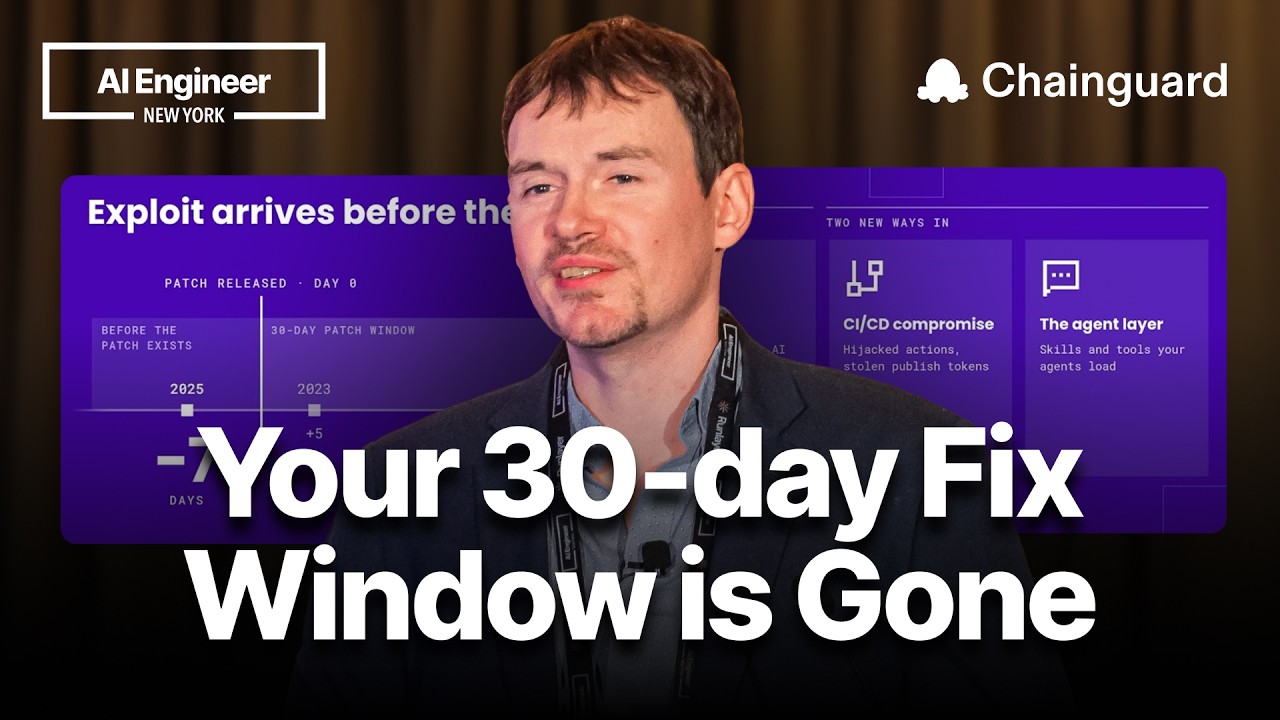
Exploits Now Beat Patches: Open Source Security in the AI Era - Patrick Smyth, Chainguard

Exploits Now Beat Patches: Open Source Security in the AI Era - Patrick Smyth, Chainguard

Patrick Smyth of Chainguard examines how frontier AI has compressed the time between vulnerability disclosure and exploitation, leaving 30-day remediation cycles obsolete. The talk covers AI-assisted attacks, waves of supply chain malware, four attack surfaces spanning malware, known CVEs, zero days, and side doors like CI/CD, developer laptops, and agent skills, and practical defenses including cooldown periods, faster CVE remediation, and signing artifacts with SLSA and Sigstore.


Recent Post

Re-engineering the Semiconductor Supply Chain with Intel CEO Lip Bu Tan

Re-engineering the Semiconductor Supply Chain with Intel CEO Lip Bu Tan

Intel CEO Lip Bu Tan shares his strategic vision for turning around the tech giant, focusing on cultural transformation, strengthening the balance sheet with key investments (including the US government and Nvidia), and driving innovation in foundry, advanced packaging, and new materials. He discusses collaborations like Terafab with Elon Musk, the profound impact of AI on the semiconductor supply chain, and his investment philosophy for the evolving industry, aiming to position Intel for agentic and physical AI at the edge and client, not just centralized compute.

🔬 The Limits of AI in Science - Why We Need Self-Driving Labs — Joseph Krause, Radical AI

🔬 The Limits of AI in Science - Why We Need Self-Driving Labs — Joseph Krause, Radical AI

Joseph Krause, CEO of Radical AI, details how his company uses Self-Driving Labs (SDLs) and AI scientists to overcome the experimental bottleneck in materials science. By automating the full loop of hypothesis generation, synthesis, characterization, and testing, Radical AI is accelerating the discovery of novel alloys for aerospace, defense, and semiconductor applications, achieving 10x the pace of traditional methods. Krause explains why materials science is uniquely challenging for AI, how human intuition trains the AI, and why experimental data, not models, forms the core competitive advantage in this rapidly evolving, geopolitically significant field.

Women in AI | The Founders & Builders Flipping the Script | Event | Creator's Cut | Mar 2026 | 4K

Women in AI | The Founders & Builders Flipping the Script | Event | Creator's Cut | Mar 2026 | 4K

This Creator's Cut of The AI Space Podcast features women leaders across motorsports, tech staffing, AI design, and MedTech. They discuss actionable strategies for 2026, emphasizing why AI adoption hinges on fitting user workflows, the irreplaceable value of authentic human voice, and the necessity of robust processes for scaling businesses. The panel explores AI's impact on job markets, healthcare, creative industries, and ethical development, offering practical advice for founders and professionals.

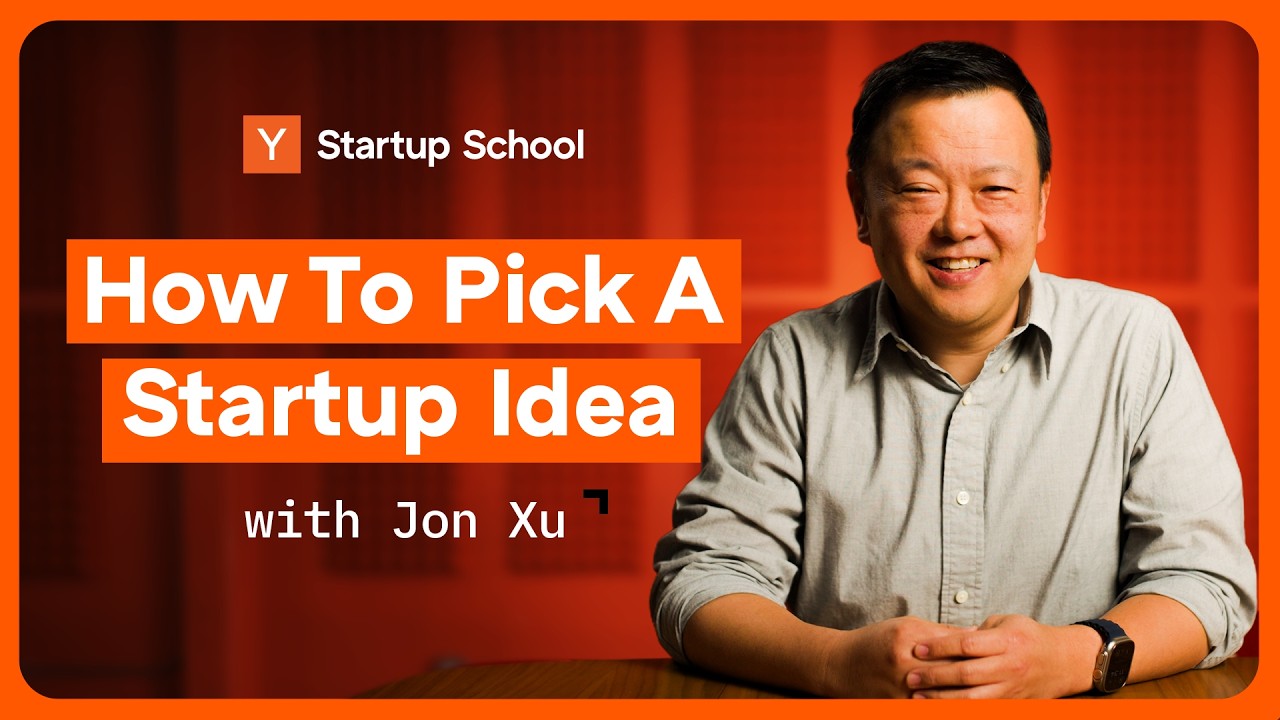
How To Pick A Startup Idea

How To Pick A Startup Idea

Jon Xu, a YC General Partner, argues against the "perfect idea" trap and juggling multiple startup concepts. He advocates for founders to commit deeply to a single idea, immersing themselves in customer problems to the point of understanding their business intimately. This approach, especially vital in the AI era, involves building at the frontier of technology, verticalizing to own outcomes, and aiming for the most ambitious version of a solution, ultimately yielding invaluable insights and potential for pivot, even if the initial idea doesn't succeed.

Growing & Thriving in a Multi-model World • Alberto Brandolini • GOTO 2025

Growing & Thriving in a Multi-model World • Alberto Brandolini • GOTO 2025

Alberto Brandolini delivers a compelling talk on how to combat software model decay and avoid the "Big Ball of Mud" by strategically applying Domain-Driven Design principles, especially Bounded Contexts. He emphasizes the critical role of visual thinking, structured architectural discussions, and organizational habits in maintaining clean, evolvable systems, particularly when scaling across teams and international markets. The talk highlights the need for continuous design effort, disciplined decision-making, and proactive identification of model boundaries to build resilient software in complex socio-technical landscapes.

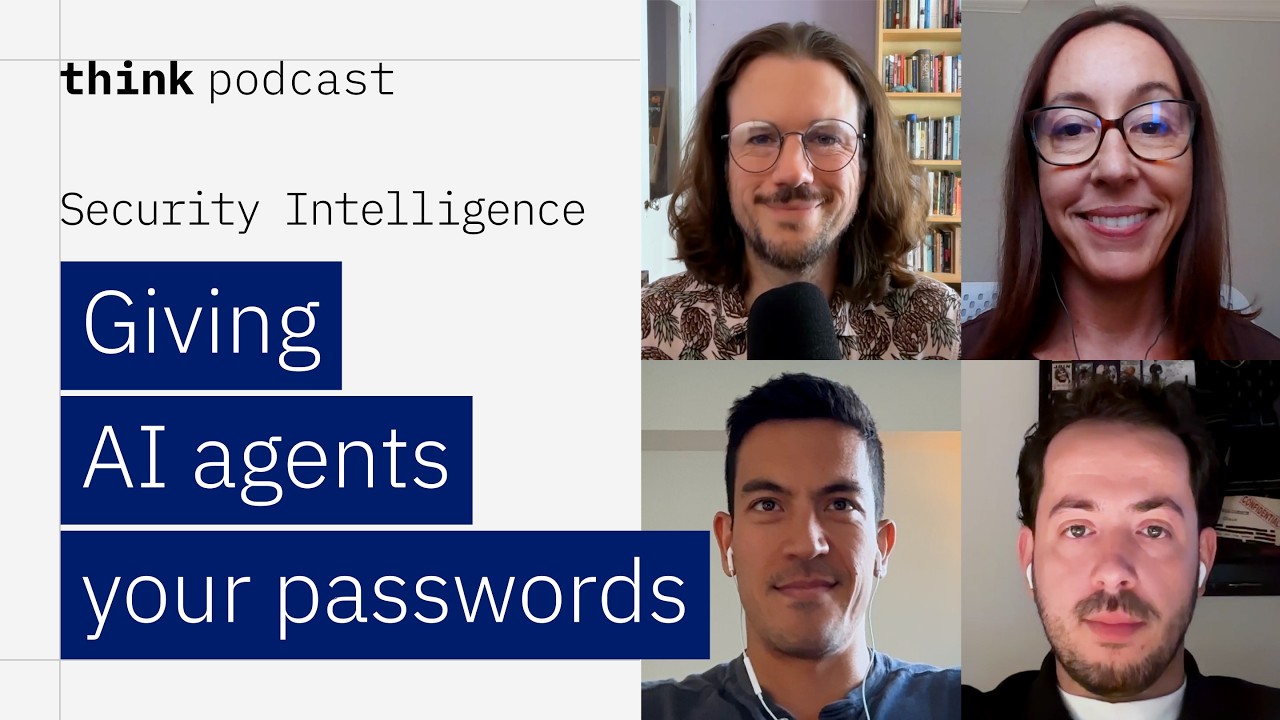
AI agents can manage your passwords. Should we let them? Plus: The biggest Patch Tuesday ever.

AI agents can manage your passwords. Should we let them? Plus: The biggest Patch Tuesday ever.

This episode of Security Intelligence delves into three critical cybersecurity topics: the implications of AI agents managing passwords, the impact of AI on vulnerability discovery and "Patch Tuesday" volumes, and the C-suite's evolving appetite for cyber risk in pursuit of innovation. Experts discuss the promises, pitfalls, and necessary strategic shifts in an AI-driven security landscape.

Stay In The Loop! Subscribe to Our Newsletter.

Get updates straight to your inbox. No spam, just useful content.