Ml

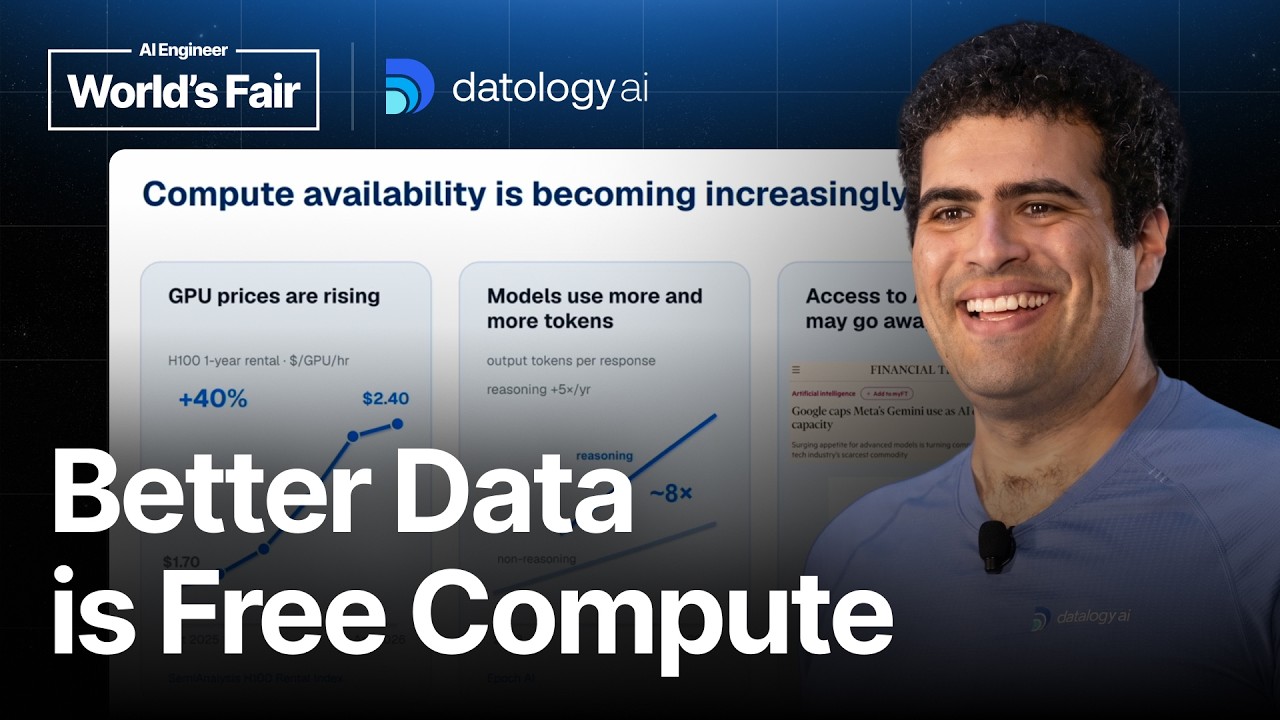
Data Quality Is the Compute Multiplier — Ari Morcos, DatologyAI

Data Quality Is the Compute Multiplier — Ari Morcos, DatologyAI

Ari Morcos, CEO of DatologyAI, explains why data quality is the critical "compute multiplier" in an era of scarce and expensive compute. He outlines DatologyAI's "oil refinery" process (Clean, Curate, Create, Compose) for enhancing datasets. Through empirical results and customer cases like Thomson Reuters and Arcee, he demonstrates how superior data curation leads to significantly better models, reduced training costs, improved inference efficiency, and the ability to train competitive models for a fraction of traditional costs, proving that manufacturing high-quality data is more effective than buying more compute.

Reinforcement Learning without Verifiable Rewards — Will Brown, Prime Intellect

Reinforcement Learning without Verifiable Rewards — Will Brown, Prime Intellect

Will Brown's talk addresses the critical challenge of applying Reinforcement Learning to real-world tasks where verifiable rewards are absent. He outlines how Primordial AI tackles this by leveraging environments as the core anchor for building reward signals. Key strategies include using LLMs as "judges," grounding tasks in production traces or document corpora, and employing "reverse direction" techniques to generate training data. Brown also details methods for calibrating task difficulty, identifying reward hacking, and fostering continual learning by treating model optimization as a science, emphasizing the use of compute to refine environmental signals and abstract human expertise.

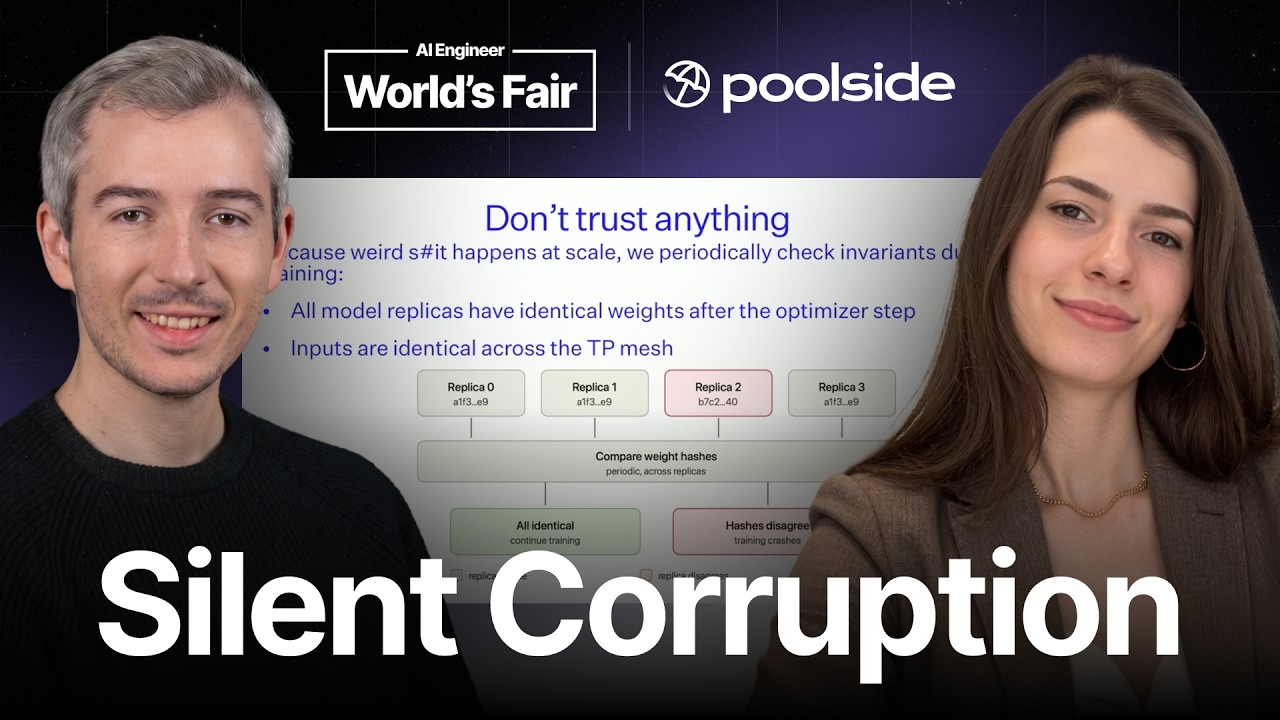
The Messy Reality of Scale: Synthetic Data and Pre-Training — Marah Abdin & Robert McHardy, poolside

The Messy Reality of Scale: Synthetic Data and Pre-Training — Marah Abdin & Robert McHardy, poolside

Poolside discusses their innovative approaches to synthetic data generation, pre-training validation, and distributed training challenges. They highlight how modular data pipelines, rigorous replica hash checks, and numerical stability fixes enabled them to scale their LLMs, culminating in the 118B parameter Laguna S model designed for agentic coding, which shows strong early results against leading open-weight models.

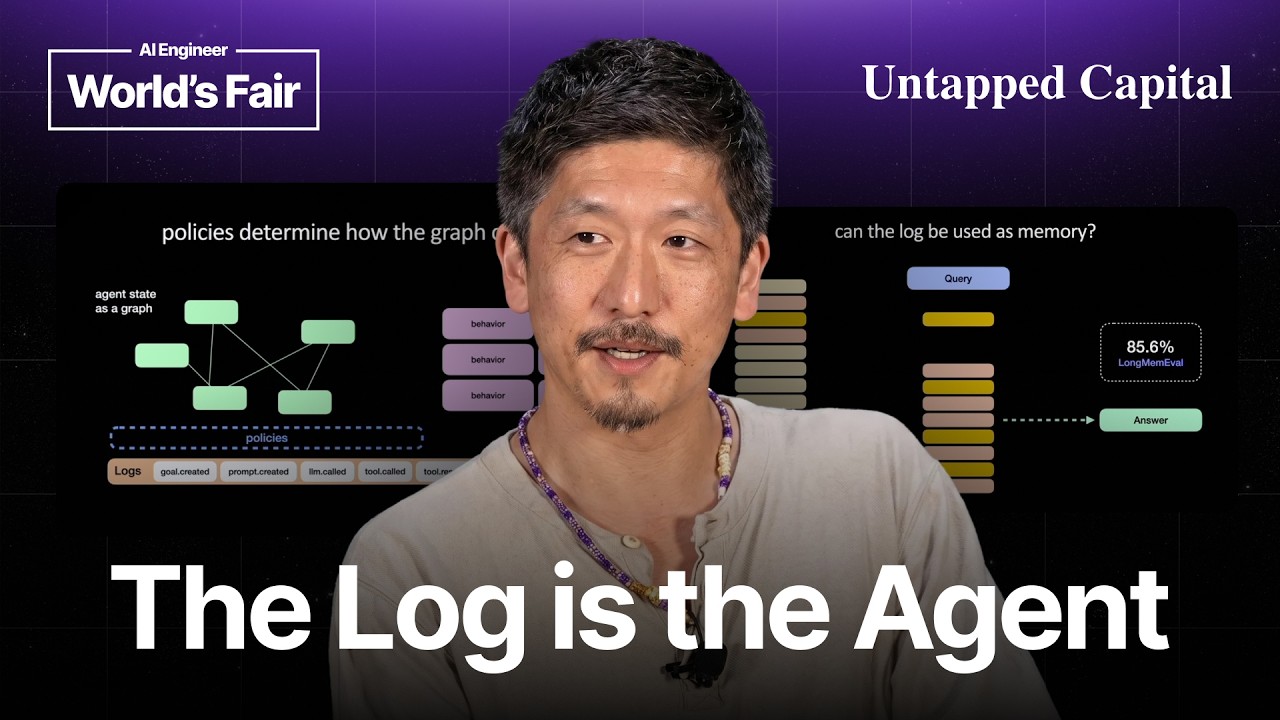
Active Graph Agent Runtime (BabyAGI 4) — Yohei Nakajima, Untapped Capital

Active Graph Agent Runtime (BabyAGI 4) — Yohei Nakajima, Untapped Capital

Yohei Nakajima, creator of BabyAGI, introduces ActiveGraph, a novel agent architecture that builds around an immutable event log rather than the LLM. This log-centric approach enables auditable agents with native replay, rollback, and self-improvement capabilities, drawing inspiration from blackboard systems and Kafka.

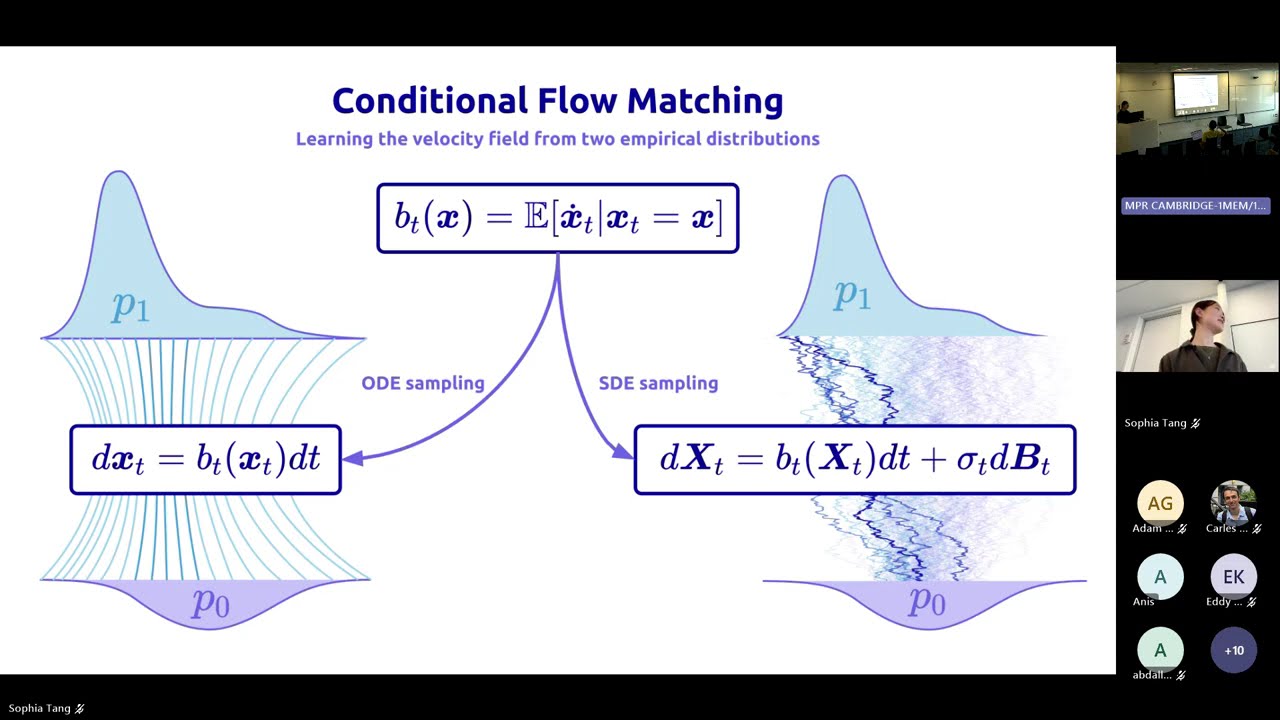
Expanding Flows for Fast and Flexible Generation Beyond the Fixed Canvas

Expanding Flows for Fast and Flexible Generation Beyond the Fixed Canvas

This talk introduces Expanding Generative Flows (EFlows) and Expanding Flow Maps (EFMs), a novel framework for flow-based generative models that overcome the limitation of fixed-canvas generation. It proposes decomposing the generative process into an 'expand' operation (to increase dimensionality with new coordinates/tokens) and a 'transport' map, allowing for fast and flexible generation of variable-sized outputs across both continuous and discrete state spaces. The framework leverages local time clocks, piece-wise deterministic Markov processes, and specific training objectives for consistency, demonstrated through applications in conformer generation, molecular graph generation, and language modeling.

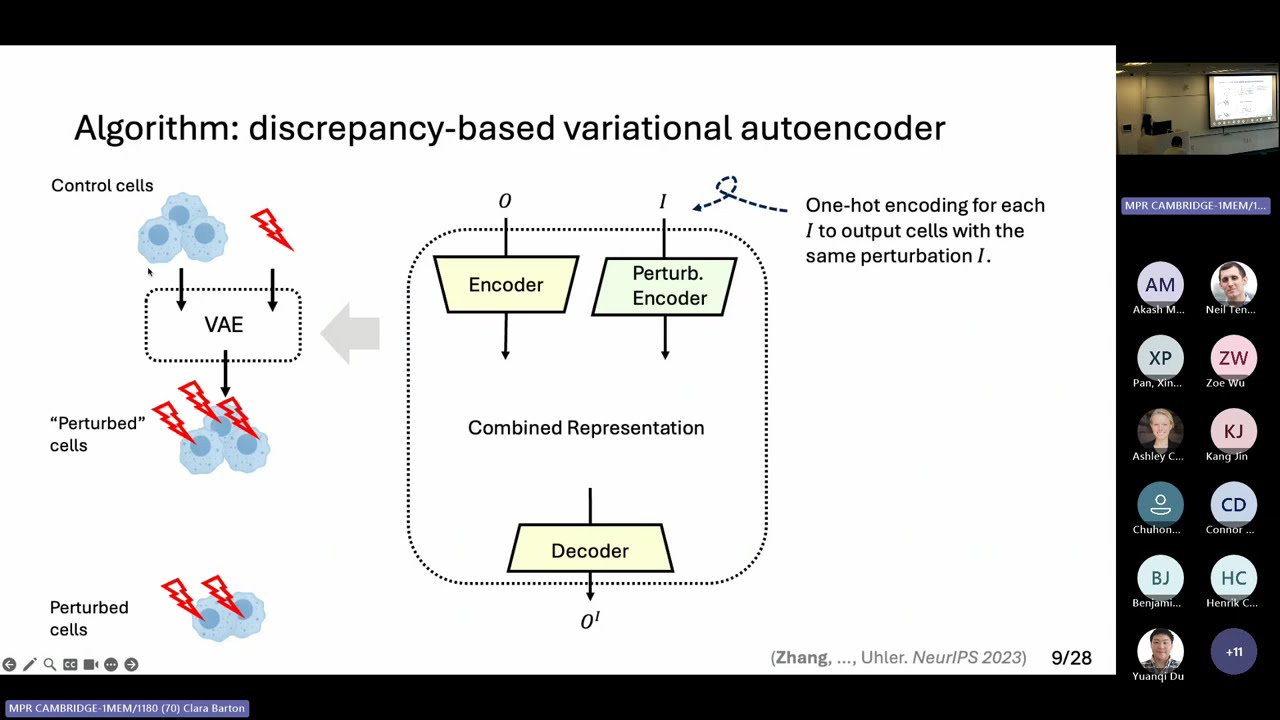
Learning Genetic Perturbation Effects at Single-Cell Resolution for Virtual Cells

Learning Genetic Perturbation Effects at Single-Cell Resolution for Virtual Cells

Jiaqi Zhang's talk focuses on advancing causal discovery and perturbational modeling for gene networks, crucial for therapeutic insights. She introduces theoretical guarantees for learning latent causal variables and presents MORPH, a VAE-based framework that predicts the effects of novel and combinatorial gene perturbations by integrating diverse prior biological knowledge and using distributional loss for training. The model has demonstrated success in guiding experimental design, including identifying novel T-cell regulators for cancer immunotherapy, highlighting its potential to accelerate biological discovery and drug development.