Ai

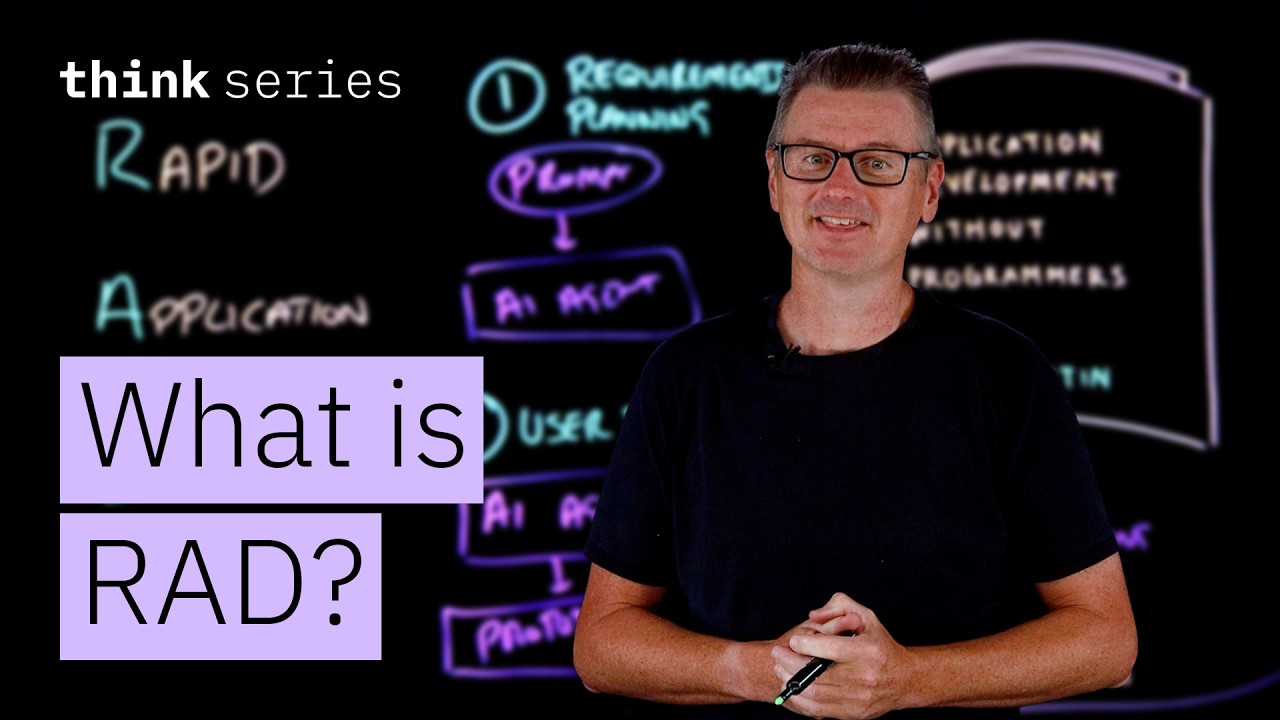
What Is RAD? Why It Matters in the Age of AI Coding

What Is RAD? Why It Matters in the Age of AI Coding

This video explores how James Martin's 1991 Rapid Application Development (RAD) methodology, with its emphasis on rapid prototyping, iterative development, and user feedback, offers a robust framework for contemporary AI coding and "vibe coding" workflows. It highlights how AI agents accelerate prototyping but introduces new challenges regarding production readiness and security. The solution proposed is spec-driven development, where human expertise formalizes requirements and verifies AI-generated code based on insights gained from early prototypes, ensuring quality and mitigating risks.
OpenAI’s Head of Design: This is the best time in history to be a designer | Ian Silber

OpenAI’s Head of Design: This is the best time in history to be a designer | Ian Silber

Ian Silber, OpenAI's Head of Design, discusses the paradoxical anxiety among designers despite AI's transformative potential. He explains why this is the best time to be a designer, emphasizing curiosity, systems thinking, and the human element in an AI-amplified world. The conversation delves into ChatGPT's evolution as a "super app" and the unique design challenges of building for vastly diverse users.

5 Ways to Connect AI Agents to Tools: From APIs to MCP

5 Ways to Connect AI Agents to Tools: From APIs to MCP

Grant Miller outlines five evolving patterns for integrating AI agents with tools, starting from simple direct API connections to complex, secure token-based architectures. The discussion highlights the progression of these methods, emphasizing how authentication, user delegation, abstraction layers like MCP, and secure credential management using vaults improve security, observability, and scalability in agentic systems.

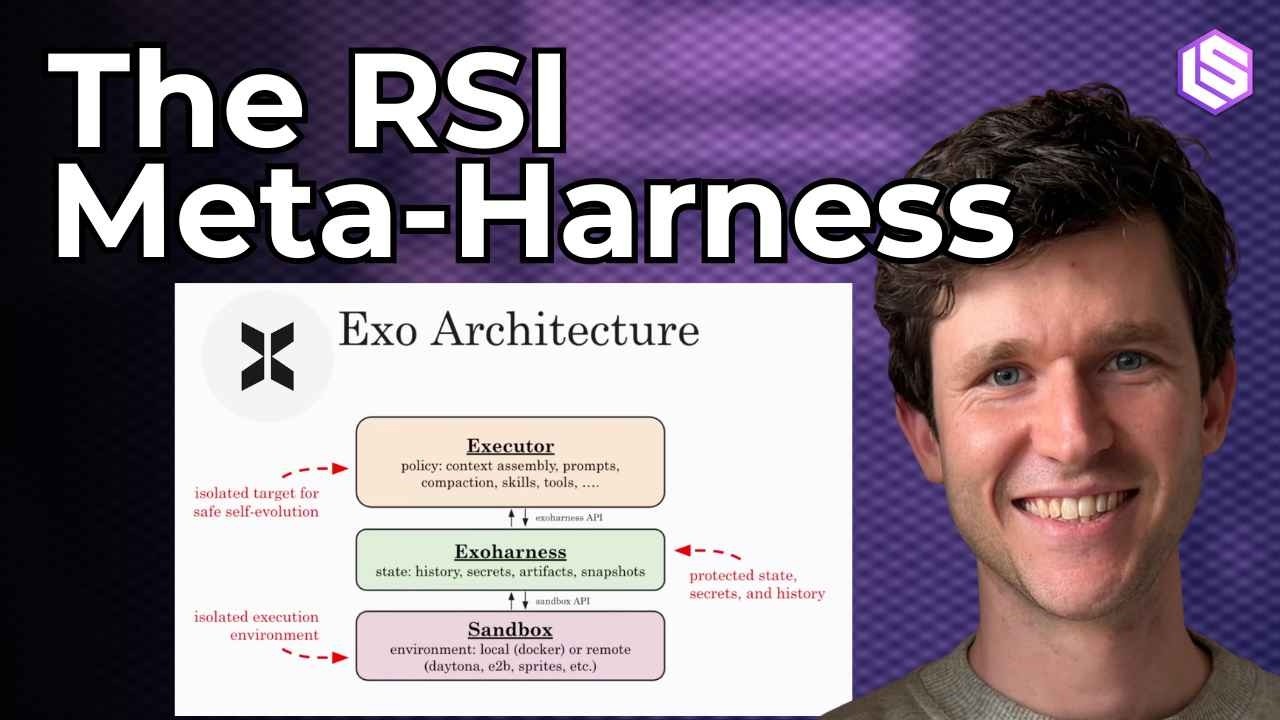
Exo: Harnesses should see their own code and logs — Alex Krentsel

Exo: Harnesses should see their own code and logs — Alex Krentsel

An introduction to Exo, a fully recursive AI agent harnessing a novel three-layer architecture (Executor, Harness, Sandbox) designed for autonomous self-improvement. It delves into how Exo surpasses current agent limitations by allowing the agent to edit its own code and policy at runtime, ensuring protected state and isolated execution, and discusses practical implications and the underlying systems philosophy enabling this paradigm shift.

Building And Structuring An AI Native Company

Building And Structuring An AI Native Company

Tom Blomfield of Y Combinator discusses the paradigm shift towards AI-native companies, moving beyond traditional human-centric hierarchies. He introduces the concept of self-improving AI loops—where systems continuously learn and evolve without human intervention—and illustrates this with examples like YC's self-healing data agents and living user manuals. Blomfield explores the vision of 'AI employees with VMs' leading to a 'company brain,' where humans transition to the 'edge' for intuition and real-world interaction. He concludes with practical advice for founders: prioritize token burn over headcount, ensure all data is AI-legible, and leverage AI for strategic simulations like investor calls.

IBM’s cloud collab, Meta’s Muse Glimmer & OpenAI’s upcoming Astra model

IBM’s cloud collab, Meta’s Muse Glimmer & OpenAI’s upcoming Astra model

This episode explores IBM's massive AI infrastructure partnership with Together AI and NVIDIA, Meta's open-source Muse Glimmer model enabling powerful on-device AI, and OpenAI's delayed Astra model due to critical cybersecurity capabilities. Discussions cover the economics of industrial-scale AI, the implications of local vs. cloud AI, and the profound security challenges and opportunities presented by both open and closed frontier models.