Ai

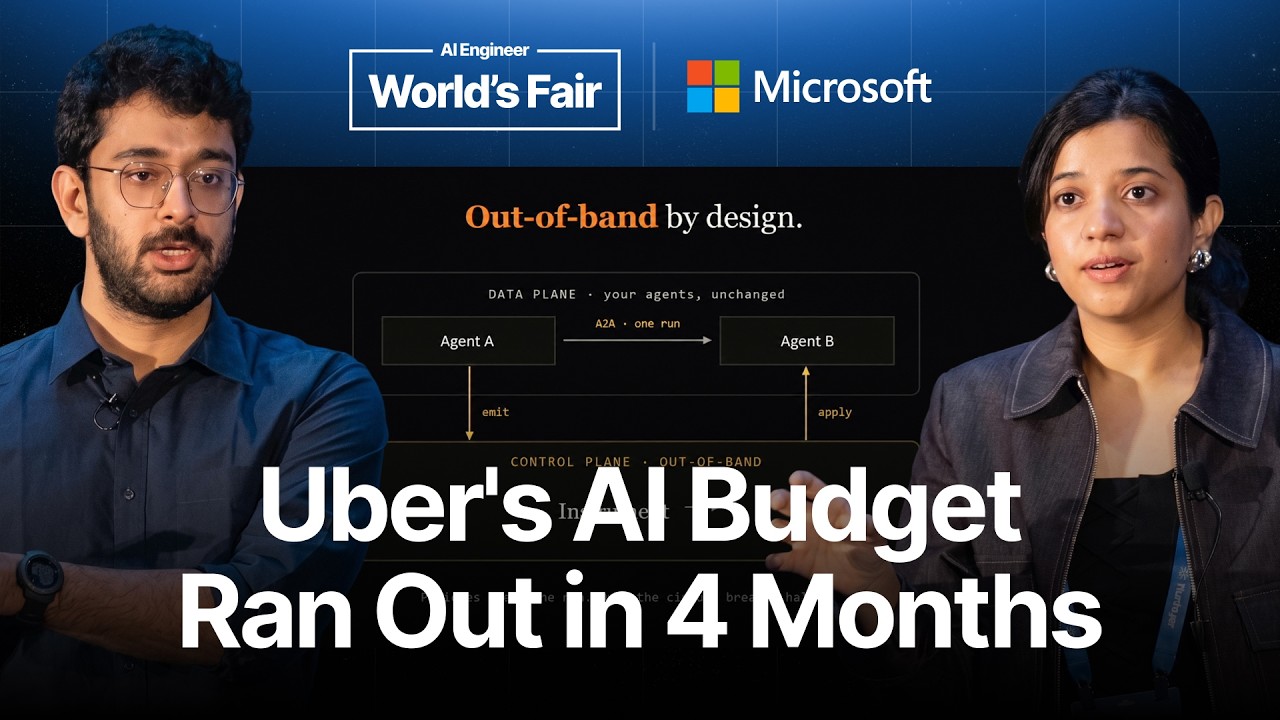
FinOps for AI Agents: Who Spent All the Tokens? — Tisha Chawla & Susheem Koul, Microsoft

FinOps for AI Agents: Who Spent All the Tokens? — Tisha Chawla & Susheem Koul, Microsoft

TokenOps introduces a novel control plane for managing AI agent costs, shifting from simple throttling to proactive steering. By integrating an out-of-band system that annotates agent methods and provides a policy-driven governor, TokenOps can dynamically modify agent behavior—like making outputs more succinct—to reduce token consumption and prevent runaway loops. This approach significantly cuts average spend (78%) and dramatically improves run completion rates (from 67% to 96%) compared to traditional halting mechanisms, offering granular, attributable cost control for the agentic era.


Give the Agent a Budget, Not a Token — Sachin Malhotra, Anthropic

Give the Agent a Budget, Not a Token — Sachin Malhotra, Anthropic

Sachin Malhotra's talk outlines a critical framework for safely deploying autonomous agents in production, moving beyond simple token-based access. He introduces 'asymmetric verbs,' refilling 'rate limits,' 'trip wires' for aggregate monitoring, and the 'undo test' as a lens. A central tenet is that infrastructure (via a proxy) must stamp an agent's identity, preventing agents from circumventing controls and ensuring accountability, thus providing a "budget" instead of an unbounded "token."

Simulating Humanity: from Generative Agents to 8 Billion Digital Twins — Joon Sung Park, Simile AI

Simulating Humanity: from Generative Agents to 8 Billion Digital Twins — Joon Sung Park, Simile AI

Joon Sung Park, co-founder and CEO of Simile, traces his path from painting to the Smallville generative agents paper and explains how Simile builds behavioral foundation models and digital twins. The conversation covers why frontier models fail to reproduce irrational human behavior, the role of interviews, observational data, and randomized controlled trials, the 85% accuracy result, scaling laws for simulation, Schelling's agent-based models, the economics of simulating large populations, and the long-term vision of simulating 8 billion people to tackle problems like climate change and democratic instability.

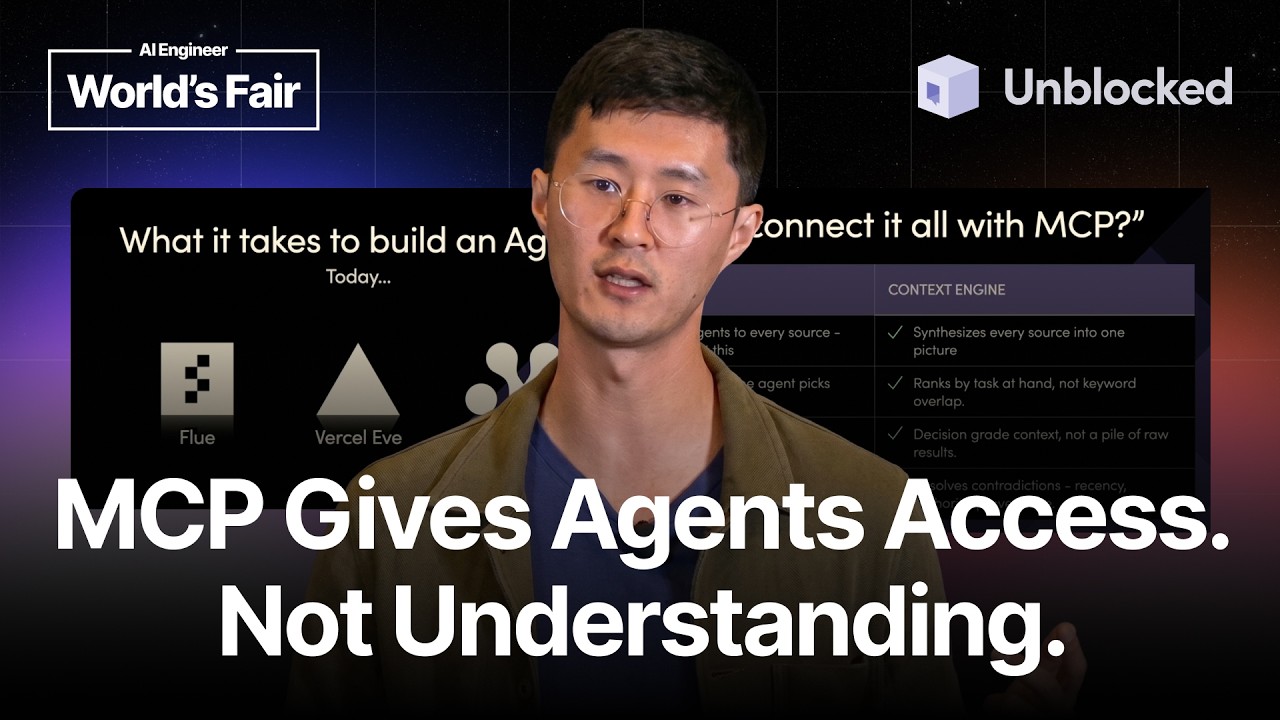
Building Agents Is Trivial Now, Context Is the Next Frontier — Jeff Ng, Unblocked

Building Agents Is Trivial Now, Context Is the Next Frontier — Jeff Ng, Unblocked

Building AI agents is now easier than ever, but they frequently make confident yet incorrect decisions. This is because agents often lack critical context that humans provide, such as historical discussions, postmortems, and tribal knowledge. The solution proposed is a 'context engine' that synthesizes and grounds information from across an organization's documents, code, tickets, and conversations, providing agents with a holistic and reconciled view, thus bridging the 'context gap' that current LLMs often miss.

Supabase: Cash Does Not Equal Success

Supabase: Cash Does Not Equal Success

Paul Copplestone, CEO of Supabase, discusses the company's rapid rise as a leading dev tool. He explains their strategic bet on open-source Postgres, the pivotal "Open Source Firebase" rebrand, and how three distinct "chapters" of AI — from vector databases and code generation to advanced AI agents — have dramatically accelerated Supabase's growth and forced a re-evaluation of developer experience and internal operations.

Agentic SDLC at Uber — Uday Kiran Medisetty & Adam Huda, Uber

Agentic SDLC at Uber — Uday Kiran Medisetty & Adam Huda, Uber

Uber has transformed its software development with an agentic AI-powered factory, leading to a dramatic increase in engineer productivity. The presentation details six key infrastructure components: a unified model gateway with strict PII and safety guardrails, an MCP gateway for streamlined agent tool access and token optimization, agentified dev pods for rapid execution, a managed skills marketplace, a comprehensive context graph, and the Cortana AI assistant. Adam Huda then demonstrates an end-to-end feature development workflow, highlighting a critical shift to inner-loop validation (stopping short of CI) and automated, managed maintenance loops. The ultimate takeaway is that the bottleneck has moved from technical execution to strategic decision-making: "should we build it?" rather than "can we build it?"