Ai

🔬 The Physical World Is More Forgiving Than You Think — Anima Anandkumar, Caltech

🔬 The Physical World Is More Forgiving Than You Think — Anima Anandkumar, Caltech

Anima Anandkumar discusses her vision for AI in science, moving beyond language models to apply machine learning to the physical world. She introduces neural operators, especially Fourier neural operators, as a solution to data scarcity and resolution challenges in domains like weather, climate, and fusion. These models integrate physical constraints and data to achieve unprecedented speed and accuracy, even on consumer hardware, enabling capabilities from early hurricane prediction to digital twins for fusion reactors and inverse design for advanced materials. The conversation highlights the need for principled AI design for scientific discovery and advocates for distinct regulatory approaches for AI in science.
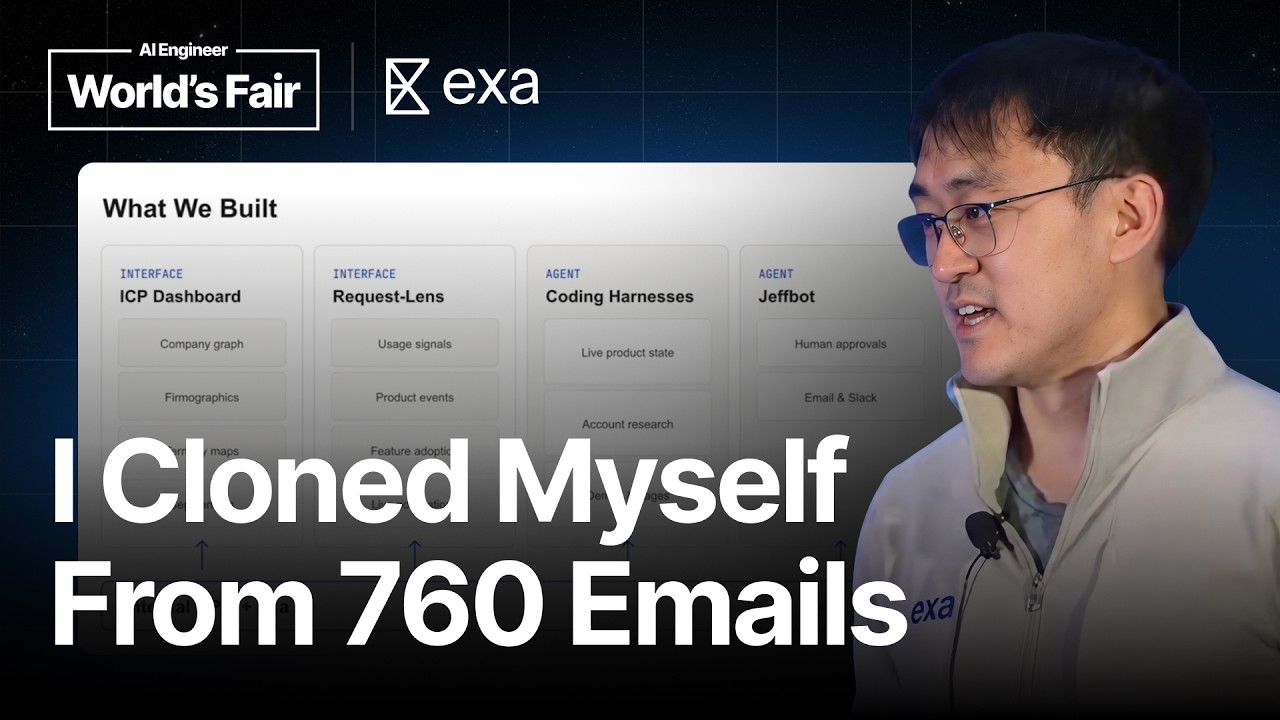
Knowledge Systems: The New GTM Stack — Jeffrey Wang, Exa

Knowledge Systems: The New GTM Stack — Jeffrey Wang, Exa

Jeffrey Wang, co-founder of Exa, details how "go to market" (GTM) is transforming into an AI engineering problem. He showcases Exa's agent-first approach, using tools like an ICP dashboard for market intelligence and a personal AI clone (Jeffbot) to automate and optimize sales, emphasizing the need for robust APIs and arbitrarily customizable systems in this new AI-driven landscape.

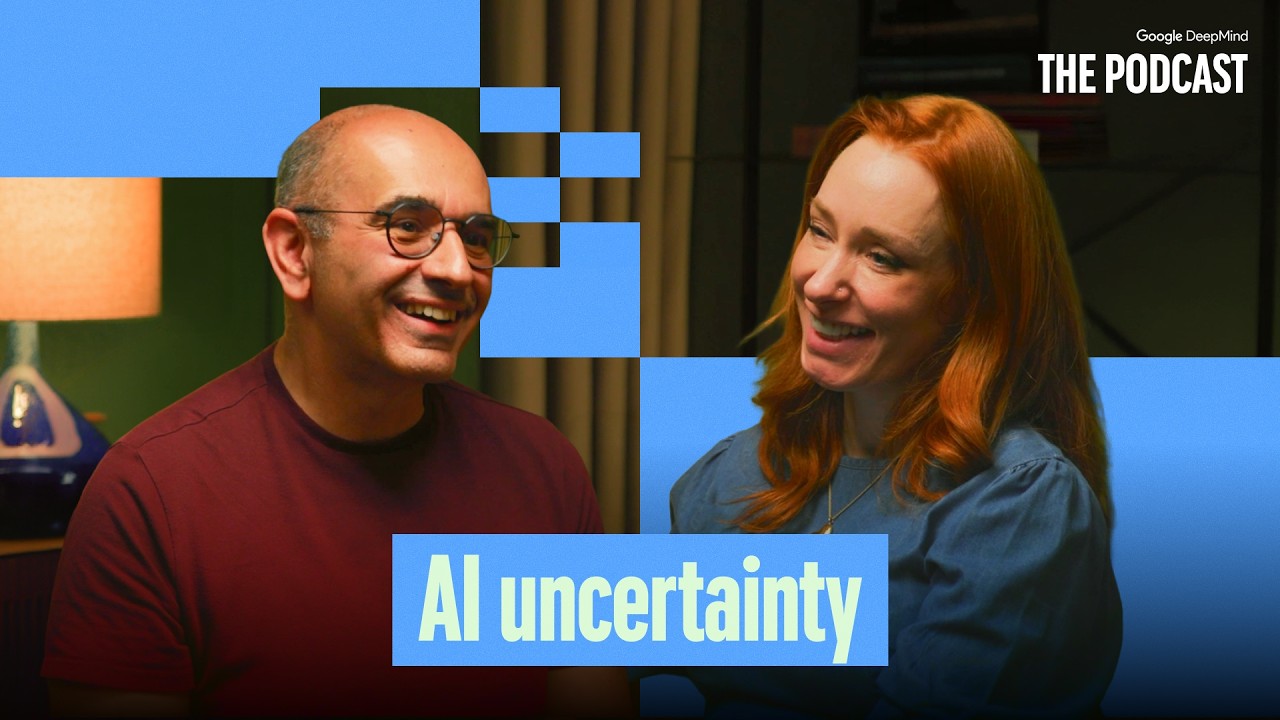
The mathematics of AI uncertainty

The mathematics of AI uncertainty

Zoubin Ghahramani, a leading researcher at Google DeepMind and professor at Cambridge, argues that incorporating uncertainty is a missing piece for ever-improving AI. He discusses the critical difference between correctness and confidence in AI, tracing the historical evolution of probabilistic models from early neural networks to modern Bayesian approaches. Ghahramani highlights how current large language models often 'fake' uncertainty and explores successful implementations in areas like weather forecasting and AlphaFold, ultimately advocating for architectural innovations over pure scale to build more robust, trustworthy, and human-aligned intelligent systems that understand their own limitations.

The State of AI: Models, Moats, and the Consumer Renaissance

The State of AI: Models, Moats, and the Consumer Renaissance

Anish Acharya and Jen Kha delve into the evolving AI landscape, dissecting the model layer with its emerging multiple winners and the strategic choice between frontier and open-weight models. They explore how the application layer captures value through model aggregation and specialization, ultimately ushering in a renaissance for consumer AI with personal agents, coding tools, and new economic models, urging founders to think big.

AI in GTM at Notion — Flora Liu

AI in GTM at Notion — Flora Liu

Flora Liu from Notion's GTM engineering team discusses transforming a fragmented Go-to-Market system into a unified, agent-driven platform. She details how Notion tackles challenges like dispersed customer data and unstructured insights by building a four-layered architecture (Know, Decide, Act, Learn) where humans and AI agents operate on the same substrate, leveraging Snowflake, DynamoDB, and Notion itself to create durable, self-improving workflows and boost sales and marketing effectiveness.

Who’s afraid of an open-weight model? GLM, context bombing and post-Black Hat attacks

Who’s afraid of an open-weight model? GLM, context bombing and post-Black Hat attacks

This episode dives into GLM-5.3's advanced vulnerability discovery, debating its potential for good or harm. It then explores "context bombing," an innovative defensive use of prompt injections, and analyzes recent social engineering attacks targeting cybersecurity pros after the Black Hat conference, emphasizing human vulnerability and the need for robust AI defenses.