Why Reflection AI Is Making the Open Intelligence Bet - and What It Means for Deploying Models
Joe Spisak of Reflection discusses why open models and open intelligence matter, covering RL-driven customization, environments as the new dataset, the OpenEnv project, PyTorch and Llama lessons, inference scaling, and the case for ecosystem control and open safety.
From 36% to 100%: How Self-Improving Agents Write Their Own Skills — Rafal Wilinski, Runlayer
Rafal Wilinski of Runlayer argues that when one agent solves a hard problem, that knowledge should become a skill shared across the whole company. He covers why skills matter more as agents run longer, three problems with current skills, using MCP as a governed distribution layer, distilling skills from successful and failed agent traces inspired by the Voyager paper, and the organizational flywheel as a durable competitive advantage.
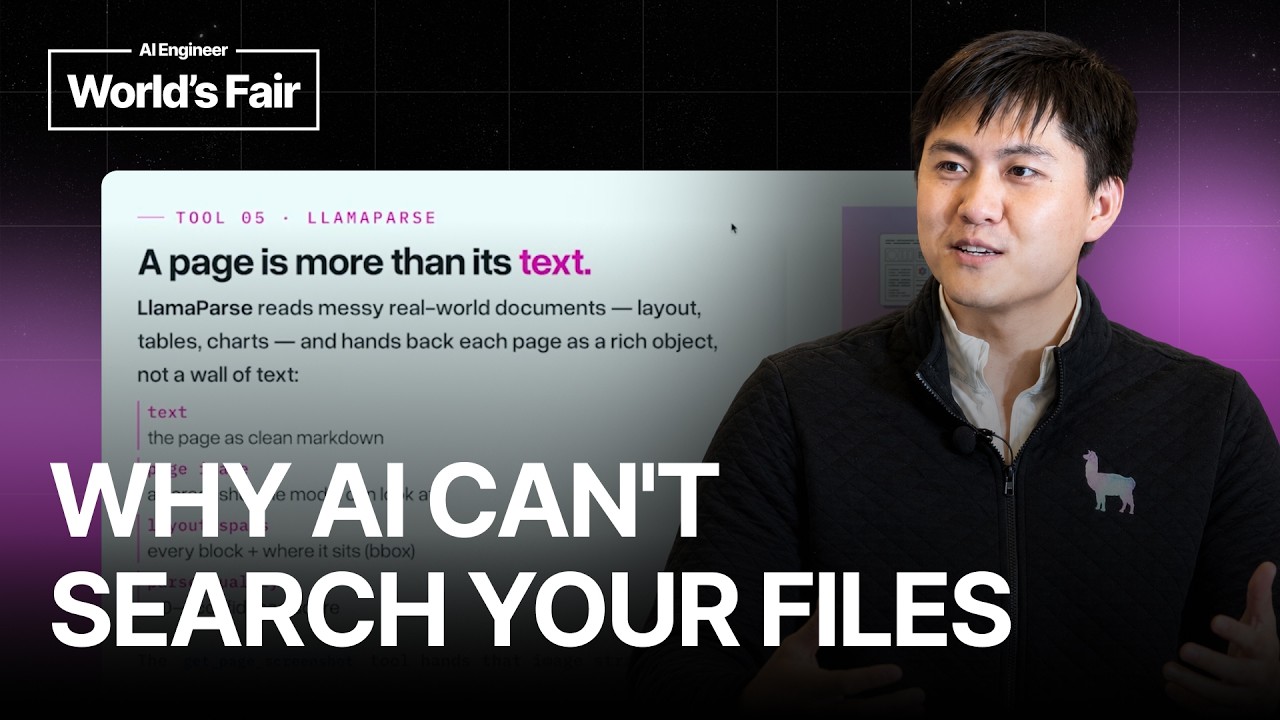
Grep or Embeddings? Agentic Search Over Company Documents — George He, LlamaIndex
George He, head of engineering at LlamaIndex, explores when agents need pre-indexed vector search and when plain file traversal with grep is enough. He contrasts Claude Code's embedding-free approach on code with the harder reality of large, messy, multimodal, permissioned company documents, and proposes a harness of hybrid retrieval, metadata filtering, grep, and reading tools backed by LlamaParse and LiteParse. The talk closes with a live demo of an agent building a cash-flow table from 135 Alphabet filings, grounded in source files.
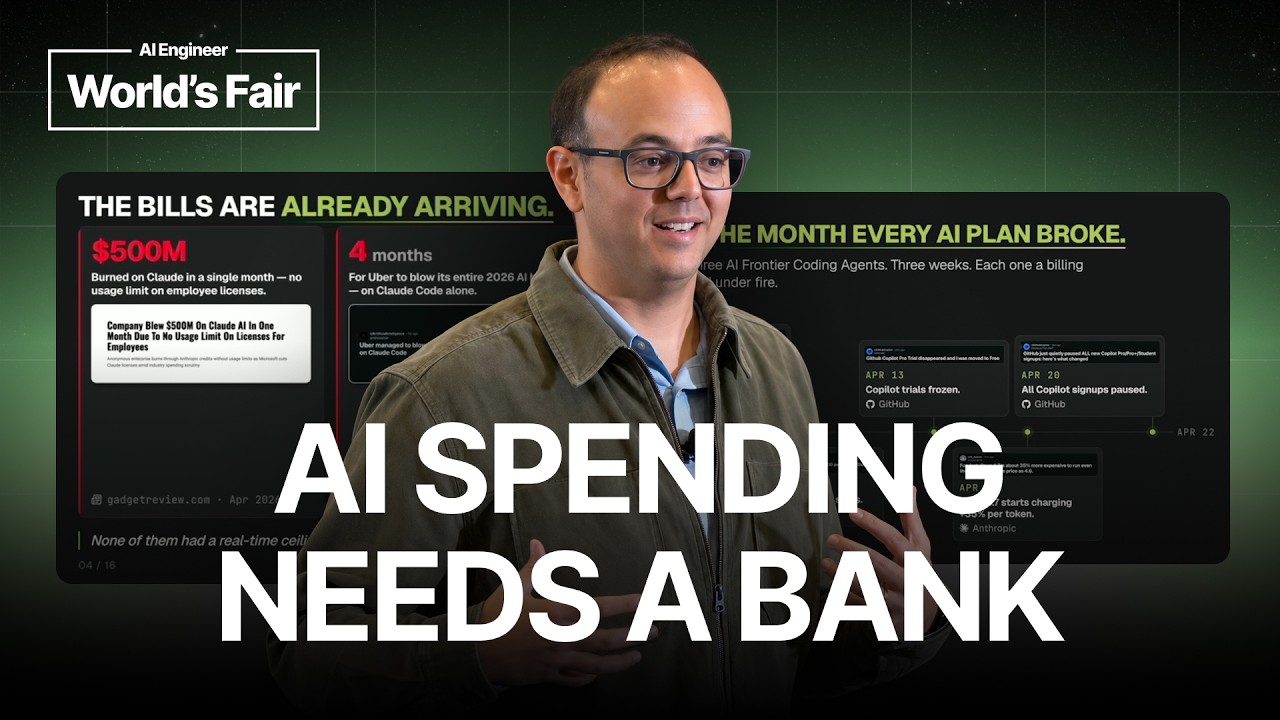
Every AI Company Is Accidentally Building a Bank — Dor Sasson, Stigg
Dor Sasson argues that the 2026 AI pricing crises at Anthropic, OpenAI, and GitHub were infrastructure failures: usage was checked after invoicing rather than before inference. He proposes synchronous entitlement checks with asynchronous settlement, borrows banking concepts such as holds, double-entry bookkeeping, and credit sources, and outlines four patterns for selling AI at scale.
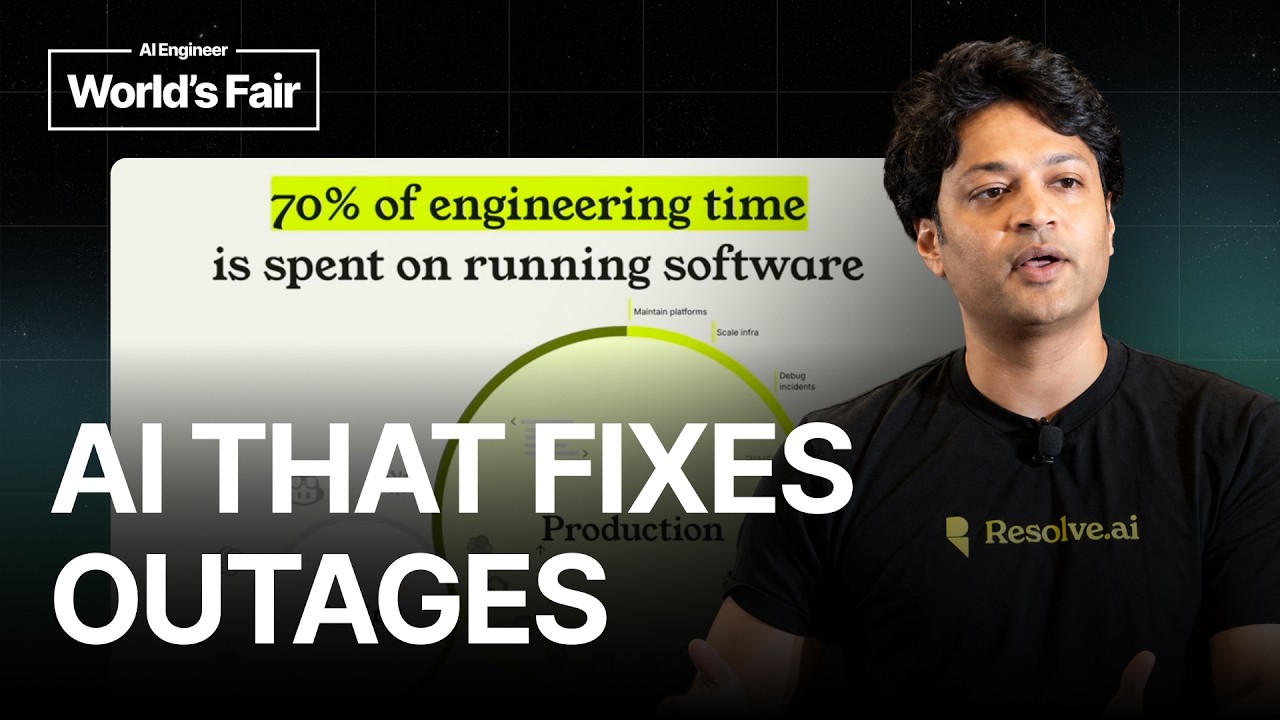
The 6 Pillars of an Agentic Harness for Production — Varun Krovvidi, Resolve AI
Varun Krovvidi of Resolve AI explains why AI excels at code generation but struggles with the complex, multi-domain problem of running and fixing software in production. He outlines five common failure modes for AI agents in production (anchoring bias, context issues, coherent vs. causal answers, guardrails, lack of learning) and introduces Resolve AI's six-pillar architecture: model orchestration, context engineering, causal reasoning, governed actions, learning systems, and multi-level evaluations. A demo illustrates how Resolve AI diagnoses a Grafana alert to its root cause, ruling out coincidental events and maintaining its causal reasoning.
What AI gets wrong and what failure teaches us
Jennifer Neville discusses her research into "surprising failures" in AI systems, where models, particularly LLMs, struggle with complexity in realistic user workflows. Her team focuses on practical evaluation for multi-turn conversations and agentic knowledge work, emphasizing the need for robust AI that understands context and user intent over time. She offers insights into bridging the gap between user expectations and AI capabilities, advocating for detailed user feedback and outlining the future of human-AI collaboration.