Vendor lock in

An AI Future Without the Lock-In — Remy Guercio, Tailscale

An AI Future Without the Lock-In — Remy Guercio, Tailscale

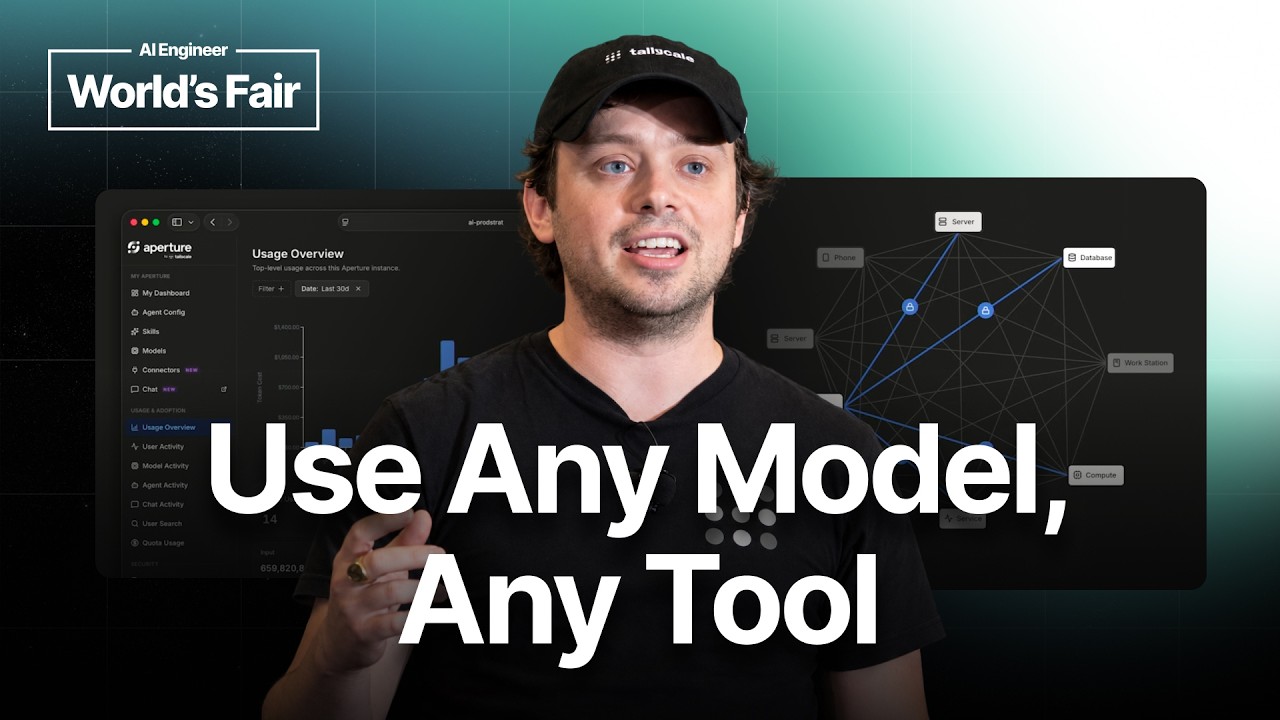
Remy Guercio of Tailscale argues that the era of unlimited AI budgets is over and that teams need to escape lock-in while proving real ROI. He breaks an internal AI deployment into four layers (models, data connectors, interfaces, and sandboxes) and presents an AI gateway as the way to keep each layer swappable. He demonstrates how Tailscale's Aperture uses tailnet identity instead of shared API keys, sets per-model budgets, serves as both an LLM and MCP gateway, centralizes authentication for coding agents, and provides logs for diagnosing agent behavior.

AI Agents Don't Read Your Policy Docs. They Hit Your APIs — Gravitee

AI Agents Don't Read Your Policy Docs. They Hit Your APIs — Gravitee

Sam, CTO at Gravity, argues that AI agent governance must be enforced in infrastructure rather than in prompts or policy documents. Through five live demos against a hotel-booking agent, he shows a gateway blocking destructive tool calls, preventing data exfiltration, rate-limiting runaway agents, serving cached semantic responses, and rejecting oversized prompts before any LLM call. He also covers observability, vendor decoupling via LLM routing, trimming bloated MCP tool lists, and managing shadow AI.

Notion's Token Town — Sarah Sachs, Notion

Notion's Token Town — Sarah Sachs, Notion

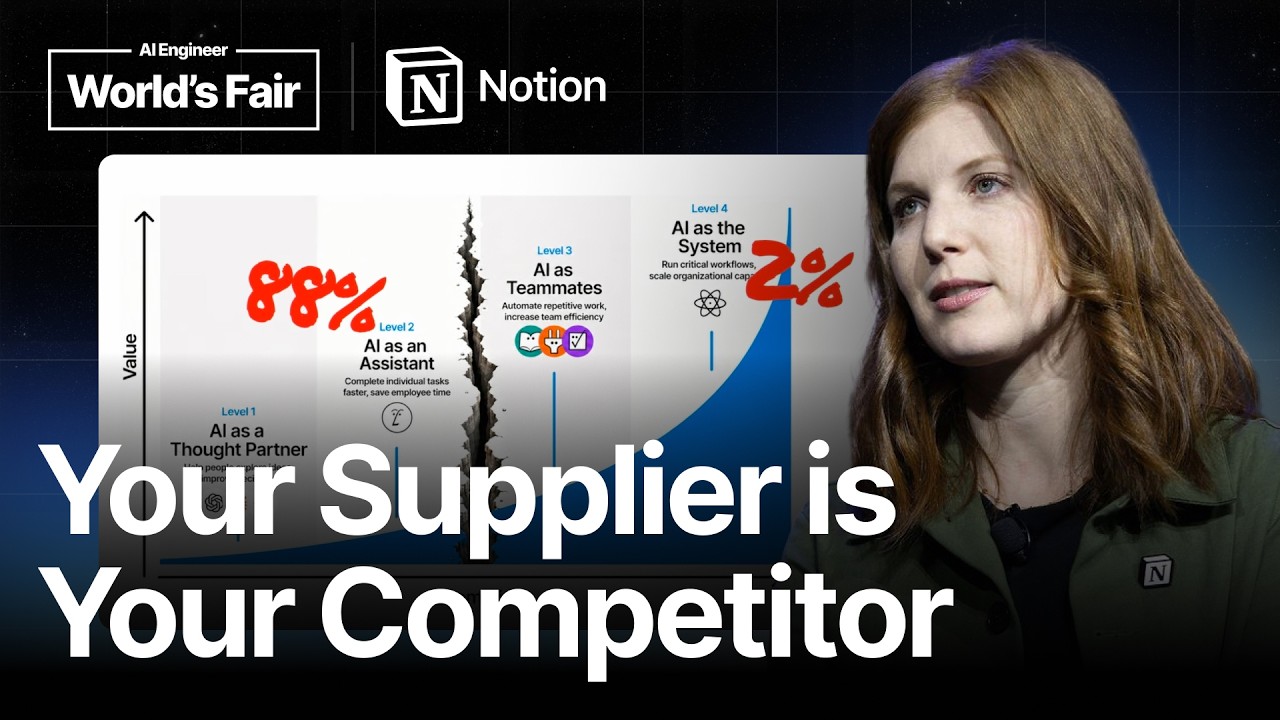
Sarah Sachs, Head of AI Engineering at Notion, discusses the economic traps of AI model contracts and advocates for a "win on product" strategy. She details how Notion maintains optionality and leverage by treating suppliers as competitors, implementing a model-agnostic "AI Switzerland" approach with an auto model, leveraging open-weight models, and prioritizing data flywheels and orchestration over token economics to build sustainable AI products.

What Breaks When You Build AI Under Sovereignty Constraints - Bilge Yücel, deepset GmbH

What Breaks When You Build AI Under Sovereignty Constraints - Bilge Yücel, deepset GmbH

Bilge Yücel explains that true AI sovereignty is a technical challenge, not just a policy issue, built on four pillars: data, model, infrastructure, and operations. This talk explores the common pitfalls of retrofitting sovereignty—from performance regressions after swapping models to discovering deep vendor lock-in when moving on-prem—and presents a checklist for building genuinely sovereign systems.

Under Secretary of War on Iran, Anthropic and the AI Battle Inside the Pentagon | The a16z Show

Under Secretary of War on Iran, Anthropic and the AI Battle Inside the Pentagon | The a16z Show

Emil Michael, a key figure in the Department of Defense, outlines his strategy for modernizing the department by prioritizing Applied AI. He details the risks discovered in existing commercial AI contracts, which led to a vendor-lock crisis, and explains how the DoD is reforming its procurement processes to better engage with innovative startups and ensure technology serves national security interests without restrictive terms.