Tokenization

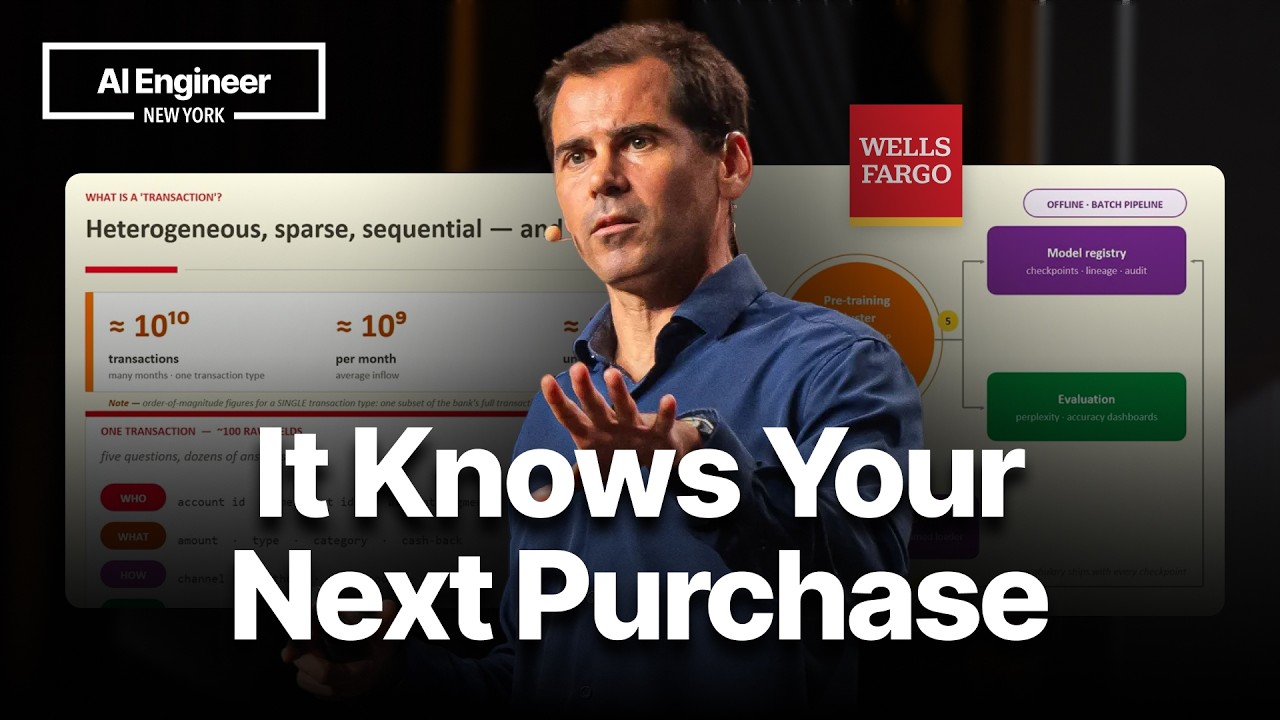
A Bank Trained Its Own Foundation Model to Catch Fraud — Freddy Lecue, Wells Fargo

A Bank Trained Its Own Foundation Model to Catch Fraud — Freddy Lecue, Wells Fargo

Wells Fargo pre-trained a transformer from scratch on billions of customer transactions rather than words, then fine-tuned it for fraud detection, credit decisions, anti-money laundering and marketing. The talk covers how tabular transaction data was tokenized, the model's size and training setup, and results that beat the production XGBoost fraud model on both detection and false positives while meeting real-time latency requirements.
What Happens When AI Agents Can Spend Your Money?

What Happens When AI Agents Can Spend Your Money?

Terry Angelos of VGS and Alex Rampell explore how AI agents are moving from giving recommendations to completing purchases, and what payment infrastructure must change to support that shift safely. They cover network tokenization, the wallet wars, Stripe's walled-garden approach, the new agentic token standard, liability and delegated authority, merchant resistance such as Amazon's block, and how agents could reshape rewards, subscriptions, and customer relationships.

How AI Agents Pay: Checkout in ChatGPT and Google AI Mode — Sam Parsons, PayPal

How AI Agents Pay: Checkout in ChatGPT and Google AI Mode — Sam Parsons, PayPal

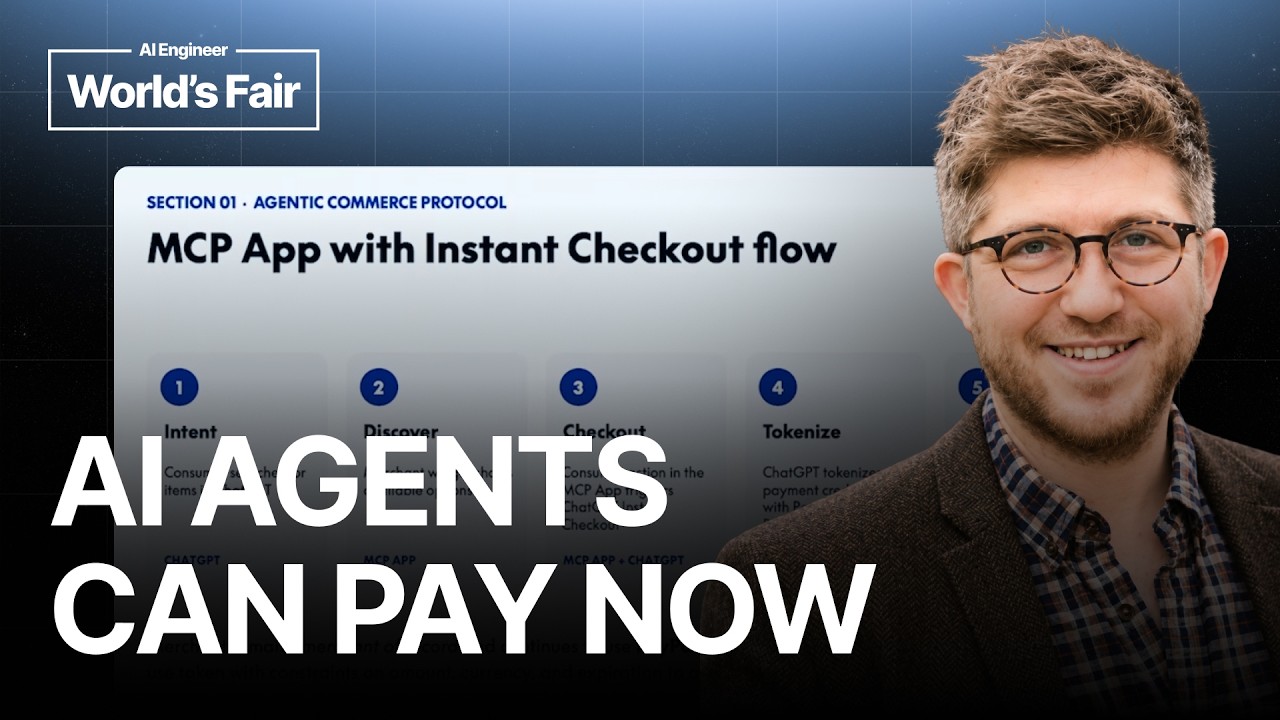
Sam Parsons from PayPal Enterprise Payments explores three distinct ways merchants can accept payments initiated by AI agents: Instant Checkout in ChatGPT (Agentic Commerce Protocol), Google AI Mode (Universal Commerce Protocol), and a custom MCP app with an external checkout page. He details the technical flows, emphasizing tokenization for secure transactions and outlining the trade-offs between in-agent experiences and full merchant control.

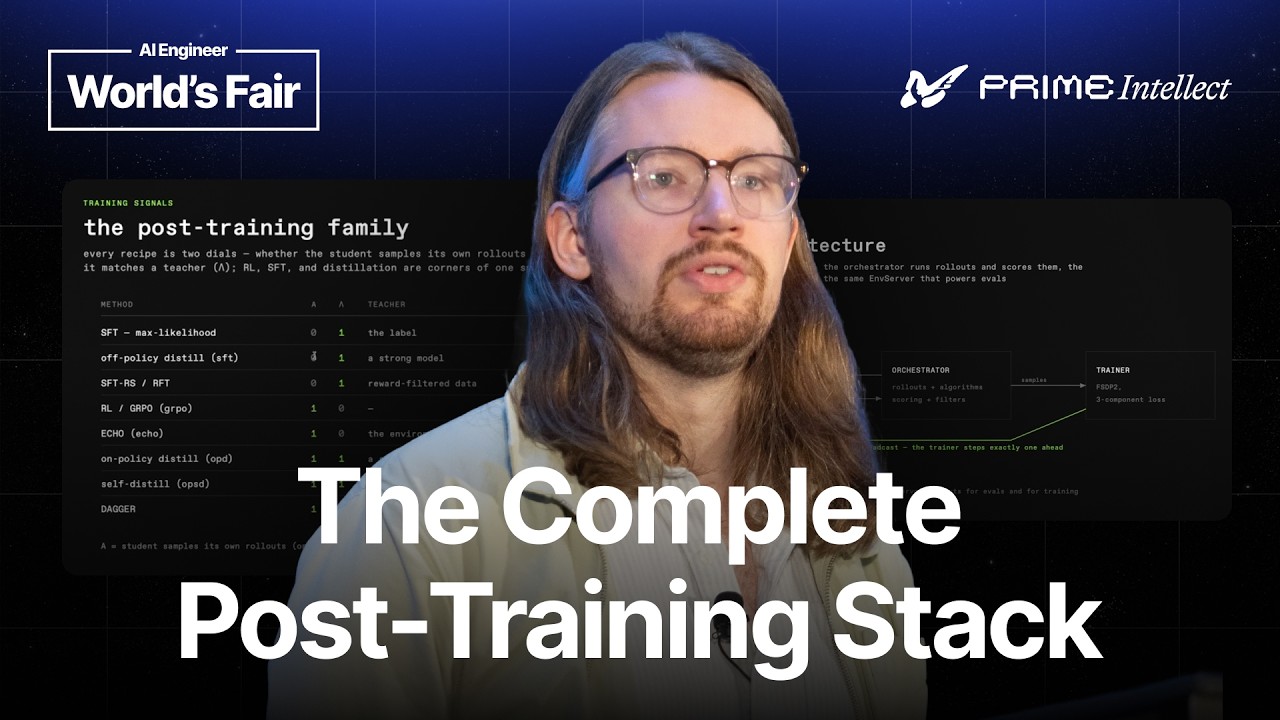
The Prime Intellect Stack — Will Brown, Prime Intellect

The Prime Intellect Stack — Will Brown, Prime Intellect

Deep dive into Prime Intellect's open-source ecosystem for post-training LLMs, covering the modular Verifiers V1 environment design, the asynchronous and scalable Primer RL training framework, and the Lab platform for hosted training and fine-tuning. Learn about advanced reward systems, the interception server pattern, and tokenization control with the Renderers library, all designed to enable frontier agentic model development.

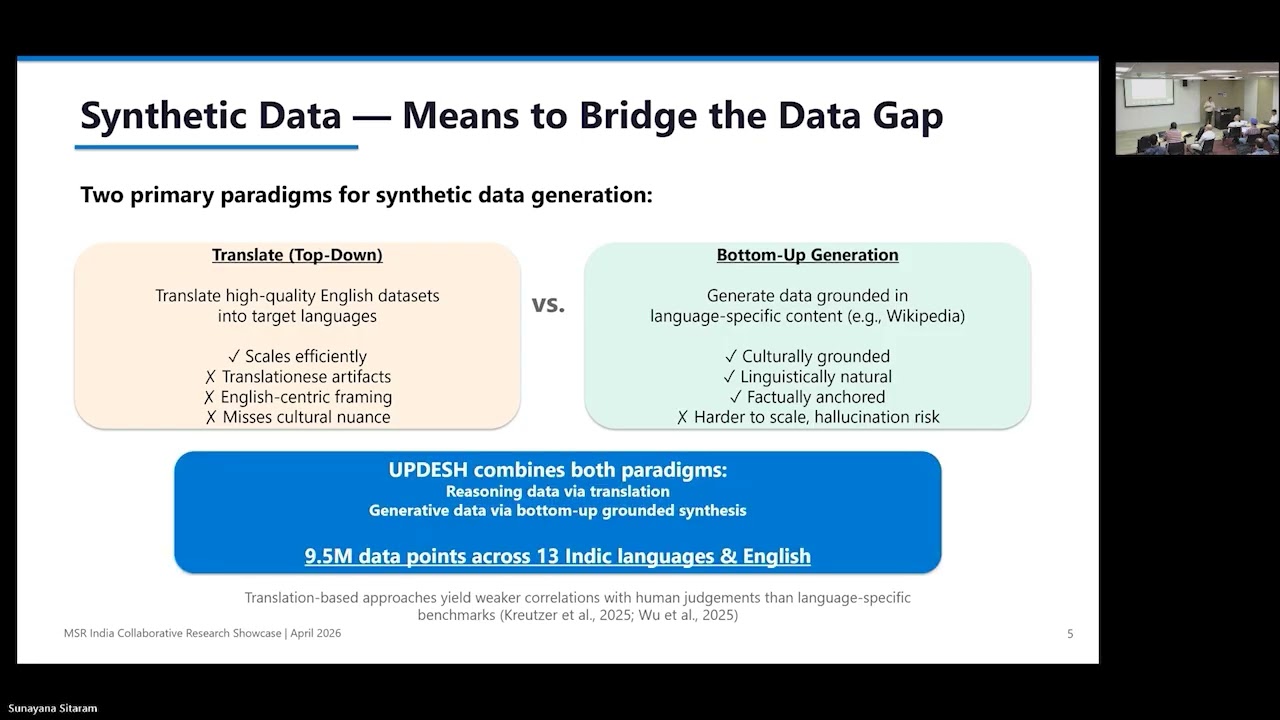
Session on Inclusive AI: Data, Models, Evaluation

Session on Inclusive AI: Data, Models, Evaluation

The Microsoft Research India Academic Research Summit 2026 session on "Inclusive AI" explored critical challenges in developing AI that serves diverse linguistic and cultural contexts. Speakers Niloy Ganguly, Danish Pruthi, Sunayana Sitaram, Anoop Kunchukuttan, and Ashutosh Modi addressed data gaps, model biases, and evaluation shortcomings, emphasizing the need for equitable and culturally relevant AI. Key themes included the use of synthetic data for low-resource languages, the impact of tokenization on model performance, geographical disparities in generative AI, and the application of AI for social good in legal and accessibility domains. The discussions underscored the importance of community involvement, open data, and designing AI for multilinguality from the outset, rather than as an afterthought.

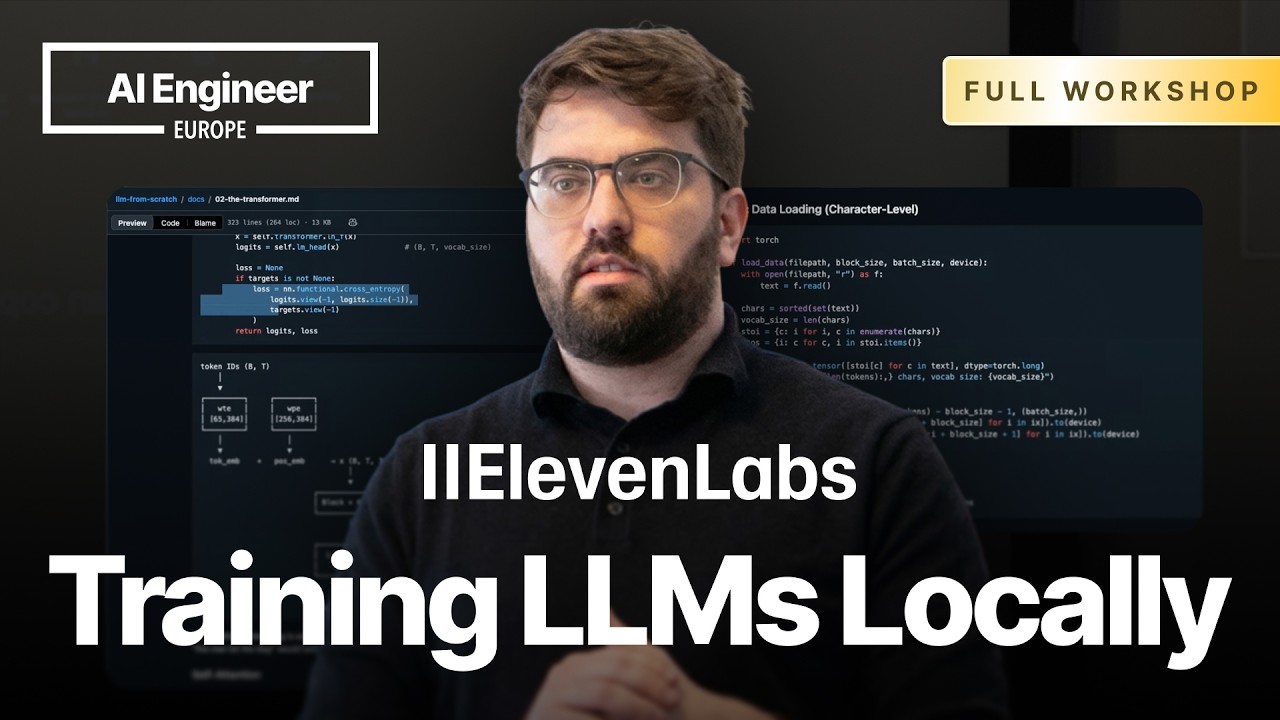
Training an LLM from Scratch, Locally — Angelos Perivolaropoulos, ElevenLabs

Training an LLM from Scratch, Locally — Angelos Perivolaropoulos, ElevenLabs

A practical guide to the engineering principles and trade-offs involved in training a small language model from scratch on a local machine, based on a workshop by Angelos Perivolaropoulos from ElevenLabs.