Technical debt

AI-Native Organisations Run on Skills: How to Structure and Scale Them — Imad Touil, QuantumBlack

AI-Native Organisations Run on Skills: How to Structure and Scale Them — Imad Touil, QuantumBlack

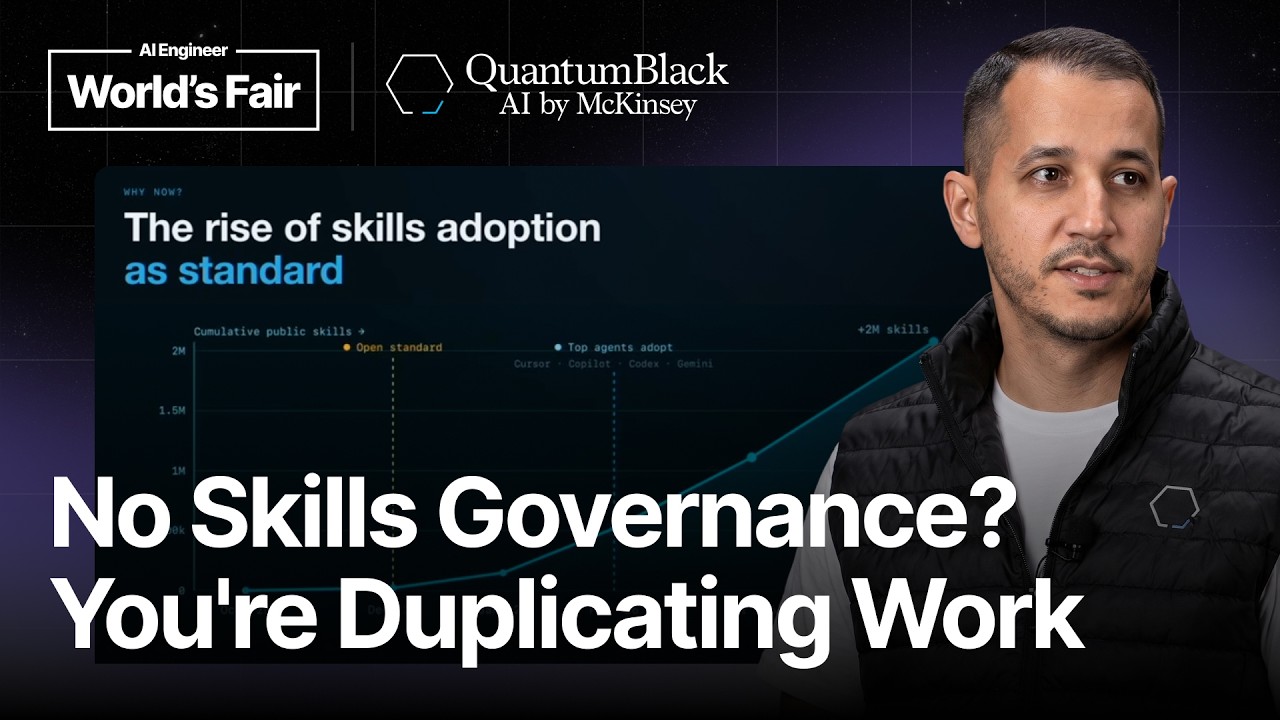
Imad Touil explores the critical need for governing AI skills within organizations, asserting that skills represent the true repository of enterprise know-how. He contrasts simplified coding agent loops with complex, real-world product lifecycles, demonstrating how ungoverned skills lead to technical debt—including duplication, quality degradation, security risks, and lack of discoverability. Proposing a microservices-inspired approach, Touil outlines a centralized skills platform and human-led governance model essential for achieving deterministic workflows, boosting productivity, and mitigating risks in AI-native enterprises.

Benchmarking Coding Agents on New vs Legacy Codebases — Denys Linkov, Wisedocs

Benchmarking Coding Agents on New vs Legacy Codebases — Denys Linkov, Wisedocs

Denys Linkov details Wisedocs' journey of refactoring a complex, distributed ML pipeline into a monorepo, benchmarking the process against evolving AI coding tools. He honestly audits whether the six-month effort was justified, or if waiting for more advanced AI would have been better, ultimately concluding that the significant social and technical benefits made the refactor a successful strategic move despite current LLM limitations.

Agentic Engineering vs Software Engineering: Beyond Vibe Coding

Agentic Engineering vs Software Engineering: Beyond Vibe Coding

Anna Gutowska explains the paradigm shift in software engineering towards "agentic engineering," where AI agents execute goals defined by developers. She differentiates this from traditional, AI-assisted, and vibe coding, highlighting the increased importance of human oversight, orchestration, and verification in a world of probabilistic AI systems, and how this redefines the developer's role.

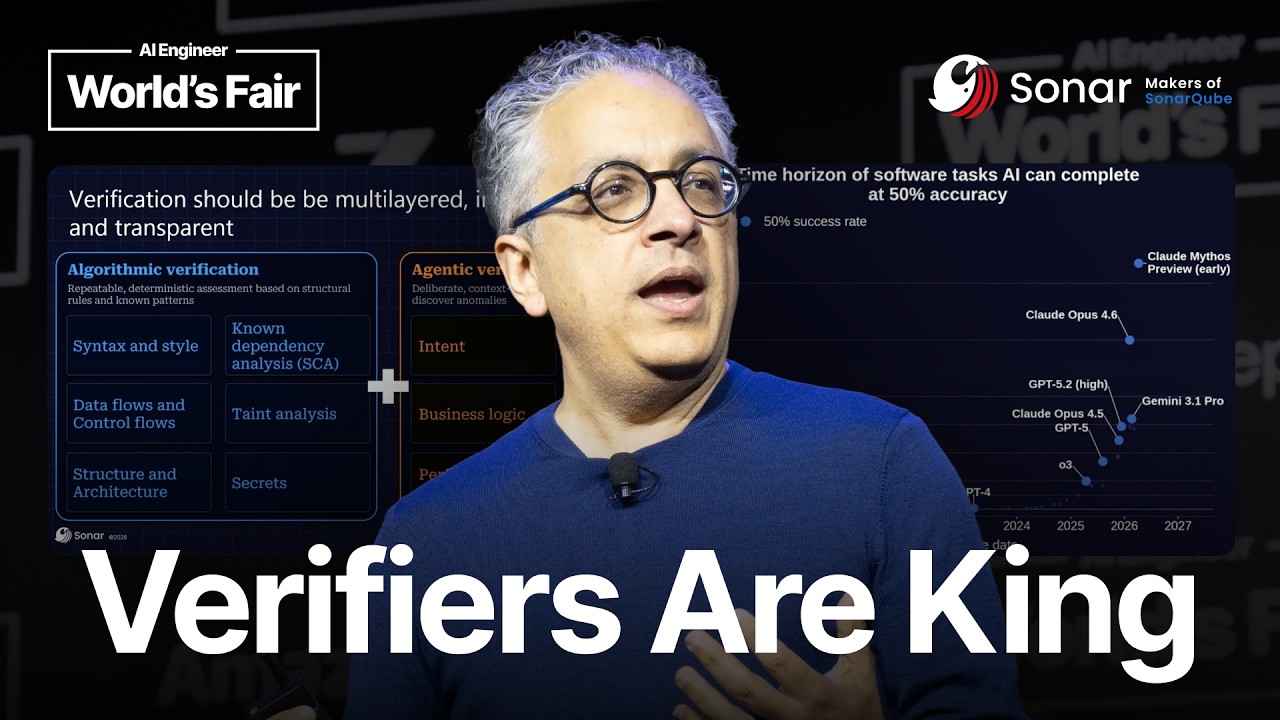
In the Land of AI Agents, the Verifiers Are King — Tariq Shaukat, Sonar

In the Land of AI Agents, the Verifiers Are King — Tariq Shaukat, Sonar

This talk addresses the critical challenge of verification in AI agent development, moving beyond generation to ensure correctness. It highlights the problem of "AI slop" and the "productivity paradox" of AI coding agents, where initial velocity gains are offset by increased technical debt and quality issues. The speaker introduces the AC/DC (Agent-Centric Development Cycle) framework comprising three stages: Guide (providing context and constraints), Verify (zero-trust, multi-layered verification using both algorithmic and agentic methods), and Solve (active code maintenance to control technical debt). This systems-level approach, integrating verification across agentic, CI, and code maintenance loops, significantly reduces issues and transforms AI into a reliable enterprise asset.

The AI-Native Startup Playbook (Ep. 1008 with Jon Krohn)

The AI-Native Startup Playbook (Ep. 1008 with Jon Krohn)

Anthropic's Founder's Playbook redefines startup building in the AI era, emphasizing that AI has removed traditional bottlenecks, making execution cheap and judgment the scarce resource. The playbook outlines four stages—Idea, MVP, Launch, and Scale—providing practical guidance on sharpening problem statements, using AI as a devil's advocate, combating agentic technical debt, achieving true product-market fit, and building defensible moats against incumbents. The overarching message: prioritize strategic sense-making over effortless building.

What Is AI Code Refactoring? Agentic AI & Safe Code Changes

What Is AI Code Refactoring? Agentic AI & Safe Code Changes

This video explores AI code refactoring, differentiating between inline and autonomous agentic approaches. It highlights how AI can leverage pattern recognition for tasks like improving readability or reducing duplication, thereby addressing technical debt. A key focus is on the safety guardrails, detailing a multi-step, human-in-the-loop process involving planning, searching, reporting, human approval, patching, and verification through testing, ensuring AI-driven changes are safe for production and can integrate into CI/CD pipelines.