Semantic search

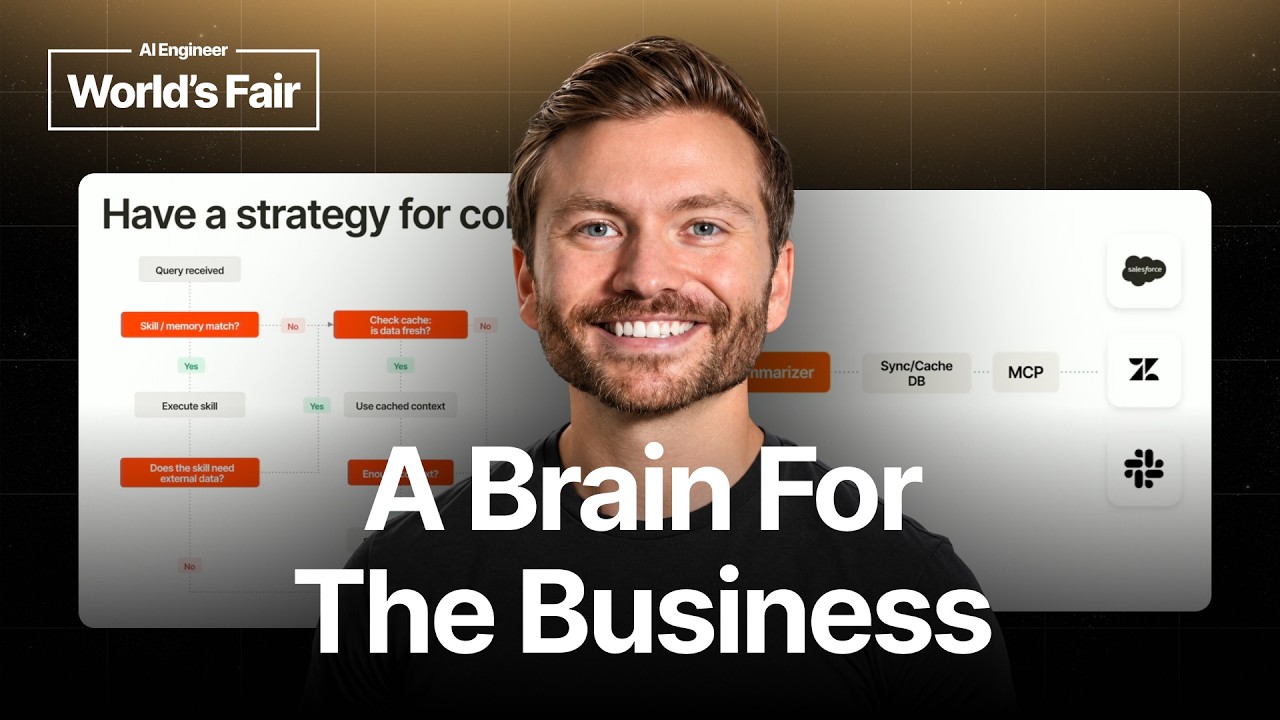
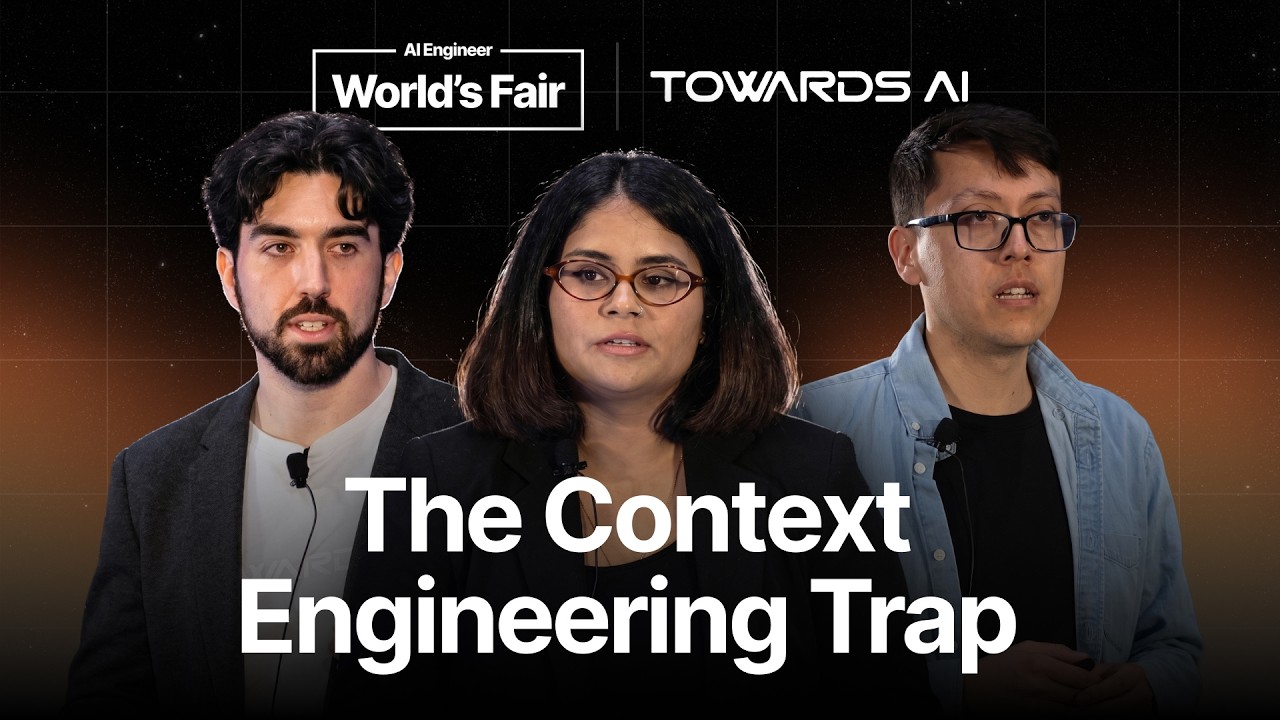
Context Engineering in 2026 — Louis-François Bouchard, Omar Solano & Samridhi Vaid, Towards AI

Context Engineering in 2026 — Louis-François Bouchard, Omar Solano & Samridhi Vaid, Towards AI

Experiments with an AI tutor reveal that not compacting context often outperforms summarization, leading to better recall, lower cost, and faster responses, primarily due to LLM API prompt caching. Compaction invalidates the cache, making it unexpectedly expensive. While cloud environments benefit from full history, local hardware limits necessitate compaction, highlighting the need to prioritize actual constraints over default compaction strategies.

What Are Large Database Models? AI for SQL Data

What Are Large Database Models? AI for SQL Data

Martin Keen introduces Large Database Models (LDMs), a new AI paradigm that brings advanced analytical capabilities directly into SQL and relational databases. This allows for semantic queries on the 99% of enterprise data traditionally locked away, enabling faster, more secure insights without costly data movement.

How we taught agents to use good retrieval - Hanna Lichtenberg, Mixedbread AI

How we taught agents to use good retrieval - Hanna Lichtenberg, Mixedbread AI

Mixedbread AI addresses the "Oracle Gap" – the disparity between LLM reasoning and retrieval capabilities – by developing agents trained to use advanced search tools effectively. They demonstrate how current LLMs generate poor queries due to training biases and introduce a sophisticated agent harness with diverse search tools and a unique training regimen, including supervised fine-tuning and reinforcement learning with custom rewards, to teach agents to form precise semantic queries. This approach significantly improves performance on benchmarks like Oblique Congress and Snowflake's Match QA, closing the gap between theoretical perfect retrieval and real-world agent performance.

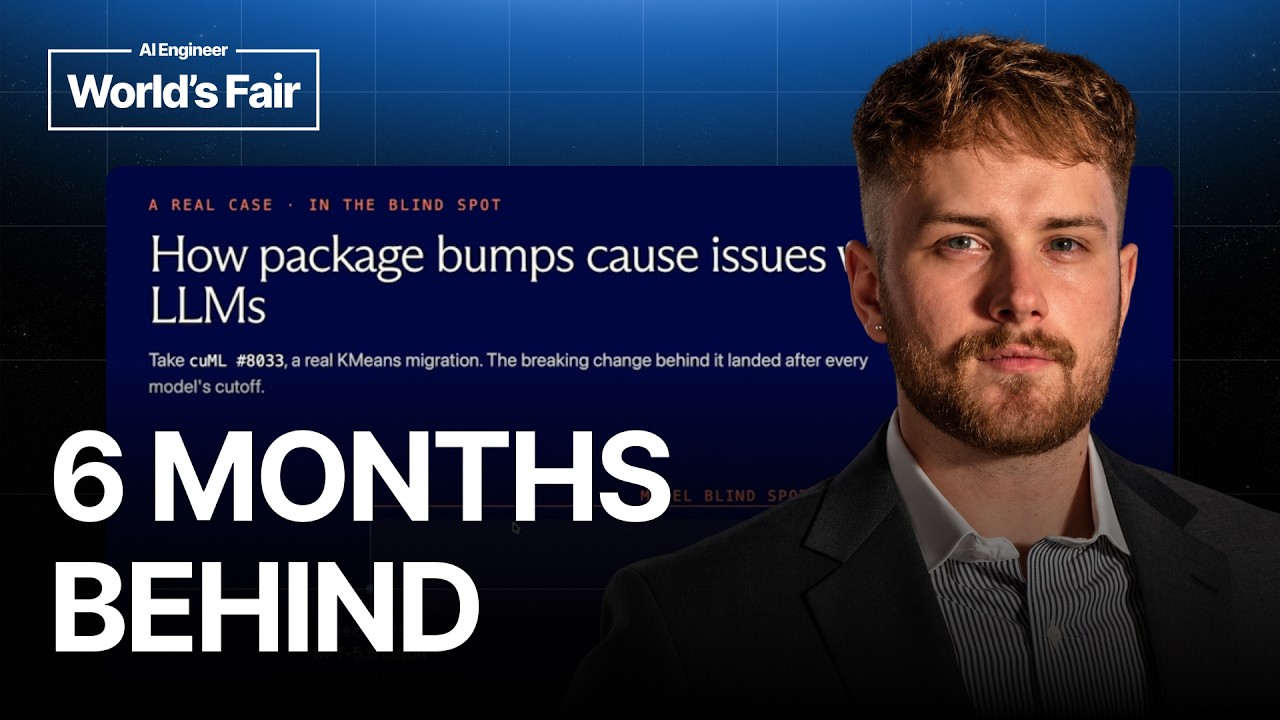
Benchmarking semantic code retrieval on Claude Code — Kuba Rogut, Turbopuffer

Benchmarking semantic code retrieval on Claude Code — Kuba Rogut, Turbopuffer

A detailed benchmark analysis comparing raw Claude Code's performance with windowed grep and Turbopuffer's semantic search for code retrieval in LLM agents. The study reveals significant improvements in file precision (65% to 87%) and reduced wasted reads (1 in 3 to 1 in 8) with semantic search, while highlighting the importance of the agent's understanding of when to use retrieval tools.

Is RAG Still Needed? Choosing the Best Approach for LLMs

Is RAG Still Needed? Choosing the Best Approach for LLMs

Martin Keen compares Retrieval Augmented Generation (RAG) with the emerging long context window approach in LLMs. He analyzes the pros and cons of each, from infrastructure simplicity and retrieval accuracy to computational costs and the 'needle in the haystack' problem, providing guidance on when to use each solution.

Before Building AI Agents Watch This (Deep Agent Expertise)

Before Building AI Agents Watch This (Deep Agent Expertise)

Nishikant Dhanuka from Prosus Group shares practical lessons on building effective AI agents for e-commerce and productivity. He covers why context engineering is more crucial than prompt tweaking, how to build a modern search pipeline, the failures of pure-chat interfaces, and why a robust evaluation framework is the real competitive advantage.