Scaling laws

Chai Discovery's Bitter Lesson: Drug Design Is Another Scaling Problem

Chai Discovery's Bitter Lesson: Drug Design Is Another Scaling Problem

Chai Discovery is revolutionizing drug discovery by treating biology as an engineering problem, leveraging AI—particularly diffusion models and the "bitter lesson" of scaling—to design molecules rather than merely discover them. Their approach has boosted antibody design hit rates from 0.1% to 16%, aiming for a "Molecular CAD" suite that collapses discovery timelines from months to days. They partner with pharma, building infrastructure and creating a data flywheel to develop higher-quality, more targeted medicines for previously undruggable diseases.


Data Quality Is the Compute Multiplier — Ari Morcos, DatologyAI

Data Quality Is the Compute Multiplier — Ari Morcos, DatologyAI

Ari Morcos, CEO of DatologyAI, explains why data quality is the critical "compute multiplier" in an era of scarce and expensive compute. He outlines DatologyAI's "oil refinery" process (Clean, Curate, Create, Compose) for enhancing datasets. Through empirical results and customer cases like Thomson Reuters and Arcee, he demonstrates how superior data curation leads to significantly better models, reduced training costs, improved inference efficiency, and the ability to train competitive models for a fraction of traditional costs, proving that manufacturing high-quality data is more effective than buying more compute.

The Future of AI – Key Trends Shaping What’s Next • Ekaterina Sirazitdinova • YOW! 2025

The Future of AI – Key Trends Shaping What’s Next • Ekaterina Sirazitdinova • YOW! 2025

Ekaterina Sirazitdinova from NVIDIA provides a high-level overview of the latest trends shaping the future of AI, covering the evolution from early deep learning to the rise of agentic and physical AI, and diving deep into the critical optimization techniques required to deploy these powerful models efficiently.

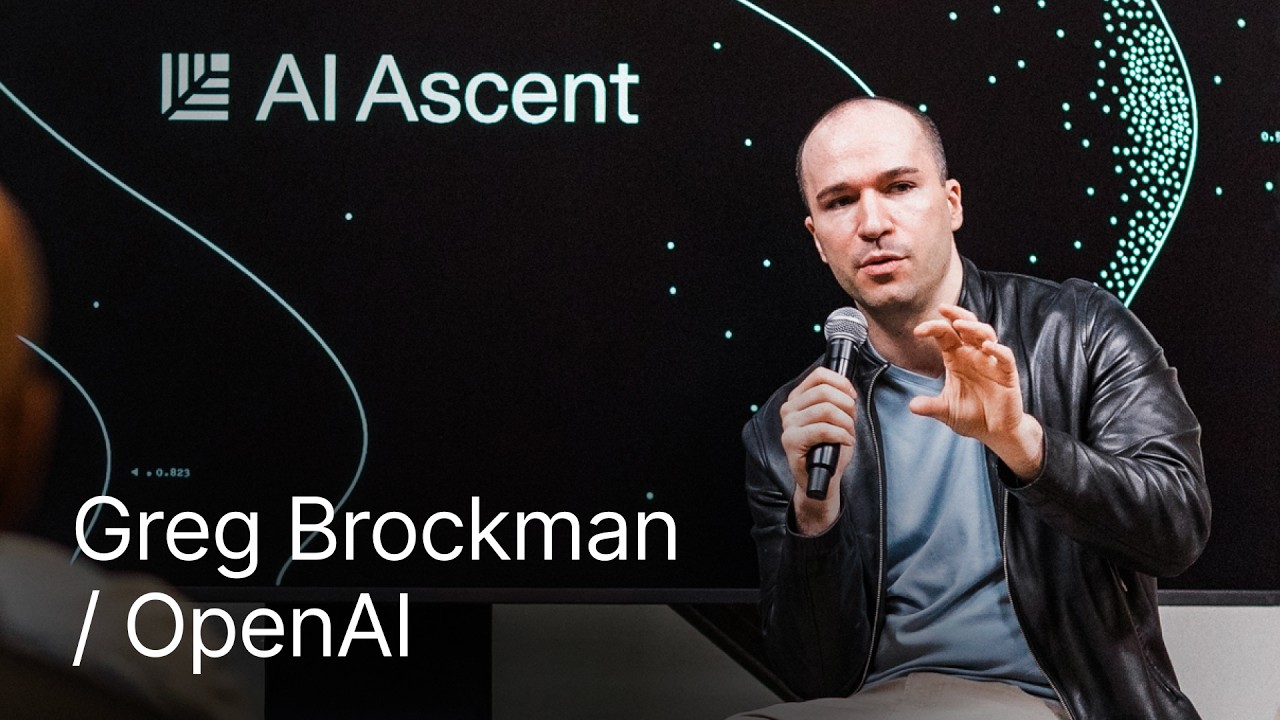
OpenAI's Greg Brockman: Why Human Attention Is the New BottleneckOpenAI's

OpenAI's Greg Brockman: Why Human Attention Is the New BottleneckOpenAI's

Greg Brockman, co-founder and president of OpenAI, discusses the company's insatiable need for compute, the state of scaling laws, and the belief that we are 80% of the way to AGI. He explores how agentic coding tools are transforming software development, the emerging role of human attention as the ultimate bottleneck, and the future of AI in pushing scientific frontiers.

What are we scaling?

What are we scaling?

A critical analysis of AI progress, arguing that short AGI timelines are unlikely given the current reliance on pre-baking skills via reinforcement learning. The author contends that true AGI requires on-the-job, continual learning—a capability current models lack. The modest economic impact of AI is presented not as a diffusion lag but as direct evidence of this capability gap. The future of AI will be a gradual, competitive race to solve continual learning, not a sudden takeoff.

The future of intelligence | Demis Hassabis (Co-founder and CEO of DeepMind)

The future of intelligence | Demis Hassabis (Co-founder and CEO of DeepMind)

Google DeepMind CEO Demis Hassabis discusses the path to AGI, focusing on the scientific frontiers of the next decade. He covers the importance of solving 'root node' problems like fusion energy, the challenge of 'jagged intelligence' in current models, and the promise of world models and simulations like Genie and SimA. The conversation also explores the balance between scientific rigor and commercial competition, and the profound societal and philosophical questions AGI will force us to confront.