Robotics

Multimodal & Embodied Intelligence (Pt 1), Panel on Multimodal AI: Progress, Pitfalls, Possibilities

Multimodal & Embodied Intelligence (Pt 1), Panel on Multimodal AI: Progress, Pitfalls, Possibilities

This session explored Multimodal and Embodied Intelligence, featuring talks on hybrid AI in robotics (classical vs. end-to-end), AI's role in healthcare (focusing on NCDs, deployment, and uncertainty modeling), and fundamental perception challenges in multimodal reasoning (using educational video QA and visual puzzles). A panel discussed the impact of foundation models, the blurred lines between AGI and human-like AI, critical deployment pitfalls (human factors, efficiency, architectural limits), and future directions, emphasizing task-specific models and the redefinition of 'foundation models.'

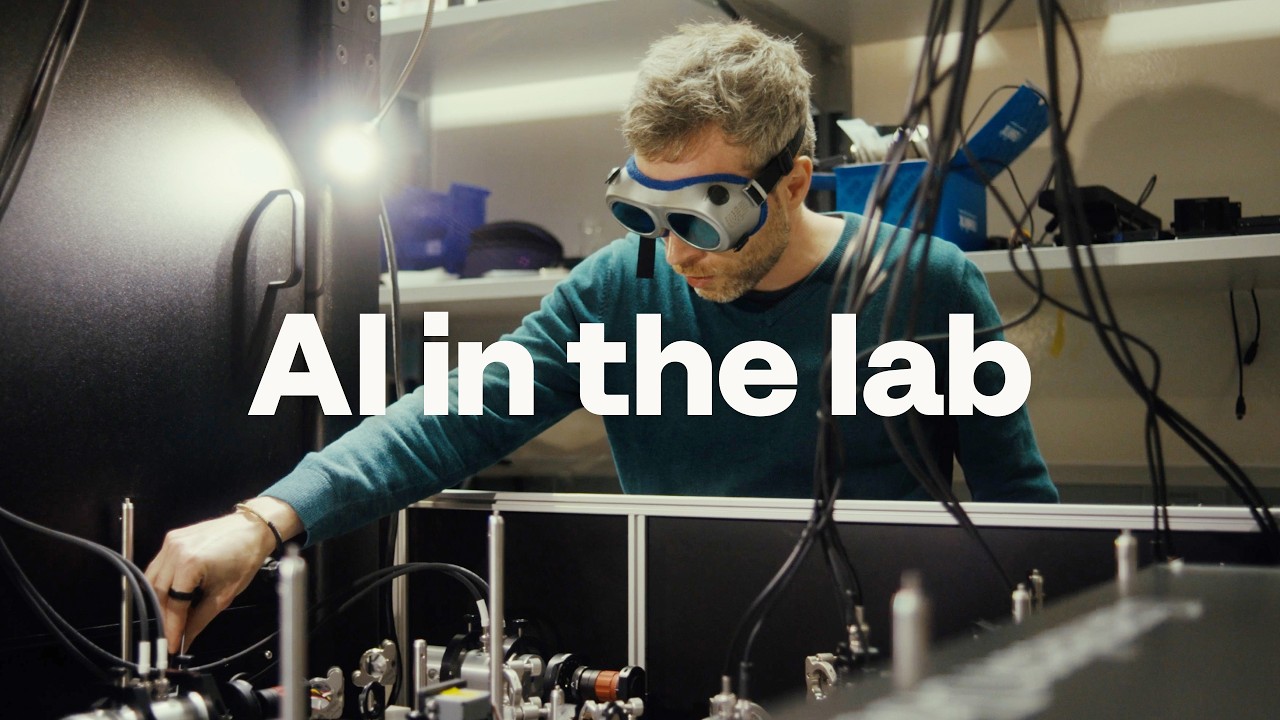
🔬 The Limits of AI in Science - Why We Need Self-Driving Labs — Joseph Krause, Radical AI

🔬 The Limits of AI in Science - Why We Need Self-Driving Labs — Joseph Krause, Radical AI

Joseph Krause, CEO of Radical AI, details how his company uses Self-Driving Labs (SDLs) and AI scientists to overcome the experimental bottleneck in materials science. By automating the full loop of hypothesis generation, synthesis, characterization, and testing, Radical AI is accelerating the discovery of novel alloys for aerospace, defense, and semiconductor applications, achieving 10x the pace of traditional methods. Krause explains why materials science is uniquely challenging for AI, how human intuition trains the AI, and why experimental data, not models, forms the core competitive advantage in this rapidly evolving, geopolitically significant field.

Pax Silica: Inside the Trump Administration’s Tech Strategy with Jacob Helberg

Pax Silica: Inside the Trump Administration’s Tech Strategy with Jacob Helberg

US Under Secretary of State Jacob Helberg details Pax Silica, a 14-country economic security coalition designed to secure the entire AI supply chain for the US and its allies. He discusses the creation of a forward-deployed industrial base in the Philippines, contrasts the initiative with China’s Belt and Road, and explains how the US plans to reindustrialize through private sector partnerships, automation, and robotics.

Physical AI Forum | Builders Reveal the New Moat & Playbook | Creator & Founder's Cut | Mar 2026 |4K

Physical AI Forum | Builders Reveal the New Moat & Playbook | Creator & Founder's Cut | Mar 2026 |4K

In a live panel at the Physical AI Builders Forum, founders and operators in computer vision, robotics, and multimodal AI share their 2026 playbooks. The discussion covers the architectural differences between physical and generative AI, the strategic shift from frame AI to scene AI for enterprise value, and the critical skills needed to build and scale a modern AI business.

Robots Don't Need More Compute. They Need This.

Robots Don't Need More Compute. They Need This.

Encord co-founders Eric and Ulrich discuss their $60M Series C, the company's origins before the AI hype, and their focus on building the essential data infrastructure for physical AI and robotics—the next frontier after LLMs.

Robotics' End Game: Nvidia's Jim Fan

Robotics' End Game: Nvidia's Jim Fan

Jim Fan of Nvidia outlines the endgame for robotics, arguing it will mirror the successful playbook of Large Language Models. He introduces "The Great Parallel," a roadmap where World Models replace Language Models, and data collection shifts from limited teleoperation to scalable egocentric video, culminating in a future of physical APIs and automated research.